[Beginner's Guide] Retail Investors Shaking Over 'Physical Division'... What Exactly Is Division?
![[Beginner's Guide] Retail Investors Shaking Over 'Physical Division'... What Exactly Is Division?](http://www.asiae.co.kr/news/img_view.htm?img=2022011309512897958_1642035088.jpg)
[Asia Economy Reporter Kwon Jae-hee] Recently, the stock prices of companies have been frequently fluctuating following news of their 'physical spin-offs.' Small shareholders have strongly opposed these moves, even petitioning against the companies and financial authorities. Presidential candidates have also made regulating physical spin-offs a key campaign promise, making spin-offs a hot topic in the stock market. So, what exactly is a spin-off that makes shareholders react so sensitively?
CJ ENM's Stock Price Rollercoaster Amid Physical Spin-off
In November last year, CJ ENM announced through the Financial Supervisory Service's electronic disclosure system a plan to create a new studio by physically spinning off the main production functions of its entertainment, drama, film, and animation businesses.
Following this, CJ ENM's stock price plummeted continuously, hitting a 52-week low of 118,000 won on January 28. Compared to the peak price of 191,600 won on October 25 last year, this is a 38% decrease.
It's not just CJ ENM. Earlier, on September 16, 2020, LG Chem announced a physical spin-off during trading hours. Its stock price dropped by over 5% that day and fell another 6% the following day.
![[Beginner's Guide] Retail Investors Shaking Over 'Physical Division'... What Exactly Is Division?](http://www.asiae.co.kr/news/img_view.htm?img=2022012710030025224_1643245380.jpg)
What Exactly Is a Physical Spin-off?
A spin-off simply means separating various business units within a company to form a new company. LG Energy Solution is an example. Originally, LG Energy Solution was one of LG Chem's business units. Separating it to become an independent company is what a spin-off entails.
There are two types of spin-offs: 'personal spin-off' and 'physical spin-off.'
A personal spin-off involves allocating shares of the newly established company to existing shareholders of the original company in proportion to their holdings. For example, if you own 100 shares of Company A, and Company A splits into Company A and Company B with a 50:50 personal spin-off, you would hold 50 shares of Company A and 50 shares of Company B accordingly.
On the other hand, a physical spin-off means the original company owns 100% of the shares of the newly established company. Existing shareholders do not receive shares of the new subsidiary, and the original company's stake is diluted during the listing process.
The problem arises when the newly spun-off company goes public. The original company's corporate value decreases.
This is why LG Chem's stock price plunged following the listing news of LG Energy Solution.
Some shareholders bought LG Chem stock expecting growth in its battery business. However, when LG Chem physically spins off LG Energy Solution and lists it, existing shareholders receive no shares of LG Energy Solution.
Why Do Companies Choose Physical Spin-offs Despite Stock Price Plunges?
Companies opt for physical spin-offs despite stock price plunges because it facilitates large-scale fundraising.
In a personal spin-off, existing shareholders receive shares of the new company proportionally, limiting the company's ability to raise substantial funds.
![[Beginner's Guide] Retail Investors Shaking Over 'Physical Division'... What Exactly Is Division?](http://www.asiae.co.kr/news/img_view.htm?img=2022021120092341316_1644577763.jpg)
Physical Spin-offs Spark a Second Donghak Ant Movement
As physical spin-offs benefit companies rather than individual investors, retail investors have taken active measures such as petitioning the Blue House.
Presidential candidates have also made restricting physical spin-offs a major campaign pledge.
Lee Jae-myung, the Democratic Party presidential candidate, stated, "To prevent major shareholders from excluding minority shareholders through physical spin-offs, we will use the 'Stewardship Code' to check major shareholders."
Yoon Seok-youl, the People Power Party presidential candidate, said, "We will improve the system to grant existing shareholders some rights to subscribe to new shares during physical spin-offs."
Ahn Cheol-soo, the People's Party presidential candidate, directly mentioned cases like LG Chem and LG Energy Solution, Kakao and Kakao Pay, saying, "We will ban the listing of companies spun off physically, where minority shareholders suffer losses and major shareholders benefit."
![[Beginner's Guide] Retail Investors Shaking Over 'Physical Division'... What Exactly Is Division?](http://www.asiae.co.kr/news/img_view.htm?img=2022021516491445514_1644911353.jpg)
Are There Only Failures in Physical Spin-offs?
There are also successful cases of physical spin-offs. KT is a prime example.
On the 15th, KT announced plans to spin off its cloud and Internet Data Center (IDC) businesses to establish 'KT Cloud' to enhance business value.
KT will separate its cloud and IDC businesses through a contribution in kind and establish KT Cloud on April 1.
Unlike many other companies' physical spin-offs, KT has taken measures to alleviate concerns about the decline in existing shareholders' stock value due to the spin-off.
To this end, KT plans to amend its articles of incorporation at the March regular shareholders' meeting to allow in-kind dividends of subsidiary shares. KT also expressed its intention to reflect any legal improvements related to corporate spin-offs.
The securities industry praises KT as an exemplary case of spin-offs.
Ahn Jae-min, a researcher at NH Investment & Securities, analyzed, "KT's cloud business spin-off is far from damaging corporate value due to physical spin-offs. The cloud and IDC business account for only 1.8% of KT's total sales, contributing little to operating profit, and there is no room for specific major shareholders to benefit from this spin-off."
Jung Ji-soo, a researcher at Meritz Securities, also evaluated KT's case as "a spin-off that sufficiently considers shareholder value" and "a decision made in the process of contemplating business growth potential, not for specific shareholders."
He added, "To dispel negative perceptions of corporate spin-offs, KT also prepared shareholder protection measures such as preferential allocation of public offering shares to KT shareholders during the subsidiary's listing."
Hot Picks Today
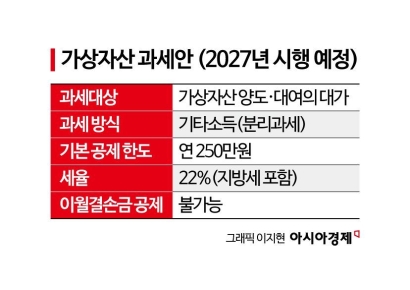 "Stocks Are Not Taxed, but Annual Crypto Gains Over 2.5 Million Won to Be Taxed Next Year... Investors Push Back"
- "Not Jealous of Winning the Lottery"... Entire Village Stunned as 200 Million Won Jackpot of Wild Ginseng Cluster Discovered at Jirisan
- "Rather Than Endure a 1.5 Million KRW Stipend, I'd Rather Earn 500 Million in the U.S." Top Talent from SNU and KAIST Are Leaving [Scientists Are Disappearing] ①
- "How Did an Employee Who Loved Samsung End Up Like This?"... Past Video of Samsung Electronics Union Chairman Resurfaces
- "Even With a 90 Million Won Salary and Bonuses, It Doesn’t Feel Like Much"... A Latecomer Rookie Who Beat 70 to 1 Odds [Scientists Are Disappearing] ③
Editor's Note [Beginner's Guide to Stocks] is a smart investment guide for 'stock beginners (stock + children).' We will kindly and simply explain unfamiliar stock stories to beginners.
© The Asia Business Daily(www.asiae.co.kr). All rights reserved.







