China Strengthens Solidarity with Middle Eastern Countries through Belt and Road Initiative... Largest Investment in Iraq
![[Photo by Xinhua News Agency]](http://www.asiae.co.kr/news/img_view.htm?img=2022020314455330768_1643867153.jpeg)
[Asia Economy Reporter Park Byung-hee] Major foreign media reported on the 2nd (local time) that China is strengthening cooperative relations with Middle Eastern and Arab countries, centered on Iraq. The foreign media combined the Belt and Road analysis report released on the day by the Green Finance Development Center (GFDC) of China’s Hohai University and their own analysis results to report this.
According to the GFDC report, the scale of financial investment and agreements China made through the Belt and Road last year was $59.5 billion, slightly down from $60.5 billion in 2020. The scale of agreements increased from $37 billion to $45.6 billion, but investment decreased from $23.4 billion to $13.9 billion.
Iraq emerged as the largest investor country in China’s Belt and Road policy by signing new construction contracts worth $10.5 billion with China last year. The Middle East and North Africa region accounted for the largest share of Belt and Road investments last year, making up 28.5% of total investments. This was followed by East Asia (20.43%), Sub-Saharan Africa (19.01%), Europe (13.19%), and West Asia (12.25%).
Christoph Nedopil Wang, director of GFDC, stated that the scale at which China is expanding ties with Middle Eastern and Arab countries is astonishing. He said, “I expected China to focus much more on Southeast Asian countries, but in reality, interest has grown in the Middle East and Africa, centered on Iraq.”
Controversies have arisen that China is trapping underdeveloped countries in debt through the Belt and Road, and with the spread of the COVID-19 virus, China’s Belt and Road investment scale has recently decreased. The current investment scale is only about half of what it was before the COVID-19 pandemic. However, investment in Middle Eastern Arab countries is increasing.
According to GFDC, China’s Ministry of Commerce’s five-year overseas investment plan through 2025, including the Belt and Road, is $550 billion, which is 25% less than the previous five-year investment scale of $740 billion from 2016 to 2020. However, GFDC explained that construction investment and contract scales for Middle Eastern and Arab countries are planned to increase by 360% and 116%, respectively, with a particular focus on energy and transportation infrastructure investments.

Many Western companies still hesitate to invest in Iraq due to political instability and repeated sporadic armed conflicts.
The interests of China, which wants to expand energy imports, and Iraq, which wants to increase trade with China as well as technology exchange, coincide, leading to expanded exchanges between China and Iraq.
China is the third-largest importer of crude oil from Iraq. Iraqi officials want Chinese investment to improve aging social infrastructure. Construction contracts between Iraq and China include building a large-scale medium oil power plant in the Karbala region, rebuilding the international airport in Nasiriyah, and developing the Mansuriya gas field near the Iranian border. In December last year, Iraq signed a contract with China Power Construction Corporation and Chinese construction company Sinotech to build 1,000 schools. China is expected to receive payment for school construction in petroleum products.
Coincidentally, China’s expansion of investment in the Middle East overlaps with the period when the United States is reducing its role in the Middle East. Last year, the U.S. officially ended the combat mission of the U.S.-led international coalition to defeat the Islamic State (IS). The number of U.S. troops stationed in Iraq, which reached 170,000 in 2007, is now only 2,500. These 2,500 stationed troops have also ended combat missions and are focusing on training and advisory roles.
Hot Picks Today
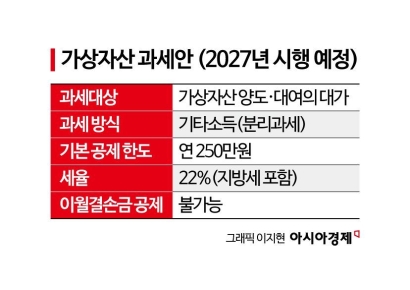 "Stocks Are Not Taxed, but Annual Crypto Gains Over 2.5 Million Won to Be Taxed Next Year... Investors Push Back"
- "Not Jealous of Winning the Lottery"... Entire Village Stunned as 200 Million Won Jackpot of Wild Ginseng Cluster Discovered at Jirisan
- "Rather Than Endure a 1.5 Million KRW Stipend, I'd Rather Earn 500 Million in the U.S." Top Talent from SNU and KAIST Are Leaving [Scientists Are Disappearing] ①
- "How Did an Employee Who Loved Samsung End Up Like This?"... Past Video of Samsung Electronics Union Chairman Resurfaces
- "Even With a 90 Million Won Salary and Bonuses, It Doesn’t Feel Like Much"... A Latecomer Rookie Who Beat 70 to 1 Odds [Scientists Are Disappearing] ③
Meanwhile, last year, there were no investments or contracts related to coal under China’s Belt and Road policy, and transactions in eco-friendly energy slightly increased, reaching a record high of $6.3 billion. GFDC analyzed that this shows a preference for smaller-scale and sustainable projects.
© The Asia Business Daily(www.asiae.co.kr). All rights reserved.







