Shaken Chinese Stock Market... Seeking Opportunities at the 'Zhengyiandao'
![[Image source=Yonhap News]](http://www.asiae.co.kr/news/img_view.htm?img=2021030617173618373_1615018656.jpg)
[Asia Economy Reporter Hwang Junho] Although the Chinese stock market fluctuated ahead of the Chinese New Year, an analysis has emerged emphasizing the need to pay attention to the expectations for the National People's Congress, where "economic stimulus" will be the key theme. Hana Financial Investment forecasted on the 31st that "external negative factors have been sufficiently reflected, and the effect of the National People's Congress is anticipated" for the Chinese stock market after the Lunar New Year.
On the 27th, the Shanghai Composite Index and the Shenzhen ChiNext Index fell by -7.7% and -16.9%, respectively, from their peaks on December 14 of last year. This was the result of institutions and foreign investors proactively reducing their holdings due to external negative factors ahead of the Lunar New Year.
On the surface, this adjustment coincides with the period of US-led tightening and rising real interest rates, and appears to be influenced by these factors. However, in reality, short-term investor sentiment contraction played a significant role. Since December of last year, the shock to supply and demand from Chinese institutions and individual investors has not been resolved. Since December of last year, new fund issuances and individual investor margin trading in China have also dropped to their lowest levels since 2021.
However, it is positive that investor sentiment and supply-demand passed their lows just before the Lunar New Year. The overall trading volume share of growth stocks and thematic stocks, as compiled by Hana Financial Investment, has already fallen to the lowest point since the pandemic. From the perspective of investor sentiment and supply-demand, Hana Financial Investment believes that domestic and external negative factors have been sufficiently reflected.
![[Image source=Yonhap News]](http://www.asiae.co.kr/news/img_view.htm?img=2020061121063490125_1591877193.jpg)
A full-fledged National People's Congress market phase is also expected. Over the past 20 years, the monthly probability of stock price increases in the mainland market has been overwhelmingly high in February (77%). This is due to the overlapping of policy announcements by local governments and ministries in February ahead of the March National People's Congress, as well as the peak loan season in the banking sector.
Researcher Kim Kyunghwan of Hana Financial Investment analyzed, "Considering the contents of the two sessions (National People's Congress) of 30 local governments that ended in late January, the expectation for the February market after the Lunar New Year is deemed valid."
In particular, the fact that the National People's Congress follows local people's congresses where local governments focused on "economic stimulus" raises expectations for this National People's Congress. Ahead of the opening of the two sessions (National People's Congress) on March 5, 29 provincial and municipal local governments (excluding Beijing) hold their local two sessions in January.
The growth targets set by the 30 provinces average 5.5%. The weighted average is 6.1%, slightly below last year's target. However, this is higher than the actual growth rate expected by the current market concerns. The government work report at the National People's Congress in March is likely to set the target with 5.5% as the upper limit.
Hot Picks Today
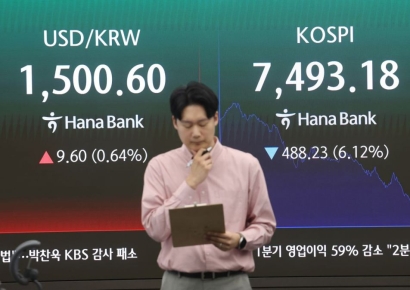 After Topping 8,000 Instead of Hitting 10,000... KOSPI Plunges—When Will It Rebound?
- "Samsung and Hynix Were Once for the Underachievers"... Hyundai Motor Employee's Lament
- [Breaking] Court Rules Against Samsung Electronics Union...1 Billion Won per Day Penalty for Exceeding Strike Scope
- Stronger Fines for Personal Data Leaks Start Tomorrow... Higher Sales Standards Applied
- "That? It's Already Stashed" Nightlife Scene Crosses the Line [ChwiYak Nation] ③
Researcher Kim stated, "There is a need to trust the direction of the Chinese government, which differentiates itself from major countries," and "maintains the view of expanding the weighting of China and Hong Kong." He added, "We expect confirmation of the bottom in investor sentiment and the stock market in January-February, a rebound after confirming the economic bottom in Q1, and a rebound after confirming the earnings bottom in Q2." He explained, "Among the risks in Q1 such as quarantine (zero-COVID), real estate risk, and commodity price resurgence, quarantine has entered a controllable area, and a practical easing of the 'zero-COVID' strategy is expected after the Beijing Olympics, while commodity prices are expected to stabilize downward after February."
© The Asia Business Daily(www.asiae.co.kr). All rights reserved.







