Minor Sexual Assault Victims Facing Court... "Protection Rollback, System Improvement Needed"

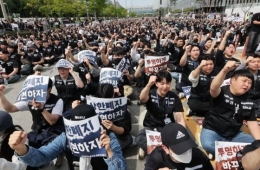
[Asia Economy Reporter Baek Kyunghwan] Following the Constitutional Court's ruling that requires minor victims of sexual crimes to appear in court and testify about their victimization, the courts and the Ministry of Justice have launched urgent measures. The core issue is that the state and relevant ministries must support victims to prevent secondary harm in court, with proposals to pre-discuss specific questioning methods or use relay devices.
According to the legal community on the 11th, the 'Modern Society and Sexual Crime Research Association (Chairperson: Justice Oh Kyungmi of the Supreme Court)' held an emergency forum on the evening of the previous day under the theme of 'Practical Measures Related to Video Recorded Testimonies of Minor Sexual Violence Victims.' This forum was organized to discuss practical measures to prevent secondary harm to minor victims following the Constitutional Court's ruling last month declaring Article 30, Paragraph 6 of the Sexual Violence Punishment Act unconstitutional.
Previously, on the 23rd of last month, the Constitutional Court ruled Article 30, Paragraph 6 of the Act on Special Cases Concerning the Punishment of Sexual Crimes unconstitutional. The Sexual Violence Punishment Act stipulates that if the victim of a sexual violence crime is under 19 years old or has physical or mental disabilities that impair their ability to discern or make decisions, the victim's testimony and investigation process can be recorded. Paragraph 6 of Article 30 states that "the victim's testimony recorded in this video can be used as evidence in the preparatory hearing or trial if its authenticity is recognized through the testimony of the victim, a trusted person who accompanied the investigation process, or a testimony assistant."
However, the Constitutional Court ruled unconstitutional, stating, "The defendant's right to a fair trial must be guaranteed," and "Given the nature of sexual violence crimes, there are many cases where the video-recorded testimony of minor victims is key evidence, yet the right to cross-examine to challenge distortion or errors in the main testimonial evidence is not guaranteed."
At the forum, concerns and criticisms were raised about situations where, even if there is an initial video recording of the victim's testimony or the investigative agency has obtained a confession, if the defendant denies it during the trial, the victim or witnesses must be called to court.
Kim Ji-eun, Deputy Director of the Daegu Sunflower Center, argued, "Research on the developmental stages of children and on child and adolescent victims of sexual violence is necessary, and the state and ministries should review measures to minimize secondary harm in court." She emphasized the need for psychological inoculation before court testimony to protect children from further trauma. Legal professionals also stated that understanding children's developmental stages and mastering effective questioning methods tailored to preschoolers, children under 13, and adolescents is essential.
Cho Hyun-joo, a public defender specializing in victim representation at the Korea Legal Aid Corporation, said that when applying to have a minor victim testify as a witness, preparation or consultation on the questioning method should be held before the witness examination date or during the trial. If a testimony assistant participated during the investigation, the testimony assistant's report should be separated from the evidence records and submitted through the prosecutor in advance, or the court should request the testimony assistant who participated to submit the report prepared during the investigation. Cho also proposed pre-discussion on specific questioning methods, considering the victim's young age or condition, as typical witness questioning tends to be in the form of long questions and short answers.
Kim Dong-hyun, a research fellow at the Judicial Policy Research Institute, predicted that applying the principles of the Criminal Procedure Act as is would cause severe secondary harm to minor victims in court. However, considering the difficulty of discussing the defendant's right to defense, he mentioned the need to find a compromise within the current legal framework, such as minimizing direct questioning when submitting video-recorded testimonies.
There were also criticisms that protection for minor victims has inevitably regressed. Oh Jeong-hee, a prosecutor at the Seoul High Prosecutors' Office, proposed holding closed hearings to prevent exposure of personal information or privacy, and suggested witness questioning via relay devices such as video to prevent shock caused by the courtroom environment or face-to-face encounters with the defendant, including the defendant's removal from the courtroom. Additionally, to prevent secondary harm during the defendant's cross-examination, she recommended utilizing support systems such as accompaniment by trusted persons, testimony assistants, and victim lawyers.
Hot Picks Today
 Cerebras Soars 70% on IPO Debut: Is Nvidia's Reign Ending as a New AI Semiconductor Power Emerges?
- "He's Handsome, It's Such a Pity?"... Lawyer Responds to Bizarre 'Appearance Evaluation' of High School Girl Murder Suspect
- "After Vowing to Become No. 1 Globally, Sudden Policy Brake Puts Companies’ Massive Investments at Risk"
- "Mom, Isn't It Comfortable Living With Me?"... 'Unexpected Result' Shows Increased Drinking Out of Frustration
- "Nothing Has Changed": Union Rejects Samsung's Proposal... Further Talks Fail as Strike Proceeds
Meanwhile, following the Constitutional Court's decision, the Ministry of Justice has also begun preparing supplementary measures. On the 5th, it launched the 'Special Committee on the Amendment of the Gender Violence Punishment Act' and started discussions on protection measures for child victims of sexual violence. Minister of Justice Park Beom-gye also personally stated, "Despite the Constitutional Court's ruling of unconstitutionality, the goal of protecting child victims of sexual violence remains valid," and urged, "Please promptly provide opinions on improving the criminal law system."
© The Asia Business Daily(www.asiae.co.kr). All rights reserved.