Prolonged Lockdown in Xi'an... Will Memory Chip Prices Rebound Sooner?
Samsung Electronics Continues Production Cuts at Plants 1 and 2 as Full Lockdown Exceeds Two Weeks
Ongoing Production Process Issues Expected to Slow Memory Price Decline

[Asia Economy Reporter Lee Hye-young] As the full lockdown of Xi'an, China, due to a COVID-19 cluster infection continues into its second week, warning signs have been triggered in the global memory semiconductor market. Samsung Electronics, which is operating its semiconductor factory production lines in Xi'an on a reduced scale, is closely monitoring the prolonged lockdown situation and any additional measures from authorities. Along with the Xi'an situation, variables related to semiconductor production processes have emerged one after another since the beginning of the year, leading to forecasts that memory semiconductor prices could unexpectedly shift to an upward trend.
According to the industry on the 6th, Samsung Electronics is continuing its emergency operations by running its NAND flash production lines 1 and 2 in Xi'an on a reduced scale compared to before.
After the lockdown order was issued in Xi'an, Samsung Electronics tried to minimize the impact on production and customer supply by mobilizing as much available manpower as possible, but with disruptions in both material and personnel movement, it eventually reduced operations and cut production six days into the lockdown, on December 29 last year. At that time, Samsung Electronics announced through its newsroom that it was "carrying out flexible adjustments of the production lines." Although the exact scale of the facility operation reduction was not disclosed, it implied that some impact on supply to customers was inevitable.
Within the industry, as the lockdown measures have extended beyond two weeks entering a prolonged phase, it is expected that the scope of Samsung Electronics' so-called 'flexible adjustments' will expand further. This is because Chinese authorities, advocating a 'zero COVID' policy, are unlikely to ease their strict quarantine measures ahead of the Lunar New Year holiday starting at the end of January and the Beijing Olympics. Local media also report that although the number of infections in Xi'an has dropped below 100, the possibility of lifting the lockdown in the immediate future remains low.
An industry official said, "Samsung had a painful experience last year when its semiconductor factory in Austin, USA, was forced to halt operations due to a cold wave, so it will actively adjust to the Xi'an situation as much as possible," adding, "Since there is no problem with the infrastructure itself, including electricity, it will not reach the worst-case scenario."

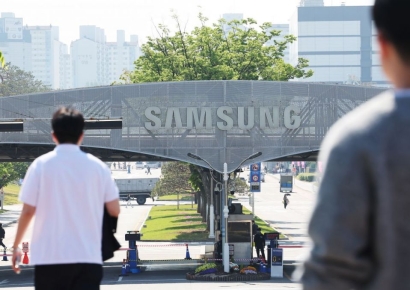
Samsung Electronics' NAND flash production plant in Xi'an, Shanxi Province, China
View original imageThere is also analysis that the supply shock caused by the prolonged Xi'an lockdown could lead to a rebound in memory semiconductor prices. The Xi'an factory accounts for 42.5% of Samsung's total NAND production and about 15% of global production. Especially with the recent fire at ASML's extreme ultraviolet (EUV) lithography equipment factory in Berlin, Germany, and the earthquake in Taiwan where TSMC is located, expectations are rising that companies' semiconductor purchasing and inventory sentiment will increase compared to before.
According to market research firm DRAMeXchange, the spot price of DDR4 8Gb DRAM, mainly used in PCs, was $3.700 as of the 5th (local time), showing a steady upward trend since mid-December last year.
Hot Picks Today
 "Now Our Salaries Are 10 Million Won a Month" Record High... Semiconductor Boom Drives Performance Bonuses at Major Electronic Component Firms
- "Not Everyone Can Afford This: Inside the World of the True Top 0.1% [Luxury World]"
- While All Eyes Were on Samsung and Hynix, This Company Surged 50% to New Highs in Four Days [Weekend Money]
- "Heading for 2 Million Won": The Company the Securities Industry Says Not to Doubt [Weekend Money]
- Experts Already Watching Closely..."Target Price Set at 970,000 Won" Only Upward Momentum Remains [Weekend Money]
Predictions continue that the down cycle of memory semiconductors will end sooner than expected due to various factors such as the Xi'an lockdown and global foundry (semiconductor contract manufacturing) issues. Lee Won-sik, a researcher at Korea Investment & Securities, said, "It is understood that Samsung Electronics has started to reduce the input volume of NAND wafers partially, and Micron is also experiencing disruptions in its DRAM back-end production lines," adding, "The strong spot prices are narrowing the gap with fixed prices, and the price negotiation environment is changing positively for suppliers."
© The Asia Business Daily(www.asiae.co.kr). All rights reserved.