Lee Jae-myung "First Home Acquisition Tax 50% Reduction Threshold Raised from 400 Million to 600 Million Won"
Ahead of the Election, Current Government Reverses 'Real Estate Policy'
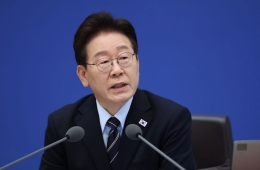
[Asia Economy Reporters Oh Ju-yeon and Jeon Jin-young] As public sentiment on real estate emerges as a decisive factor in next year's presidential election, real estate tax policy pledges shaped by political calculations are shaking the market. In particular, Lee Jae-myung, the ruling Democratic Party presidential candidate, has put forward acquisition tax reduction pledges following capital gains tax and comprehensive real estate tax, distancing himself from the current government that failed to curb housing prices, in an effort to court voter support.
![[Image source=Yonhap News]](http://www.asiae.co.kr/news/img_view.htm?img=2021122818225779100_1640683377.jpg)
On the morning of the 29th, Lee announced via social media (SNS) that he would "reduce the acquisition tax burden for actual homebuyers," raising the acquisition tax 50% reduction threshold for first-time homebuyers from 400 million won to 600 million won in the metropolitan area, and from 300 million won to 500 million won in other regions. He also said he would raise the highest acquisition tax rate threshold from the current 900 million won to 1.2 billion won.
Lee emphasized, "My real estate tax principle is to raise holding taxes to an appropriate level and lower transaction taxes," adding, "I will reasonably adjust the increased acquisition tax burden caused by rising housing prices to ease the public's burden and establish proper real estate tax principles."
Earlier, Lee had proposed pledges such as a one-year deferral of the capital gains tax surcharge and easing the comprehensive real estate tax for multi-homeowners, showing conflict with the government. Regarding this, Lee emphasized differentiation from the Moon Jae-in administration in a radio interview that morning, saying, "It would be good to see it as a 'difference' from the current government's real estate policy direction." He stated, "It is clear that the real estate policy has failed," and added, "The cause of failure must be removed and changed, and the core is 'respect for the market.'"
Hot Picks Today
 "Stocks Are Not Taxed, but Annual Crypto Gains Over 2.5 Million Won to Be Taxed Next Year... Investors Push Back"
- "Don't Throw Away Coffee Grounds" Transformed into 'High-Grade Fuel' in Just 90 Seconds [Reading Science]
- Signed Without Viewing for 1.6 Billion Won... Jamsil and Seongbuk Jeonse Prices Jump 200 Million Won in a Month [Real Estate AtoZ]
- "Groups of 5 or More Now Restricted"... Unrelenting Running Craze Leaves Citizens and Police Exhausted
- "Even With a 90 Million Won Salary and Bonuses, It Doesn’t Feel Like Much"... A Latecomer Rookie Who Beat 70 to 1 Odds [Scientists Are Disappearing] ③
Meanwhile, when asked whether the reason for repeatedly mentioning real estate tax reform was to persuade voters in the metropolitan area, Lee replied, "I cannot say there is none."
© The Asia Business Daily(www.asiae.co.kr). All rights reserved.