Economic Groups Oppose Hyundai Heavy's Ordinary Wage Ruling, Claiming It Only Causes Industrial Site Confusion and Conflict (Comprehensive)
KCCI and FKI Issue Joint Statement Expressing Concerns Over Deteriorating Corporate Management Conditions

[Asia Economy Reporters Lee Hyeyoung and Yoo Jehoon] Major economic organizations on the 16th collectively voiced concerns that the recent final victory of Hyundai Heavy Industries workers in a lawsuit demanding the inclusion of bonuses in the ordinary wages will place a significant burden on future corporate management.
The Korea Employers Federation (KEF) issued a statement expressing worry that the Supreme Court's ruling in favor of the labor union in a 600 billion KRW ordinary wage lawsuit could lead to enormous labor cost burdens.
KEF stated, "By recognizing regular bonuses as part of ordinary wages, the Supreme Court denied the principle of good faith and trust (Shinui Principle), putting companies that relied on previously agreed terms between labor and management in a situation where they must bear massive additional costs."
KEF particularly noted, "The Supreme Court narrowed the existing standards for judging the Shinui Principle, denying it on the grounds that even if a company faces managerial difficulties, if the employer made reasonable and objective business forecasts, it could have sufficiently anticipated the deterioration of business conditions." They added, "The Supreme Court considers that changes in overseas economic conditions and their impacts are all predictable; however, today's industry is rapidly changing to the extent it is called the Fourth Industrial Revolution, and unpredictable crises and changes such as COVID-19 occur frequently."
KEF continued, "It is practically impossible to require corporate managers to predict an unpredictable and rapidly changing economic environment and respond to business deterioration," emphasizing, "This unreasonable judgment, which does not align with reality, risks causing confusion and conflict in the industrial field."
KEF also stated, "In a situation where the judicialization of labor issues is continuously raised, this ruling can only heighten such concerns," urging, "We hope the courts respect the autonomous practices and trust relationships between labor and management and make reasonable judgments that align with the rapidly changing business environment and industrial realities."

The Korea Economic Research Institute (KERI), under the Federation of Korean Industries, also opposed the Supreme Court's decision on the same day and called for legislative supplementation by the government.
In a commentary, KERI pointed out, "In a situation where national competitiveness has weakened due to delayed economic recovery caused by the resurgence of COVID-19, this ruling, which does not recognize the Shinui Principle, will lead to a sudden increase in unforeseen labor costs and heighten uncertainty in corporate management."
KERI criticized the Supreme Court for not recognizing the Shinui Principle, which was the core issue in the lawsuit that lasted nine years. Existing precedents state that if paying retroactive ordinary wages causes significant managerial difficulties or threatens the survival of a company, it violates the fundamental civil law principle of good faith, and Hyundai Heavy Industries is also in such a situation, but the Supreme Court did not accept this.
KERI expressed concern, saying, "Hyundai Heavy Industries recorded a cumulative deficit of 320 billion KRW in the third quarter this year, indicating very difficult corporate management conditions," and added, "The ruling's failure to apply the Shinui Principle is expected to increase exhausting disputes and lawsuits related to ordinary wages."
They further emphasized, "To prevent ordinary wage lawsuits from weakening corporate competitiveness, it is desirable to first consider the trust formed between labor and management during wage negotiations and additionally review business indicators comprehensively to assess managerial difficulties."
Hot Picks Today
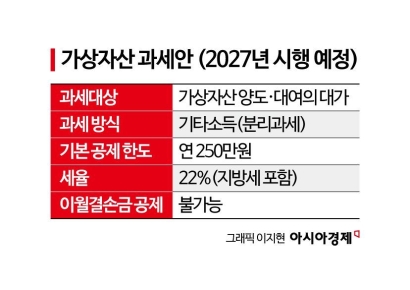 "Stocks Are Not Taxed, but Annual Crypto Gains Over 2.5 Million Won to Be Taxed Next Year... Investors Push Back"
- "Not Jealous of Winning the Lottery"... Entire Village Stunned as 200 Million Won Jackpot of Wild Ginseng Cluster Discovered at Jirisan
- "Even With a 90 Million Won Salary and Bonuses, It Doesn’t Feel Like Much"... A Latecomer Rookie Who Beat 70 to 1 Odds [Scientists Are Disappearing] ③
- "Rather Than Endure a 1.5 Million KRW Stipend, I'd Rather Earn 500 Million in the U.S." Top Talent from SNU and KAIST Are Leaving [Scientists Are Disappearing] ①
- "How Did an Employee Who Loved Samsung End Up Like This?"... Past Video of Samsung Electronics Union Chairman Resurfaces
KERI also urged, "Since the essence of the ordinary wage controversy lies in legislative deficiencies, please prepare specific guidelines regarding the application of the Shinui Principle."
© The Asia Business Daily(www.asiae.co.kr). All rights reserved.







