KDI "After-School Programs and Regular Classes Should Share Information on Children's Interests, Characteristics, and Learning History"
Researcher Kim In-kyung Presents 'Improvement Directions for Elementary After-School Programs for Child Development'

[Sejong=Asia Economy Reporter Kim Hyunjung] As the educational environment rapidly changes due to the spread of COVID-19, there is a growing recognition of the need to strengthen the substantive educational and care functions of schools. In this context, it has been argued that after-school programs should share information related to regular classes and student guidance and be linked to the school curriculum. Additionally, it was diagnosed that sufficient care accompanied by positive interactions must be provided to prevent negative emotional issues such as depression, aggression, and deterioration of peer relationships.
Kim Inkyung, a research fellow at the Korea Development Institute (KDI), stated this on the 15th in the KDI Policy Forum article titled "Directions for Improving Elementary After-School Programs for Child Development." The after-school programs mentioned in the study refer to educational and care activities conducted within the school for a certain period, reflecting the demands of students and parents separately from regular classes. These programs operate by allowing students (or parents) to select from various subjects and special aptitude programs.
However, as a result of analyzing the first and second-year data of the "Korean Children and Youth Panel Survey 2018," Researcher Kim found that the relationship between participation in after-school programs and elementary students' development was not consistently evident. The analysis showed that only participation in private education improved satisfaction with school grades (0.206 standard deviations), increased academic enthusiasm in terms of vigor (0.175), efficacy (0.256), and immersion (0.221), and reduced aggression (0.198). The scores for related scales were calculated by summing the category scores of items directly answered by the children and standardized using the mean and standard deviation.
On the other hand, for after-school programs, the relationship between participation time (less than 1 hour, 2?3 hours, more than 2 hours, etc.) and child development scales appeared inconsistent. In the case of private education, participation for 1?2 hours improved perseverance, participation for more than 1 hour improved academic efficacy and reduced aggression, and participation for more than 2 hours increased satisfaction with school grades. Participation for more than 3 hours enhanced dedication to studies, vigor, immersion and attention, cooperation, peer relationships, and health status evaluation.
Regarding this, Researcher Kim explained, "The differences in program composition according to participation time in after-school programs and private education, as well as differences in teaching and learning methods and instructor characteristics between after-school programs and private education, may have caused this." He also noted, "The positive relationship between child development scales and household income appears to be offset when parenting attitudes and relationships with teachers improve."
To deepen students' cognitive abilities through after-school programs, Researcher Kim suggested that information related to regular classes and student guidance should be shared and linked to the curriculum of individual schools. He said, "If information such as children's interests, experiences, developmental characteristics, and learning history is shared between regular elementary classes and after-school programs, after-school programs can use this as a basis for teaching and learning that enhances academic enthusiasm." He added, "In regular classes, students learn accumulated academic concepts and systems, while in after-school programs, they can experience the practicality of learning by adding everyday experiences, thereby fostering intrinsic motivation for learning."
He emphasized, "Cooperation between regular class teachers and after-school instructors is necessary so that after-school instructors can understand the curriculum of individual schools." He stressed, "If after-school programs are operated integratively with regular classes, they can differentiate themselves from private education, which operates disconnected from specific class content."
Hot Picks Today
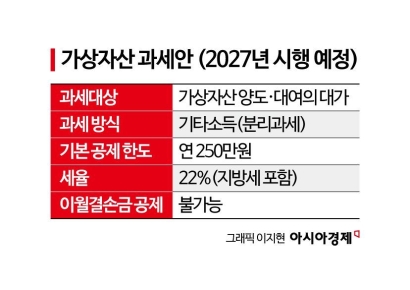 "Stocks Are Not Taxed, but Annual Crypto Gains Over 2.5 Million Won to Be Taxed Next Year... Investors Push Back"
- "Not Jealous of Winning the Lottery"... Entire Village Stunned as 200 Million Won Jackpot of Wild Ginseng Cluster Discovered at Jirisan
- "Even With a 90 Million Won Salary and Bonuses, It Doesn’t Feel Like Much"... A Latecomer Rookie Who Beat 70 to 1 Odds [Scientists Are Disappearing] ③
- "Rather Than Endure a 1.5 Million KRW Stipend, I'd Rather Earn 500 Million in the U.S." Top Talent from SNU and KAIST Are Leaving [Scientists Are Disappearing] ①
- "How Did an Employee Who Loved Samsung End Up Like This?"... Past Video of Samsung Electronics Union Chairman Resurfaces
He continued, "To conduct after-school programs for students belonging to multiple classes while reflecting the school curriculum within the program, the regular class teachers' lessons must have a similar structure, which means that professional learning communities among teachers need to be activated." He also insisted, "At the same time, to develop students' socio-emotional competencies, after-school instructors must provide sufficient care accompanied by positive interactions." Furthermore, he added, "To this end, it is necessary to establish a mandatory training course for after-school instructors and consider selecting qualified individuals among those who complete the course who can support the holistic development of children."
© The Asia Business Daily(www.asiae.co.kr). All rights reserved.







