Lee Jae-myung Highlights Specialty as 'Policy Expert'... Drives Livelihood Reform Initiative
Development Profit Recovery Act
Commercial Building Lease Protection Act
Youth Employment Promotion Act, etc.
Lee Jae-myung's Reform-Driven
Practical Livelihood Legislation Drive
![[Image source=Yonhap News]](http://www.asiae.co.kr/news/img_view.htm?img=2021112406540933204_1637704450.jpg)
[Asia Economy Reporters Jeon Jinyoung and Gu Chae-eun] On the 24th, Lee Jae-myung, the Democratic Party of Korea's presidential candidate, emphasized the institutionalization within the regular National Assembly session of laws including the Development Gain Recovery Act, considered a hallmark of the "Lee Jae-myung-style reform," as well as the Commercial Building Lease Protection Act and the Youth Employment Promotion Act. This signals his intention to confront the "Daejang-dong preferential treatment allegations," a major issue after the primary, head-on through reform legislation, while also aiming to secure leadership on youth employment and COVID-19 livelihood issues.
Lee is also scheduled to announce four major visions for small and medium-sized enterprise (SME) policies in the afternoon and pledge to expand government venture investments. Following the announcement of the "Digital Transformation," the first presidential pledge by the election campaign committee the previous day, he is intensifying his focus on a "policy-driven election" for the second consecutive day.
This appears to be part of a strategy to highlight livelihood reform legislation that could serve as a "sample of the next Lee Jae-myung administration" by making it visible within this December's regular National Assembly session, thereby gaining an advantage as the ruling party's candidate. It is also a move to strengthen his image as a "prepared president" by announcing pledges one step ahead of Yoon Seok-youl, the People Power Party's presidential candidate. A representative from Lee's camp stated, "We plan to emphasize the prompt passage of livelihood bills to respond to the COVID-19 crisis."
The Commercial Building Lease Protection Act to be discussed at the "Livelihood Reform Legislation Promotion Meeting" on this day includes provisions to extend rent special measures until the end of the COVID-19 pandemic. The Youth Employment Promotion Act mandates public institutions to hire at least 3% of their workforce annually from unemployed youth. The Development Gain Recovery Act, which Lee particularly stresses for passage during the regular session, has been proposed in the National Assembly and is undergoing public debate. Examples include the "Urban Development Act Amendment" (proposed by Assemblyman Jin Seong-jun), which limits private investors' equity and profit rates in public development projects; the "Development Gain Recovery Act Amendment" (proposed by Assemblyman Park Sang-hyuk), which increases private development charges and allows development gains to be used for public purposes; and the "Urban Development Act Amendment" (proposed by Assemblyman Hong Jeong-min), which strengthens public supervisory functions in development projects.
Hot Picks Today
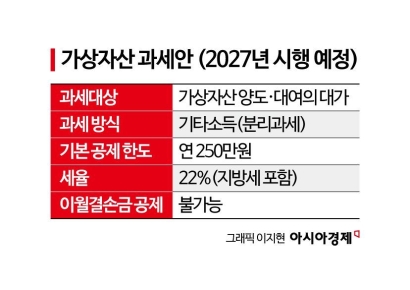 "Stocks Are Not Taxed, but Annual Crypto Gains Over 2.5 Million Won to Be Taxed Next Year... Investors Push Back"
- "Not Jealous of Winning the Lottery"... Entire Village Stunned as 200 Million Won Jackpot of Wild Ginseng Cluster Discovered at Jirisan
- "Jeong Yu-kyung Is a Neighbor"...Itaewon Standalone House with Record 23.2 Billion Won Appraisal Up for Auction [Real Estate AtoZ]
- "How Did an Employee Who Loved Samsung End Up Like This?"... Past Video of Samsung Electronics Union Chairman Resurfaces
- "Even With a 90 Million Won Salary and Bonuses, It Doesn’t Feel Like Much"... A Latecomer Rookie Who Beat 70 to 1 Odds [Scientists Are Disappearing] ③
Meanwhile, immediately after the meeting, Lee will visit the Korea Federation of SMEs to announce four major visions for SME policies: ▲restoring the balance of power and promoting win-win cooperation between large and small-to-medium enterprises; ▲building an economy strong in SMEs and a society where SME workers are happy; ▲significantly expanding government venture investments and establishing large-scale funds; and ▲enhancing the competitiveness of small business owners and traditional markets through field-centered support. Lee emphasized, "We must turn the crisis of great transformation into a growth opportunity through massive government investment," adding, "A market order of free creativity and innovation cannot be established without fairness."
© The Asia Business Daily(www.asiae.co.kr). All rights reserved.