'Loan Interest Rate Controversy' FSC Summons Banks, Will the Right to Request Interest Rate Reduction Be Effective?
Major Commercial Banks Face Calls for Effective Interest Rate Reduction Requests
Lack of Enforcement and Incentives Likely to Spark Effectiveness Debate

[Asia Economy Reporter Jin-ho Kim] Amid ongoing controversy over the 'sharp rise in loan interest rates,' the Financial Supervisory Service (FSS) has urged major commercial banks to activate the right to request interest rate reductions. This move is interpreted as a response to public criticism that banks are only 'watching from the sidelines' despite the sharp increase in interest burdens on ordinary citizens. However, there are considerable concerns that the right to request interest rate reductions has limitations in resolving the issue, and questions about its 'effectiveness' are expected to persist.
On the 19th at 3 p.m., the FSS held a meeting chaired by the Senior Deputy Governor at the Seoul Banking Hall with vice presidents in charge of loans from major commercial banks. The meeting was held as part of the FSS's review of banks' loan interest rate calculation systems. Vice presidents responsible for loans from eight banks?KB Kookmin Bank, Shinhan Bank, Woori Bank, Hana Bank, NH Nonghyup Bank, IBK Industrial Bank of Korea, SC First Bank, and Citibank?along with executives from the Korea Federation of Banks attended.
Senior Deputy Governor Lee Chan-woo said in his opening remarks, "Given the growing concerns and worries of the public due to the increased interest burden caused by the continued rise in interest rates, today's meeting holds great significance."
Regarding the controversy over the widening gap between deposit and loan interest rates, Lee pointed out, "Loan interest rates continue to rise due to factors such as the increase in market interest rates. Deposit interest rates also reflect the rise in market rates, but the increase is not as significant as that of loan interest rates." He added, "If the upward trend in market interest rates continues, the gap between deposit and loan interest rates may widen further."
The FSS plans to examine the transparency and rational operation of banks' loan interest rate calculation systems during the meeting. This includes reviewing whether the abolition of preferential interest rates by banks, following the tightening of household loans, was appropriate.
In this context, the FSS decided to request measures to activate the right to request interest rate reductions so that the interest burden on financial consumers can be reduced even slightly during the period of rising interest rates.
Senior Deputy Governor Lee stated, "Although the right to request interest rate reductions has been legislated, there are still many shortcomings in its actual operation. Insufficient information is provided when informing financial consumers about this right, and explanations for reasons for refusal also seem inadequate." He urged, "We ask that the financial authorities promptly implement the improvement measures they announced so that more financial consumers can benefit from utilizing the right to request interest rate reductions."
Hot Picks Today
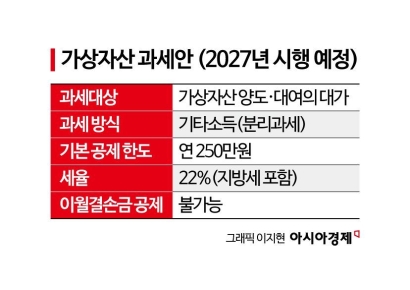 "Stocks Are Not Taxed, but Annual Crypto Gains Over 2.5 Million Won to Be Taxed Next Year... Investors Push Back"
- "Not Jealous of Winning the Lottery"... Entire Village Stunned as 200 Million Won Jackpot of Wild Ginseng Cluster Discovered at Jirisan
- "Even With a 90 Million Won Salary and Bonuses, It Doesn’t Feel Like Much"... A Latecomer Rookie Who Beat 70 to 1 Odds [Scientists Are Disappearing] ③
- "Rather Than Endure a 1.5 Million KRW Stipend, I'd Rather Earn 500 Million in the U.S." Top Talent from SNU and KAIST Are Leaving [Scientists Are Disappearing] ①
- "How Did an Employee Who Loved Samsung End Up Like This?"... Past Video of Samsung Electronics Union Chairman Resurfaces
However, it remains uncertain whether the activation of the right to request interest rate reductions, as demanded by the FSS, will quell the controversy over the sharp rise in loan interest rates. Since banks cannot be penalized for non-compliance and the system mainly focuses on existing borrowers, criticisms regarding its limitations are expected to continue. According to financial authorities, although the number of applications for the right to request interest rate reductions has increased significantly each year, the number of accepted cases falls short. The acceptance rate is known to be around 40% on average.
© The Asia Business Daily(www.asiae.co.kr). All rights reserved.







