Continued Dollar Strength, When Will It Ease?

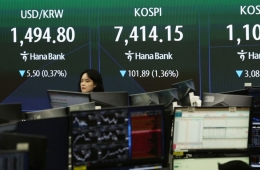
[Asia Economy Reporter Song Hwajeong] The dollar's ultra-strong phase continues. Although the strength is sustained, the additional strength is expected to be limited and gradually ease.
According to Hi Investment & Securities on the 20th, the dollar index surpassed 96 during trading on the 17th, reaching the highest level of the year. It is the highest level since July last year.
The sharp decline of the euro, differentiation in monetary policy and economic momentum are cited as factors behind the dollar's strength. Park Sanghyun, a researcher at Hi Investment & Securities, explained, "The phased return to normal life (With Corona) in Germany and major European countries is once again threatened by a rapid increase in new COVID-19 cases, leading to downward pressure on the euro's value. Additionally, the strengthening of U.S. economic momentum compared to the Eurozone economy is fueling the dollar's strength." The U.S. is dominating the global economy and industry, and global liquidity is flowing into the U.S. due to relatively high market interest rates and a strong stock rally, supporting the dollar's strength. Furthermore, the possibility of an early interest rate hike due to expanding inflationary pressures in the U.S. is also considered a factor for the dollar's strength.
Concerns have arisen that the sustained dollar strength could lead to instability in emerging market financial markets or a recurrence of global capital outflows from emerging markets, but opinions suggest it is not yet a stage to worry. Researcher Park said, "The dollar index is significantly different from the level recorded immediately after the pandemic last year, and this dollar strength is not triggered by an extreme safe-haven preference phenomenon like during the pandemic last year." He added, "This is reflected in the U.S. credit spread and emerging market credit spread, both of which remain stable." Park also noted, "Despite the dollar's strength, the depreciation of the yuan and the won is limited, indicating that the dollar's strength is unlikely to stimulate a global capital outflow from emerging markets."
Hot Picks Today
!["Rather Than Endure a 1.5 Million KRW Stipend, I'd Rather Earn 500 Million in the U.S." Top Talent from SNU and KAIST Are Leaving [Scientists Are Disappearing] ①](https://cwcontent.asiae.co.kr/asiaresize/93/2026051414165763158_1778735817.jpg) "Rather Than Endure a 1.5 Million KRW Stipend, I'd Rather Earn 500 Million in the U.S." Top Talent from SNU and KAIST Are Leaving [Scientists Are Disappearing] ①
"Rather Than Endure a 1.5 Million KRW Stipend, I'd Rather Earn 500 Million in the U.S." Top Talent from SNU and KAIST Are Leaving [Scientists Are Disappearing] ①
- "If That's the Case, Why Not Just Buy Stocks?" ETFs in Name Only, Now 'Semiconductor-Heavy' and a Playground for Short-Term Traders
- [Breaking] Two Days Before Strike... Central Labor Relations Commission Chair Park Soogeun Says "Differences Narrowing... Possibility of Agreement"
- Individual Investors Absorb Foreign Sell-Off... Concerns Over Becoming "Cannon Fodder" Emerge
- "No Cure Available, Spread Accelerates... Already 105 Dead, American Infected"
As the resurgence of COVID-19 in Europe subsides and inflationary pressures gradually ease, the dollar's strength is expected to ease with a time lag. Researcher Park analyzed, "At this point, the additional strength of the dollar is expected to be limited. Although economic momentum in non-U.S. regions is somewhat weakened and inflationary pressures are rising due to supply chain disruptions, signs of easing supply chain disruptions are becoming visible in some areas, such as the rebound in U.S. automobile industry operating rates in October. Although it will take some time, this suggests the possibility of economic momentum recovery and inflation pressure easing in non-U.S. regions." He added, "However, risks such as the still unstable situation in China and the potential escalation of U.S.-China conflicts remain risks that need to be closely monitored."
© The Asia Business Daily(www.asiae.co.kr). All rights reserved.