Government Unveils Enforcement Decree and Notice to Block Loopholes in 'Google Gapjil Prevention Act'...
Google and Apple 'In-App Payment Mandate' Ban Law
Passed in August National Assembly Judiciary Committee and Plenary Session
Google Faces 'Loophole' Controversy, Apple Essentially Rejects
KCC Collects Developer Opinions and Refines Measures
Subdivides Types of 'Specific Payment Method Mandates'
Sets Maximum Penalty Limits and Imposes Compulsory Fees for Non-Compliance

Kim Jae-cheol, Director of the User Policy Bureau at the Korea Communications Commission, held a briefing on the morning of the 17th at the KCC press room, explaining the contents of the related enforcement decree and revised notification, which are follow-up measures to the so-called 'In-App Payment Mandatory Prohibition Act (Amendment to the Telecommunications Business Act).'
View original image[Asia Economy Reporter Cha Min-young] The Korea Communications Commission (KCC) has prepared an enforcement decree and notification draft for the "Google Gapjil Prevention Act (Amendment to the Telecommunications Business Act)" stipulating that global application (app) market operators such as Apple and Google will be fined a penalty equivalent to 2% of their sales if they force domestic app developers to use in-app payment (their own payment system). Prosecution of the operators and their representatives will also be considered in case of violations of prohibited acts.
On the morning of the 17th, the KCC held the 50th committee meeting of 2021 chaired by Chairman Han Sang-hyuk to discuss matters related to the "Partial Amendment to the Enforcement Decree of the Telecommunications Business Act and Notification Draft." The main contents of the enforcement decree and notification include the detailed types and standards of newly established prohibited acts such as forcing specific payment methods by app market operators, obligations to protect user rights, subjects and methods of fact-finding surveys, and enforcement fines for non-compliance with orders to (re)submit data.
First, to reflect service characteristics and prevent regulatory circumvention, the KCC included six detailed types of "forcing specific payment methods." The newly established prohibited acts of forcing specific payment methods include ▲refusing, delaying, restricting, deleting, or blocking the registration, renewal, or inspection of mobile content, etc. ▲refusing, delaying, suspending, or restricting the use of the app market ▲technically restricting payment methods ▲making payment procedures difficult or inconvenient ▲restricting the setting of different usage conditions within a reasonable range according to payment methods ▲imposing unreasonable or discriminatory conditions or restrictions such as fees, exposure, search, advertising, or other economic benefits.
Transaction status, coerciveness, and unfairness are also specified in detail. It is presumed that operators have a transactional status if their sales and number of users exceed a certain scale (sales of 100 billion KRW or more and 1 million or more users). In this case, three operators?Google, Apple, and One Store?are included. The market situation of the app market, the business capability gap between the app market operator and mobile content providers, and the dependence on the app market operator are comprehensively considered. Coerciveness and unfairness are also examined.
Additionally, considering that forcing specific payment methods is a serious violation by app market operators, the enforcement decree draft includes imposing a penalty of 2% of sales for such acts and up to 1% of sales for delayed review or deletion acts. Kim Jae-cheol, Director of the User Policy Bureau, explained, "Basically, it pertains to the portion of sales generated domestically related to the violation." However, he noted that specific sales criteria require further discussion due to tax avoidance issues and because other domestic agencies are also reviewing sales data.
The KCC focused on reflecting app developers' opinions and refining the bill through the operation of the system improvement team. Jang Bong-jin, Head of the Telecommunications Market Survey Division, said, "Discussions have been centered on app developers," and added, "We have requested resubmission of related materials from Google and Apple, and we expect them to provide opinions in some form."
Previously, the KCC requested resubmission regarding the voluntary implementation plans announced by Google and Apple. Google's payment system change plan revealed earlier this month allows third-party payment methods but has been criticized for having a 26% commission rate and effectively eliminating the benefits of external payments, resulting in no real improvement. Apple reportedly maintains an unacceptable stance, claiming its current policy complies with the amended law. The Korea Webtoon Industry Association and others pointed out, "Considering the additional 6-7% external payment fees, there is little difference from the existing 30%," calling it "a trick to forcibly implement Google's in-app payment." Jo Seung-rae, ruling party spokesperson of the National Assembly's Science, Technology, Information and Broadcasting Committee, criticized, "Apple is avoiding the law and has not proposed any measures."
To protect app developers and enhance the effectiveness of fact-finding surveys, the criteria for app market fact-finding survey subjects and contents were also specified. Survey subjects include app market operators, mobile content providers, and end users. Survey contents cover financial status, app market service status, payment service status, user protection measures, and matters related to prohibited acts.
To increase the effectiveness of sanctions, an enforcement fine system was established that imposes enforcement fines for failure to (re)submit data and fines up to 50 million KRW. Kim Jae-cheol explained, "Enforcement fines are imposed daily, so when an operator's sales are large, it can reach 10 million KRW per day, and the amount becomes very large in a month." He added, "Separate from penalties, if the operator's violation is deemed serious based on current law, prosecution can be pursued."
However, the government cannot directly impose sanctions to change the policies of specific companies just because the enforcement decree draft has been prepared. Jang Bong-jin explained, "It means preparing subordinate legislation of the Telecommunications Business Act promptly to proactively show it to global app market operators," adding, "Legal procedures such as fact-finding surveys on violations and specifying detailed acts must accompany it." The approach is to check the abuse of market dominance by app market operators and induce competition, encouraging companies like Google to voluntarily change their internal policies.
Furthermore, the KCC will establish user protection regulations such as specifying terms of use, complaint handling procedures, and specific payment methods to prevent user damage caused by mobile content payment and refunds. The amendment draft of the enforcement decree and notification will be announced for legislation within the year after consultation with related agencies. The KCC plans to conduct regulatory review by the Regulatory Reform Committee and resolution by the Korea Communications Commission in January-February next year, followed by review by the Ministry of Government Legislation and approval by the Vice Minister and Cabinet meeting by early March.
Hot Picks Today
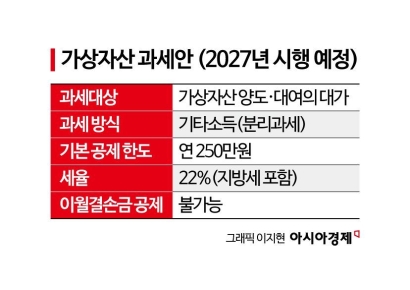 "Stocks Are Not Taxed, but Annual Crypto Gains Over 2.5 Million Won to Be Taxed Next Year... Investors Push Back"
- "Not Jealous of Winning the Lottery"... Entire Village Stunned as 200 Million Won Jackpot of Wild Ginseng Cluster Discovered at Jirisan
- "Rather Than Endure a 1.5 Million KRW Stipend, I'd Rather Earn 500 Million in the U.S." Top Talent from SNU and KAIST Are Leaving [Scientists Are Disappearing] ①
- "How Did an Employee Who Loved Samsung End Up Like This?"... Past Video of Samsung Electronics Union Chairman Resurfaces
- "Even With a 90 Million Won Salary and Bonuses, It Doesn’t Feel Like Much"... A Latecomer Rookie Who Beat 70 to 1 Odds [Scientists Are Disappearing] ③
Meanwhile, on the same day, the KCC also approved the amendment drafts of the "Enforcement Decree of the Broadcasting Act" to newly establish specific delegated tasks of the Broadcasting and Communications Office and the "Enforcement Decree of the Radio Waves Act."
© The Asia Business Daily(www.asiae.co.kr). All rights reserved.







