The End of Argentine Peronism? Left-Wing Coalition Defeated in Midterm Elections After Over 40 Years
Centrist-Left Coalition Likely to Lose Majority in Senate After House... First Time in Over 40 Years
Struggling with Inflation and COVID-19, Internal Ruling Party Conflicts Expected to Intensify
![Alberto Fernandez, President of Argentina [Image source=AP Yonhap News]](http://www.asiae.co.kr/news/img_view.htm?img=2021111513024421199_1636948964.jpg)
[Asia Economy Reporter Kim Suhwan] In Argentina's midterm elections, the center-left ruling party is expected to lose a significant number of seats in both the Senate and the Chamber of Deputies, pushing the Alberto Fernandez administration, which is approaching the midpoint of its term, into an early lame-duck crisis. As the center-left coalition that has dominated Argentine politics for over 40 years appears to face its first defeat, there are also assessments that the 'Peronism' (a political ideology inherited from former President Juan Domingo Per?n), centered on the center-left, may be coming to an end.
The Argentine Senate and Chamber of Deputies elections held on the 14th (local time) have tilted toward a defeat for the center-left ruling coalition, 'Frente de Todos' (Front for All), as the vote count progressed.
In this election, 24 out of 72 Senate seats and 127 out of 257 Chamber of Deputies seats were contested. According to local media, the ruling coalition's Senate seats are expected to decrease from the previous 41 to 35 after the election.
This means the center-left coalition will lose its majority status in the Senate for the first time in nearly 40 years.
In the Chamber of Deputies, where the ruling coalition already held less than half the seats, further losses are also anticipated.
On the other hand, the center-right coalition 'Juntos por el Cambio' (Together for Change), led by former President Mauricio Macri, is performing well in key regions such as Buenos Aires Province.
Previously, Argentina has been facing issues such as an annual inflation rate reaching 50% and rising poverty levels. Amid these challenges, the Fernandez administration has struggled in approval ratings due to public disappointment with the government's COVID-19 response.
Scandals such as vaccine queue-jumping by high-ranking officials after COVID-19 and controversies over 'no-mask' parties at the presidential residence during lockdowns have also damaged the government.
In fact, in the primary elections held in September, the ruling party's nationwide vote share slightly exceeded 30%, trailing behind 'Together for Change.'
Argentina's primary elections serve as a filtering process to exclude minor parties that fail to meet a certain vote threshold. Since they are mandatory nationwide elections like the general elections, they provide a relatively accurate prediction of the general election results.
After the primaries, the Fernandez administration attempted to win back voters by freezing prices of essential goods and raising the minimum wage, but failed to create a turnaround.
The Fernandez administration, now halfway through its four-year term, faces a thorny path ahead.
It has become difficult to expect parliamentary support amid challenging tasks such as debt negotiations with the International Monetary Fund (IMF).
Today's election results indicate a significant change occurring in Argentine politics, which has been dominated by 'Peronism.'
This marks the first time that Argentina's 'Peronism' ruling party, a core pillar of the Latin American left bloc and known for welfare expansion policies, has been overtaken by a right-wing party.
After experiencing a severe economic recession in the early 2000s, Argentina pushed millions of middle-class citizens into poverty. In response, the Peronist government expanded social spending and significantly increased subsidies for these impoverished populations. This led to criticism that a majority of the population became dependent on government subsidies.
Meanwhile, there are concerns about political turmoil due to deepening internal conflicts within the ruling party.
Following the primary election defeat, cracks were exposed between relatively moderate President Fernandez and Vice President and former President Cristina Fernandez, who leans toward the hard left. Ignacio Labouy, a researcher at the U.S. consulting firm Medley Global Advisors, predicted, "President Fernandez may have to start the latter half of his term having lost most of his political power, burdened with internal dissatisfaction within the ruling coalition and pressing economic issues such as inflation."
Hot Picks Today
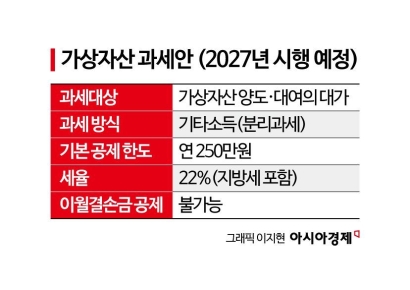 "Stocks Are Not Taxed, but Annual Crypto Gains Over 2.5 Million Won to Be Taxed Next Year... Investors Push Back"
- "Not Jealous of Winning the Lottery"... Entire Village Stunned as 200 Million Won Jackpot of Wild Ginseng Cluster Discovered at Jirisan
- "Even With a 90 Million Won Salary and Bonuses, It Doesn’t Feel Like Much"... A Latecomer Rookie Who Beat 70 to 1 Odds [Scientists Are Disappearing] ③
- "Rather Than Endure a 1.5 Million KRW Stipend, I'd Rather Earn 500 Million in the U.S." Top Talent from SNU and KAIST Are Leaving [Scientists Are Disappearing] ①
- "How Did an Employee Who Loved Samsung End Up Like This?"... Past Video of Samsung Electronics Union Chairman Resurfaces
After the partial election results were announced, President Fernandez stated, "I will make further efforts to reach a sustainable agreement with the IMF," and added that he plans to submit a long-term economic plan to Congress early next month to combat inflation and other issues.
© The Asia Business Daily(www.asiae.co.kr). All rights reserved.







