Seoul Secures Two Exam Sites at Hospitals and Residential Treatment Centers for Confirmed and Quarantined Examinees
PCR Testing Available at Health Centers Until 10 PM the Previous Day
Priority Testing for Examinees Who Disclose Status... Must Report to Education Office
Remote Classes for 3rd Year High School Students Possible from the 4th, Nationwide High School Remote Transition on the 11th
Number of Seoul College Entrance Exam Takers This Year Increases by About 1,100 Compared to Last Year

Ahead of the College Scholastic Ability Test (CSAT) scheduled for the 18th, the Seoul Metropolitan Office of Education is preparing for the possibility of COVID-19 positive test takers by securing one hospital and one residential treatment center each, allowing 120 students to take the exam there.
On the 9th, the Seoul Metropolitan Office of Education announced that it had secured 225 general test sites, 22 separate test sites, and 2 hospital test sites for this year's CSAT. In general test sites, a total of 450 separate test rooms, two per site, will be set up for symptomatic students.
A representative from the Seoul Metropolitan Office of Education stated, "Although the number of confirmed cases is generally increasing, most test takers have completed their COVID-19 vaccinations, so the number of infected test takers is not high compared to the overall number of confirmed cases." However, they urged, "Test takers should minimize external contact before the exam by refraining from small gatherings with friends or visiting crowded facilities."
Since the 4th, the Seoul Metropolitan Office of Education has informed high schools in the district that 3rd-year high school students can attend remote classes. Starting from the 11th, all high schools nationwide, including those in Seoul, will switch to remote learning.

This year, 107,568 students will take the CSAT in Seoul, accounting for 21.1% of all test takers nationwide, an increase of 1,124 compared to last year. The number of test rooms for this year's CSAT decreased by 98 compared to last year, due to the operation of two separate test rooms per school this year instead of three or more last year.
To prepare for COVID-19, about five quarantine officers are appointed per school, disinfection is conducted before and after the exam, and protective equipment is provided to supervisors.
Test takers must wear masks at the test sites, but the recommended masks vary depending on the type of test taker. In general test rooms at general test sites, regular masks are required; in separate test rooms at general test sites, masks rated KF80 or higher are required; and in separate test sites, masks rated KF94 or higher must be worn.
When supervisors verify the identity of test takers, masks must be lowered. Test takers may carry spare masks in case they need to replace them during the exam, but these must be inspected by supervisors beforehand and carried accordingly.
On the day before the CSAT, PCR tests can be taken at health centers until 10 p.m. If a test taker receives a positive diagnosis or quarantine notice, they must inform the health center that they are a CSAT candidate and report it by phone to the relevant education office. The education office that receives the report will assign and inform the test location.
A representative from the Seoul Metropolitan Office of Education said, "If test takers inform the health center of their status, they will be given priority for testing." They added, "Not only current students but also repeat test takers should get tested and confirm results if they have symptoms, for the safety of all test takers."

Since masks must be removed during lunch, paper-made temporary partitions will be distributed. Test takers must set up the partitions themselves and eat at their own seats.
On the exam day, students can enter the test rooms from 6:30 a.m. and must be seated in their designated rooms by 8:10 a.m. If a student does not take the Korean History section, their CSAT score will be invalidated.
This year, the CSAT introduces a 'common + elective subject' structure in Korean, Mathematics, and Vocational Exploration sections. The EBS linkage ratio is reduced to 50%, and English will be tested through an indirect linkage method.
Hot Picks Today
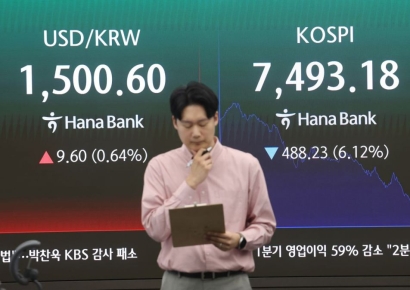 After Topping 8,000 Instead of Hitting 10,000... KOSPI Plunges—When Will It Rebound?
- "Samsung and Hynix Were Once for the Underachievers"... Hyundai Motor Employee's Lament
- [Breaking] Court Rules Against Samsung Electronics Union...1 Billion Won per Day Penalty for Exceeding Strike Scope
- Court Partially Grants Samsung Electronics' Injunction to Prohibit Industrial Action... 100 Million Won Penalty Per Day for Violations
- "That? It's Already Stashed" Nightlife Scene Crosses the Line [ChwiYak Nation] ③
Answer sheets for the 4th period Korean History and Exploration sections are separated, and although the questions are for the chosen subjects, test takers must keep them on their desks while taking the exam. Changing the order of solving or placing answer sheets simultaneously is considered cheating. Last year, 80 test takers were penalized for violating the 4th period test order as cheating.
© The Asia Business Daily(www.asiae.co.kr). All rights reserved.