Samsung SDI Expands Battery Collaboration with Stellantis
MOU Signing Ceremony in Hungary

President Jeon Young-hyun of Samsung SDI (right) and Carlos Tavares, CEO of Stellantis, are holding a ceremony to commemorate the signing of the North American joint venture memorandum of understanding (MOU).
[Asia Economy Reporter Choi Dae-yeol] Jeon Young-hyun, President of Samsung SDI, and Carlos Tavares, CEO of Stellantis, met in Hungary on the 26th (local time) to discuss cooperation plans for electric vehicle batteries.
Earlier, the two companies signed a memorandum of understanding (MOU) to build a battery joint venture factory in the North American region. At the meeting, which also served as a commemorative event, many executives from both companies attended and exchanged ideas on ways to steadily cooperate and enhance synergy going forward, Samsung SDI reported.
Neither company disclosed specific additional cooperation plans. However, since their interests align in strengthening partnerships to secure stable battery supply and sales channels in other regions as well, it is possible that they discussed additional joint ventures in Europe and other areas. SK On and Ford, who are originally promoting a joint factory in the U.S., have decided to expand their cooperation area to Europe and are discussing specific plans.
Stellantis previously forecasted in its electrification strategy announced in July that it would need 130GWh of batteries by 2025 and more than 260GWh by 2030. At that time, it announced plans to secure five battery factories with a scale of tens of GWh only in Europe and North America. Rather than building factories directly, joint ventures or cooperative forms with battery companies are likely. Stellantis recently revealed plans to build factories with a capacity of up to 40GWh in North America with Samsung SDI and another 40GWh with LG Energy Solution, aiming to start mass production around 2025. If the current trend of electric vehicle adoption continues to expand, battery shortages are expected to intensify within the next three to four years, prompting various projects by global battery companies as well as local initiatives.
Hot Picks Today
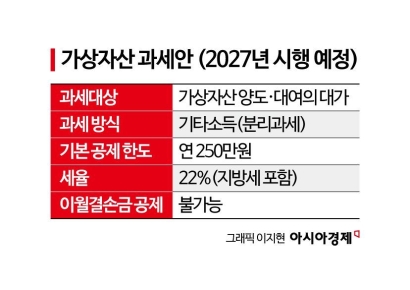 "Stocks Are Not Taxed, but Annual Crypto Gains Over 2.5 Million Won to Be Taxed Next Year... Investors Push Back"
- "Not Jealous of Winning the Lottery"... Entire Village Stunned as 200 Million Won Jackpot of Wild Ginseng Cluster Discovered at Jirisan
- "Even With a 90 Million Won Salary and Bonuses, It Doesn’t Feel Like Much"... A Latecomer Rookie Who Beat 70 to 1 Odds [Scientists Are Disappearing] ③
- "Rather Than Endure a 1.5 Million KRW Stipend, I'd Rather Earn 500 Million in the U.S." Top Talent from SNU and KAIST Are Leaving [Scientists Are Disappearing] ①
- "How Did an Employee Who Loved Samsung End Up Like This?"... Past Video of Samsung Electronics Union Chairman Resurfaces
The Samsung SDI Hungary subsidiary, where the event was held, has been producing lithium-ion batteries since 2016 and has been producing electric vehicle batteries in earnest since 2018. It is known that they plan to increase facilities beyond the current annual capacity of 30GWh and are in consultation with the local government.
© The Asia Business Daily(www.asiae.co.kr). All rights reserved.







