Household Debt, Housing Prices, and Inflation All Rising... Countdown to November Interest Rate Hike Begins
Experts: "Household debt, housing prices, and inflation will rise further"
BOK forecasts South Korea's growth rate around 4% this year
![[Image source=Yonhap News]](http://www.asiae.co.kr/news/img_view.htm?img=2021101218022963189_1634029350.jpg)
[Asia Economy Reporter Jang Sehee] With the interest rate held steady at 0.75% this month, the Financial Monetary Policy Committee (FOMC) is highly likely to raise the base interest rate by an additional 0.25 percentage points next month. There are also claims that issues such as the rapid increase in household debt, inflation, and rising housing prices caused by low interest rates should be addressed through interest rate hikes. There is only one remaining FOMC meeting this year where the rate can be raised (November 25).
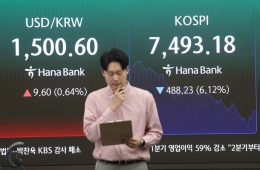
◆ Domestic Economic Recovery Slows Down & External Risks Increase = The Bank of Korea's FOMC held a monetary policy meeting on the 12th and decided to maintain the base interest rate at 0.75%. Lee Ju-yeol, Governor of the Bank of Korea, attended the National Assembly's Planning and Finance Committee audit and stated, "As long as there are no major risks to the economy, we can fully consider raising the base interest rate in November." Although they have temporarily paused due to signs of increased volatility in the stock market and exchange rates, they indicated that if the economic recovery becomes visible next month, they will raise interest rates. The GDP growth rate for this year is expected to be around 4%, as forecasted in August.
The reasons for holding the base rate steady include weak economic indicators and increased stock market volatility. While global economic growth forecasts are declining, domestic production, consumption, and investment are also simultaneously decreasing. In fact, the August industrial activity report shows that production, consumption, and investment all decreased for the first time in three months. Total industrial production fell by 0.2% month-on-month, marking a decline for two consecutive months. The early rate hikes in the U.S. and the China Evergrande crisis have overlapped, expanding financial market volatility. Governor Lee noted regarding the falling stock market and rising exchange rates, "Going forward, the global economy and international financial markets are expected to be influenced by the degree of COVID-19 resurgence, vaccine distribution status, global inflation trends, and changes in major countries' monetary policies."
As the stock market rapidly grew under ultra-low interest rates, a rise in the base interest rate could hit individual investors who have borrowed to invest, potentially accelerating the stock market's decline. It appears that the judgment was based on the concern that already heightened market volatility could increase further with a rate hike. Professor Lee In-ho of Seoul National University’s Department of Economics said, "Looking at the current securities market, it is true that raising interest rates is difficult," but added, "If the U.S. does not raise rates after starting tapering in earnest, the exchange rate is likely to rise further." In that case, import prices could increase, leading to additional inflation.
◆ Household Debt, Inflation, Housing Prices Rise... November Rate Hike Inevitable = There are forecasts that the Bank of Korea will raise interest rates to respond to the rapid increase in household debt and the continued rise in inflation and housing prices. The Bank plans to carefully review the COVID-19 situation, changes in growth and inflation trends, accumulated financial imbalance risks, and changes in major countries' monetary policies before making decisions. A scenario is expected where rates are raised twice by 25 basis points each in the November meeting and again in January-February next year.
The surging household debt is also a problem. Professor Kim Sang-bong of Hansung University’s Department of Economics explained, "To effectively manage the total household debt, it is necessary to respond with interest rates to curb the rapid rise in housing prices." He added, "Considering the rapid increase in household debt, inflation, and housing price trends, the interest rate should be raised next month," warning, "If the low interest rate trend continues, in the worst case, even if we issue bonds, there will be no buyers."
The consumer price inflation rate has been in the 2% range for six consecutive months, which is also a factor for a rate hike. Governor Lee said regarding future inflation trends, "The consumer price inflation rate is expected to exceed the August forecast path, remaining around the mid-2% range for some time before slightly decreasing, while the core inflation rate is expected to rise to the high 1% range." Consumer prices rose to 2.3% in April, entering the 2% range for the first time, then recorded 2.6% in May, 2.4% in June, and 2.6% in both July and August.
Hot Picks Today
 "Samsung and Hynix Were Once for the Underachievers"... Hyundai Motor Employee's Lament
- "Sold Everything Fearing Bankruptcy, Then It Soared 3,900 Times: How a Stock Once Feared for Delisting Became an AI Powerhouse"
- "All Major Corporations Could Leave"... Business Community Fears Overseas Factory Relocation Due to Strike Risks
- 1789 Capital Scales Up 17-Fold with Trump Jr.; Accelerates Investment in AI and Defense
- "That? It's Already Stashed" Nightlife Scene Crosses the Line [ChwiYak Nation] ③
Going forward, international oil prices and a rebound in consumer sentiment are likely to sustain the rise in personal service prices. If raw material prices rise along with the dollar’s value, import prices will inevitably fluctuate. Jung Kyu-chul, head of the Economic Outlook Division at the Korea Development Institute (KDI), pointed out, "Inflation is rising due to intertwined demand and supply factors," adding, "The rise in raw material prices due to supply-side factors could become a burden on the economy." The rise in real estate prices is also steep. Recently, the increase in prices for sales, jeonse (long-term lease), and monthly rent has expanded. Considering that housing prices usually rise in the second half of the year, if the low interest rate trend continues, housing prices could rise more sharply than expected.
© The Asia Business Daily(www.asiae.co.kr). All rights reserved.