US CIA Establishes 'China Mission Center' to Strengthen Intelligence Network on China... "China, the Greatest Threat" (Comprehensive)
Existing North Korea-Iran Mission Centers Consolidated
US National Reconnaissance Office Announces Satellite Intelligence Network Enhancement
US Public Opinion Strengthens on Need for South Korea Military Support in Emergencies
![[Image source=Reuters Yonhap News]](http://www.asiae.co.kr/news/img_view.htm?img=2021100811172959203_1633659449.jpg)
[Asia Economy reporters Hyunwoo Lee and Suhwan Kim] The U.S. Central Intelligence Agency (CIA) announced the establishment of the China Mission Center (CMC) to strengthen intelligence activities against China. At the same time, the existing Korea Mission Center and Iran Mission Center, which had focused on North Korea and Iran, will be merged with regional sector centers. This move is interpreted as an effort to reinforce the CIA's intelligence network within China, which is known to have weakened recently, with a focus on countering China. Public opinion in the U.S. has also strengthened, showing increased support for military aid to allies amid tensions reminiscent of the Cold War era.
William Burns, CIA Director, announced the establishment of the CMC in a statement on the 7th (local time). Director Burns said, "The CMC will further strengthen our collective efforts against the most significant geopolitical threat we face in the 21st century, namely the increasingly hostile Chinese government," adding, "Our CIA will be at the forefront in responding to the greatest geopolitical threat we face in this new era of hegemonic competition."
The announcement of the new CMC came the day after an agreement was reached for a virtual summit between U.S. President Joe Biden and Chinese President Xi Jinping within the year. This is interpreted as the U.S. government showing its willingness to engage in communication with China while also preparing to respond to strategic competition with China.
![[Image source=Reuters Yonhap News]](http://www.asiae.co.kr/news/img_view.htm?img=2021100811174659205_1633659466.jpg)
The existing CIA mission centers established during the previous Donald Trump administration in 2017 include the Korea Mission Center and the Iran Mission Center, which were set up to focus on North Korea and Iran respectively. Under the recent reorganization, these two centers will be absorbed into regional divisions responsible for East Asia and the Near East. This is seen as a move to prioritize intelligence gathering on China over other regions.
Alongside the CIA, the National Reconnaissance Office (NRO), a major U.S. intelligence agency, also announced plans to expand information sharing with private commercial satellite operators to strengthen satellite intelligence capabilities. Christopher Scolese, NRO Director, said at a Geoint Conference press briefing, "Through the commercial satellite information sharing program initiated three years ago, we have been able to enhance surveillance capabilities over regions like North Korea, where intelligence collection was challenging," adding, "We currently obtain images covering over 100 million square kilometers weekly and will continue to expand information sharing with private satellite companies, including satellite imagery."

On the same day, the Chicago Council on Global Affairs (CCGA), a U.S. public opinion think tank, released a survey titled ‘Perceptions of the Biden Administration’s Foreign Policy.’ According to the survey, 63% of respondents said that the U.S. military should support South Korea’s defense if North Korea attacks South Korea. This response rate is a 5 percentage point increase from 58% last year and is the second highest since the record 64% in 2018. The heightened awareness is attributed to North Korea’s repeated ballistic missile launches and violations of United Nations Security Council resolutions.
Support for U.S. military assistance to Taiwan in the event of a Chinese invasion also reached a majority for the first time, at 52%. This is an 11 percentage point increase from 41% in last year’s survey. The rise is analyzed as a result of intensified military confrontations between the U.S. and China in the South China Sea, the establishment of military coalitions aimed at countering China such as the Quad and AUKUS, and increased Chinese military demonstrations and provocations around the Taiwan Strait. The survey was conducted from July 7 to 26, targeting 2,086 U.S. adults.
Hot Picks Today
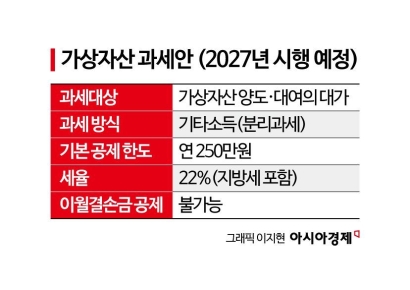 "Stocks Are Not Taxed, but Annual Crypto Gains Over 2.5 Million Won to Be Taxed Next Year... Investors Push Back"
- "Not Jealous of Winning the Lottery"... Entire Village Stunned as 200 Million Won Jackpot of Wild Ginseng Cluster Discovered at Jirisan
- "Even With a 90 Million Won Salary and Bonuses, It Doesn’t Feel Like Much"... A Latecomer Rookie Who Beat 70 to 1 Odds [Scientists Are Disappearing] ③
- "Rather Than Endure a 1.5 Million KRW Stipend, I'd Rather Earn 500 Million in the U.S." Top Talent from SNU and KAIST Are Leaving [Scientists Are Disappearing] ①
- "How Did an Employee Who Loved Samsung End Up Like This?"... Past Video of Samsung Electronics Union Chairman Resurfaces
The CCGA commented, "This is the result of the Biden administration’s focus on restoring alliances in its foreign policy," and added, "Public support for the use of U.S. military power to ensure the security of allies and partners has remained stable or increased compared to the Donald Trump administration."
© The Asia Business Daily(www.asiae.co.kr). All rights reserved.







