In the Volatile Stock Market... Rapid Increase in Forced Liquidations Among Debt Investors
Forced liquidation of 141.6 billion KRW in one week
Double the amount compared to a month ago

[Asia Economy Reporter Minji Lee] As the domestic stock market sharply declined due to overlapping negative factors from the US and China, anxiety among the ‘debt investment’ investors who have been investing with borrowed money is growing.
According to the comprehensive portal of the Korea Financial Investment Association on the 7th, the amount of forced liquidation against unpaid margin loans in consignment trading was recorded at 141.6 billion KRW over one week (6 trading days) from the 27th of last month to the 5th of this month. During about two weeks (10 trading days) from the 13th to the 24th of last month, the forced liquidation amount was 109.2 billion KRW. Compared to the total forced liquidation amount (71.1 billion KRW) during the same period last month (27th to 3rd) over 6 trading days, it nearly doubled.
Forced liquidation of unpaid margin loans in consignment trading refers to when an individual buys stocks on credit from a securities firm but fails to repay within the period, causing the securities firm to sell the stocks in the account. Unlike credit trading loans that require certain collateral, unpaid margin trading allows purchasing stocks by paying only a margin, usually more than 30% of the total stock purchase price. However, if the money is not repaid by the third trading day, the stocks are forcibly disposed of regardless of the individual's intention.
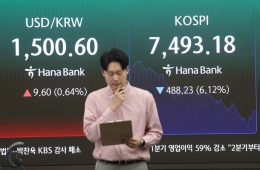
The increase in forced liquidation amounts is due to the sharp decline in the domestic stock market caused by concerns over US government tightening amid long-term inflation, political uncertainties, and regulatory risks from China. Looking at the correlation between daily unpaid margin loans and the KOSPI, after the KOSPI fell below the 3000 mark on the 28th and dropped about 6%, the forced liquidation amount consistently exceeded 20 billion KRW per day. In particular, on the 30th of last month, forced liquidation reached 31.6 billion KRW, the largest scale since August 23, when the index dropped due to US tapering signals.
The securities industry expects that an increase in forced liquidation could burden the stock market. Especially, the KOSDAQ index fell about 8% from 1003.27 to 922.36 this month, recording a larger decline compared to the KOSPI, which is analyzed to have been exacerbated by forced liquidation. Ji-young Han, a researcher at Kiwoom Securities, diagnosed, "Adverse factors in supply and demand, such as the possibility of forced liquidation due to the sharp market decline, are intensifying market anxiety."
If losses due to failure to maintain collateral in credit trading expand, the stock price decline is expected to steepen further. In credit trading, if the collateral ratio relative to stock value (usually 140%) is not met, the held stocks are subject to forced liquidation. Recently, due to the sharp index drop, many investors’ collateral ratios have fallen below the standard. According to the financial investment industry, the new loan amount for credit trading loans in the first half of this year was 185.8655 trillion KRW, far exceeding half of last year’s total new loan amount (263 trillion KRW). This also greatly surpasses the new loan amounts of 147 trillion KRW and 156 trillion KRW in 2019 and 2018, respectively. As the scale of credit trading has grown, concerns over stock price declines due to increased forced liquidation volumes have also increased.
Hot Picks Today
 "Samsung and Hynix Were Once for the Underachievers"... Hyundai Motor Employee's Lament
- "Sold Everything Fearing Bankruptcy, Then It Soared 3,900 Times: How a Stock Once Feared for Delisting Became an AI Powerhouse"
- Court Partially Grants Samsung Electronics' Injunction to Prohibit Industrial Action... 100 Million Won Penalty Per Day for Violations
- [US-China Summit] China to Purchase $17 Billion in US Agricultural Products Annually...Real Gains for Beijing
- "That? It's Already Stashed" Nightlife Scene Crosses the Line [ChwiYak Nation] ③
Since domestic and international negative factors are not expected to dissipate in the short term, forced liquidation is predicted to increase further. This is because the number of investors attempting unpaid margin trading is rising amid the sharp index decline. Unpaid margin loans in consignment trading increased from about 250 billion KRW to about 350 billion KRW after the KOSPI fell below 3000 on the 28th of last month. Yonggu Kim, a researcher at Samsung Securities, explained, "A panic market is unfolding as external negative factors pile up, adding concerns about supply and demand from individual investors such as forced liquidation and forced settlement of Contracts for Difference (CFD). The current market adjustment is driven not by fundamentals but by psychological and supply-demand factors, so the KOSPI bottom should be left open to the 2700 level."
© The Asia Business Daily(www.asiae.co.kr). All rights reserved.