[Defense Column] The Top Priority Tactical Nuclear Weapon for USFK: 'B61-12'
![[Defense Column] The Top Priority Tactical Nuclear Weapon for USFK: 'B61-12'](http://www.asiae.co.kr/news/img_view.htm?img=2021100106223949753_1633036959.jpg)
[Military Analyst Kim Daeyoung] Since 1968, over 3,000 units of the B61 have been produced, known today as the United States' representative air-delivered nuclear bomb. The B61 nuclear bomb, which can be used for both tactical and strategic purposes, can be equipped not only on the stealth strategic bomber B-2 but also on fighter jets such as the F-15 and F-16. While most U.S. nuclear weapons are operated from the U.S. mainland, uniquely, the B61 nuclear bombs are stored in several NATO (North Atlantic Treaty Organization) countries under nuclear sharing agreements.
The B61 could be dropped even during supersonic flight, and depending on the operational altitude, it used a method of spinning the bomb in the air as it fell, enabling precision delivery within approximately 100 meters of the target radius. Thirteen different models of the B61 nuclear bomb have been developed and reviewed over time. Among these, the most numerous is the B61-4, with 695 units produced and deployed to the U.S. military since 1979. Its yield can be selected from four options: 0.3, 1.5, 10, or 45 kilotons. For reference, a kiloton refers to the explosive power equivalent to detonating 1,000 tons of TNT.
The maximum yield of the B61-4, 45 kilotons, is more than three times the power of the atomic bomb "Little Boy" dropped on Hiroshima, Japan, on August 6, 1945. Additionally, about 50 units of the B61-11 were produced; this is a nuclear bunker buster operated from the stealth strategic bomber B-2. The B61-11 nuclear bunker buster can penetrate the surface and reach underground targets up to 6 meters deep, with a maximum yield of 400 kilotons, completely destroying enemy underground facilities. The B61-12, which entered exploratory development in 2015, is called a smart nuclear bomb. Measuring approximately 3.66 meters in length and weighing 374 kg, the B61-12 is equipped with precision guidance devices such as GPS on its tail fins, similar to the U.S. military’s representative precision-guided bomb, the JDAM.
The B61-12, which extends the service life of the existing B61 nuclear bomb while simultaneously adding new guidance systems, reportedly has an accuracy within 30 meters, and its yield can be adjusted to 0.3, 1.5, 10, or up to 50 kilotons depending on the target. It is also reported to be usable as a nuclear bunker buster like the B61-11. Since 2017, various air-drop tests have been conducted at the Tonopah Test Range in Nevada using F-16C/D, F-15E, and F-35A fighter jets. Having completed air-drop tests last year, the B61-12 is scheduled to enter full-scale production starting this October. Plans call for producing a minimum of 400 to a maximum of about 500 units of the B61-12.
The B61-12 is expected to be operated on the U.S. Air Force’s next-generation stealth strategic bomber B-21 and the stealth fighter F-35A Block 4. It is also anticipated to be used on the B-2 stealth bomber and F-15E fighter jets. The B61-12 is equipped with a ‘Category F’ PAL (Permissive Action Link), a launch authorization system. The launch authorization system is a security mechanism that activates the nuclear bomb, and Category F consists of a 12-digit code. It is known that only the U.S. President holds the authority to operate the launch authorization system.
Hot Picks Today
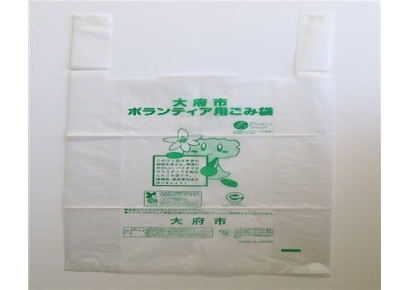 "Only Two Per Person" Garbage Bag Crisis Was Just Yesterday... Japan Also Faces Shortage Anxiety
- "Samsung Electronics Employee with 100 Million Won Salary Receiving 600 Million Won Bonus... Estimated Tax Revealed"
- Lived as Family for Over 30 Years... Daughter-in-Law Cast Aside After Husband's Death
- 'Will Demand Finally Decline Due to High Prices?'... "I'll Just Enjoy Nearby Trips" as Japan and China See a Surge
- "Wore It Once, Then This? White Spots All Over 4.15 Million Won Prada Jacket... 'Full Refund Ordered'"
© The Asia Business Daily(www.asiae.co.kr). All rights reserved.