"Strategies Needed to Reestablish Asia as a Vaccine Hub Post-COVID-19"
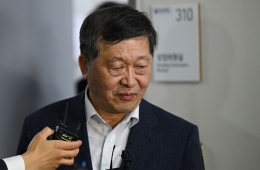
![Professor Lee Jong-gu of Seoul National University College of Medicine (former Director of the Korea Disease Control and Prevention Agency) is giving a special lecture titled "To Prepare for a New Pandemic" at the "2021 Global Bio Conference" held on the afternoon of the 13th at the Grand InterContinental Seoul Parnas Hotel in Gangnam-gu, Seoul. [Image source: Screenshot from the live broadcast of the 2021 Global Bio Conference]](http://www.asiae.co.kr/news/img_view.htm?img=2021091316311528181_1631518275.jpg)
Professor Lee Jong-gu of Seoul National University College of Medicine (former Director of the Korea Disease Control and Prevention Agency) is giving a special lecture titled "To Prepare for a New Pandemic" at the "2021 Global Bio Conference" held on the afternoon of the 13th at the Grand InterContinental Seoul Parnas Hotel in Gangnam-gu, Seoul. [Image source: Screenshot from the live broadcast of the 2021 Global Bio Conference]
View original image[Asia Economy Reporter Lee Chun-hee] There has been a call for policy preparations for South Korea to become an international vaccine production hub in the post-COVID-19 era.
Professor Lee Jong-gu of Seoul National University College of Medicine (former Director of the Korea Disease Control and Prevention Agency) emphasized the need for social consensus on the future direction of COVID-19 response during a special lecture titled "To Cope with a New Pandemic" at the '2021 Global Bio Conference' held on the afternoon of the 13th at the Grand InterContinental Seoul Parnas Hotel in Gangnam-gu, Seoul. He stated, "It is time to unify our intentions on whether to proceed with booster shots, vaccine donations, the Hub and Spoke model, or contract manufacturing organizations (CMO)."
Professor Lee analyzed that South Korea has handled COVID-19 well so far and, on the other hand, assessed that South Korea has effectively practiced a de facto 'With COVID' approach. By quickly implementing non-pharmaceutical interventions such as mandatory mask-wearing and social distancing compared to overseas, "South Korea has never imposed travel bans and manages COVID-19 while maintaining daily life," demonstrating a different and effective quarantine policy compared to countries like Australia that enforced lockdowns or closures.
However, he noted, "Although we were well prepared when the initial big wave came, I do not think we can endure it until the end," and predicted, "Now vaccines will play an important role."
![On the afternoon of the 13th, at the Grand InterContinental Seoul Parnas Hotel in Gangnam-gu, Seoul, participants including Professor Jong-gu Lee of Seoul National University (third from the left) and Kang-lip Kim, Commissioner of the Ministry of Food and Drug Safety, are taking a commemorative photo at the opening ceremony of the '2021 Global Bio Conference.' <br>[Photo by Yonhap News]](http://www.asiae.co.kr/news/img_view.htm?img=2021091316284028174_1631518120.jpg)
On the afternoon of the 13th, at the Grand InterContinental Seoul Parnas Hotel in Gangnam-gu, Seoul, participants including Professor Jong-gu Lee of Seoul National University (third from the left) and Kang-lip Kim, Commissioner of the Ministry of Food and Drug Safety, are taking a commemorative photo at the opening ceremony of the '2021 Global Bio Conference.'
[Photo by Yonhap News]
In this regard, he mentioned the 'Hub and Spoke' model currently promoted by the World Health Organization (WHO) and said that South Korea should start discussions to establish itself as a vaccine production hub in the Asian region. With the ongoing emergence of variants such as Delta, the WHO is urging a halt to booster shots while planning to increase vaccine production, and South Korea should actively participate in this model. In this process, South Korea should take on the role of a central vaccine production base in Asia and begin discussions on a strategy to train talents from neighboring countries so that each country can produce vaccines domestically again.
However, Professor Lee added, "This strategy only works if the vaccine-producing companies negotiate with our country or if Korean companies hold patents on the materials," emphasizing that without securing vaccine intellectual property rights, this strategy would be difficult to realize. To this end, he stressed, "We need to discuss with the WHO whether South Korea can become a hub by providing vaccines free of charge through the COVAX facility."
He also highlighted the importance of having vaccine platforms other than messenger RNA (mRNA). Professor Lee said, "Although we quickly produced vaccines and responded through mRNA vaccine technology, a universal vaccine is needed," and emphasized, "Having multiple platforms such as protein and DNA is a condition that can make us a hub capable of cooperating not only with the WHO but also with various countries in the future."
Professor Lee also analyzed that the oral COVID-19 treatments currently under active development will be significantly helpful. He said, "Looking back at the situation in 2009 and 2010, oral treatments helped considerably to curb regional transmission until vaccines were developed," and added, "Since the reproduction number (R value) of COVID-19 is 5, meaning one patient infects five others, promptly administering oral treatments can prevent five new patients, which can be very helpful."
Hot Picks Today
 "Stocks Are Not Taxed, but Annual Crypto Gains Over 2.5 Million Won to Be Taxed Next Year... Investors Push Back"
- [Breaking] Samsung Electronics Union: "Mediation Ends Due to Management's Rejection... General Strike Tomorrow"
- "Not Jealous of Winning the Lottery"... Entire Village Stunned as 200 Million Won Jackpot of Wild Ginseng Cluster Discovered at Jirisan
- "Looks Even More Like Him in Person": Crowds Gather to See 'Trump Lookalike' Albino Buffalo
- "Even With a 90 Million Won Salary and Bonuses, It Doesn’t Feel Like Much"... A Latecomer Rookie Who Beat 70 to 1 Odds [Scientists Are Disappearing] ③
Ultimately, Professor Lee conveyed that national investment in the bio industry is a prerequisite for these discussions. He stated, "Our country's bio industry does not yet possess the technological prowess to gain international superiority like the automobile or semiconductor industries," and added, "To play a greater role as an export industry, policy considerations and multifaceted strategies need to be prepared."
© The Asia Business Daily(www.asiae.co.kr). All rights reserved.