Disaster Relief Funds Vary by Region... Seoul and Gyeonggi 100,000 Won Per Person, Gyeongbuk Up to 800,000 Won Per Household
Last Year, 100,000 KRW Given to All Residents of Seoul, Daegu, Gyeonggi, and Jeju
Up to 800,000 KRW Gap in Gyeongbuk, 500,000 KRW in Gyeongnam within Gyeongsang Province
Trillion-Won Support Despite Relatively Low Fiscal Independence
![[Image source=Yonhap News]](http://www.asiae.co.kr/news/img_view.htm?img=2021090811060021200_1631066760.jpg)
[Sejong=Asia Economy Reporter Kim Hyunjung] It has been revealed that the amount of disaster relief funds paid by each metropolitan local government separately from the central government to respond to the damage caused by the spread of COVID-19 varied by up to 600,000 KRW per household. Even considering that the payment criteria and recipients differ for households and individuals, the amount received showed a clear difference depending on the region of residence. In particular, local governments with relatively low financial independence did not hesitate to provide support funds.

According to the '2021 Local Finance of the Republic of Korea' published by the National Assembly Budget Office on the 8th, nine metropolitan local governments including Seoul, Daegu, Gwangju, Gyeonggi, Daejeon, Jeonnam, Gyeongbuk, Gyeongnam, and Jeju paid a total of 2.9511 trillion KRW in disaster relief funds separately from the central government last year. Gyeonggi Province provided all residents with a 'Disaster Basic Income' of 100,000 KRW per person, totaling 1.3329 trillion KRW last year, and Daegu also gave all residents about 242.8 billion KRW in 'Daegu Hope Support Fund' at 100,000 KRW each. Jeju Province paid 200,000 to 500,000 KRW per household to households below 100% of the median income under the name of 'Emergency Disaster Living Support Fund' and expanded the target to all residents in the second round, paying a total of 67.7 billion KRW at 100,000 KRW each.
Gyeongbuk paid a total of 222.1 billion KRW, 500,000 to 800,000 KRW per household to households below 85% of the median income, and Gyeongnam paid a total of 194.8 billion KRW, 200,000 to 500,000 KRW per household to households below 100% of the median income. Seoul, Gwangju, and Jeonnam also paid 300,000 to 500,000 KRW per household to households below 100% of the median income, spending budgets of 577.8 billion KRW, 100.3 billion KRW, and 57.8 billion KRW respectively. Daejeon provided emergency disaster living support funds worth about 100 billion KRW, paying 300,000 to 700,000 KRW per household to households with income exceeding 50% but below 100% of the median income.

Each local government also did not hesitate to provide support funds to industries severely affected by COVID-19 or workers in sectors subject to administrative orders restricting gatherings specific to each local government. The Budget Office revealed that the total amount of disaster relief funds separately paid by local governments to workers in specific industries reached 3.5087 trillion KRW. Seoul City provided 668.4 billion KRW in 'Self-Employed Survival Funds' to small business owners with annual sales under 200 million KRW, and Busan City also spent 218.4 billion KRW on small business owners with annual sales under 300 million KRW, taxi drivers, cultural and artistic workers, and others. Some basic local governments, such as Jongno-gu in Seoul, also joined in providing support funds.
However, the financial independence of local governments that paid large amounts of support funds was generally not high. Among metropolitan local governments, Gyeonggi Province, which provided the most support, ranked 10th in financial independence with a financial autonomy ratio of 51.9. Gyeongbuk, which distributed the most support funds per household, ranked 14th in financial power.
Hot Picks Today
 "Stocks Are Not Taxed, but Annual Crypto Gains Over 2.5 Million Won to Be Taxed Next Year... Investors Push Back"
- "Don't Throw Away Coffee Grounds" Transformed into 'High-Grade Fuel' in Just 90 Seconds [Reading Science]
- Signed Without Viewing for 1.6 Billion Won... Jamsil and Seongbuk Jeonse Prices Jump 200 Million Won in a Month [Real Estate AtoZ]
- "Groups of 5 or More Now Restricted"... Unrelenting Running Craze Leaves Citizens and Police Exhausted
- "Even With a 90 Million Won Salary and Bonuses, It Doesn’t Feel Like Much"... A Latecomer Rookie Who Beat 70 to 1 Odds [Scientists Are Disappearing] ③
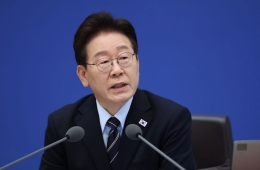
The financial independence of local governments is likely to worsen further this year. This is because each local government is actively promoting separate disaster relief funds again this year. The Gyeonggi Provincial Council recently approved an additional budget of 634.8 billion KRW to pay the '100% Disaster Relief Fund for Gyeonggi Residents (250,000 KRW per person)' promoted by Governor Lee Jae-myung. If the supplementary budget passes the Budget and Accounts Special Committee on the 10th, payments can be received from before Chuseok. Gyeonggi Province was previously criticized for hasty administration after increasing the disaster income budget by 200 billion KRW without properly identifying the recipients.
© The Asia Business Daily(www.asiae.co.kr). All rights reserved.