Onto Industry, Half of Loans in Real Estate... High-Risk 'PF' Investment Warning (Comprehensive)
On-to-Use Industry's Cumulative Loans of KRW 6.2144 Trillion in July-August
Real Estate Products Account for 47%... High-Risk PF Also Reaches 15%
Personal Credit Only 11%, Undermining the Purpose of Inclusive Innovation Finance
Beware of No Disclosures or Ads Claiming '0% Delinquency Rate'

[Asia Economy Reporter Song Seung-seop] The online investment-linked finance (OnTu) industry, which emerged under the banner of innovative finance, has been found to be heavily focused on risky real estate project financing (PF). This contradicts the original purpose of providing funds to middle- and low-credit borrowers who have difficulty borrowing money. Some companies have high delinquency rates and poor disclosures, requiring investors to exercise special caution.
According to recent disclosures from various OnTu companies on the 6th, the cumulative loan volume in the OnTu industry reached 6.2144 trillion KRW in July and August. This is the initial report card of 28 companies that completed registration by the deadline (August 26) set by financial authorities.
Most of the loans handled were products secured by real estate or those betting on price increases. Real estate loan products accounted for 2.9275 trillion KRW, representing 47.1%. This contrasts sharply with personal credit loan products, which amounted to only 715.6 billion KRW, or 11.5%.
Real estate PF loans, classified as high-risk products, accounted for 940.4 billion KRW, or 15.1%, exceeding personal credit loans. Considering that domestic banks, criticized recently for increasing PF loans, handled about 5.4% of household credit loans as PF last year, this is quite significant. This is far from the OnTu industry's stated goal of expanding financial supply to ordinary citizens. Since preparing for inclusion in the formal financial sector, the OnTu industry has declared its intention to resolve the loan cliff problem, aiming to provide loan products for middle-credit borrowers between the first and second financial sectors.
Among registered OnTu companies, ‘WeFunding’ structured 76.5% of its total loans solely as PF. ‘EarnestFund’ also reached 44.7%, with small-scale PF cases having a delinquency rate of 80%. Large OnTu companies such as PeopleFund, WincStone Partners, and Hello Fintech also have PF proportions exceeding 10-20%.
However, some companies have continuously reduced their PF proportions. A PeopleFund representative said, “We completely stopped handling real estate PF products in May 2020, and it has been 1 year and 3 months since we ceased new transactions. Currently, we are focusing only on managing repayments of existing bonds and have no plans to handle new ones.”
PF refers to lending based on real estate development projects. It does not consider the creditworthiness of the real estate development company and often lacks sufficient collateral to recover in case of default. Since funds are raised based on future cash flows as repayment sources, it is considered the riskiest product even within the financial sector. Delinquencies and total losses can occur easily even during real estate booms.
Risk of Loss if Investing Recklessly... "Carefully Review Disclosures"
In response, commercial banks hire experts who have long handled related products to verify PF. They also prepare separate safeguards to offset losses depending on risks such as project delays, bond recovery, defaults, and legal issues. However, except for a few large companies, OnTu companies generally have fewer than 30 employees. Some have only 12 employees handling PF loans exceeding 9 billion KRW.
Current laws require OnTu companies to meet strict physical and personnel conditions but do not apply these requirements specifically to products. This means related products can be handled without PF experts. An OnTu industry insider advised, “PF offers high returns, making it easy to invest impulsively. Even if a product looks good, you should check the company’s disclosures and first verify whether there are PF experts among the employees.”
Some companies handle disclosures required by OnTu regulations poorly. They make it difficult to find major disclosures or only display key indicators without posting full disclosures. Many companies have not disclosed major financial conditions even a week after registration, citing site maintenance as the reason. Some advertise guaranteed high returns or 0% delinquency rates on their websites, requiring special caution. New companies may not have delinquencies due to short loan periods, but risks still exist.
Before inclusion in the formal financial sector, some P2P companies handled PF, resulting in large-scale delinquencies and defaults. Some companies also handled asset-backed loans (ABL), lending money to developers secured by future pre-sale payments. While these companies grew rapidly, delinquency rates also soared.
Hot Picks Today
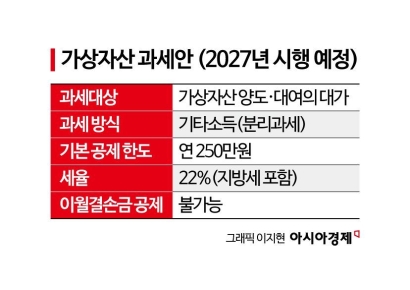 "Stocks Are Not Taxed, but Annual Crypto Gains Over 2.5 Million Won to Be Taxed Next Year... Investors Push Back"
- "Not Jealous of Winning the Lottery"... Entire Village Stunned as 200 Million Won Jackpot of Wild Ginseng Cluster Discovered at Jirisan
- "Rather Than Endure a 1.5 Million KRW Stipend, I'd Rather Earn 500 Million in the U.S." Top Talent from SNU and KAIST Are Leaving [Scientists Are Disappearing] ①
- "How Did an Employee Who Loved Samsung End Up Like This?"... Past Video of Samsung Electronics Union Chairman Resurfaces
- "Even With a 90 Million Won Salary and Bonuses, It Doesn’t Feel Like Much"... A Latecomer Rookie Who Beat 70 to 1 Odds [Scientists Are Disappearing] ③
Financial authorities emphasize verifying whether a company is registered when investing in P2P and caution that principal guarantees are not provided. A financial authority official warned, “Companies offering excessive rewards and high returns are more likely to engage in incomplete sales and handle bad loans. Investors should be cautious when investing in structured products or risky asset-backed products that are difficult to understand and have high default risks.”
© The Asia Business Daily(www.asiae.co.kr). All rights reserved.







