"No Holiday Season Boom"... August Air Passenger Numbers Fall Below 2 Million for the First Time in 5 Months

On the 13th, overseas arrivals are receiving transportation guidance at the arrival hall of Terminal 2, Incheon International Airport. The Korea Disease Control and Prevention Agency Central Disease Control Headquarters announced that as of midnight on the same day, the total number of confirmed domestic cases increased by 1,990 to 220,182. There were 1,913 domestically transmitted cases and 77 imported cases. Photo by Moon Honam munonam@
View original image[Asia Economy Reporter Dongwoo Lee] The number of air passengers in August, which was expected to see a summer peak, fell to the 2 million mark for the first time in five months.
According to the Ministry of Land, Infrastructure and Transport's Aviation Information Portal System on the 1st, the provisional total number of domestic and international passengers in August was 2,890,564, a 10.7% decrease compared to last month (3,240,348). This is the first time in five months since March (2,793,808) that the monthly number of domestic and international passengers has fallen to the 2 million level.
By airline, Jeju Air recorded a total of 505,836 passengers during the same period, maintaining its position as the top low-cost carrier (LCC) for the second consecutive month, but posted its lowest performance in six months since February (460,698). The company peaked in May with 607,360 passengers this year and has been declining for three consecutive months.
Jin Air, which ranked second, also recorded 473,280 passengers during the same period, falling below 500,000 for the first time in four months since April (447,419).
Following were T’way Air (410,744), Air Busan (350,688), and Air Seoul (147,776). Including these LCCs, the full-service carriers (FSC) Korean Air (539,758) and Asiana Airlines (419,244) also saw a decrease in passenger numbers compared to the previous month (July).
In the cargo transport sector, Jeju Air ranked first among LCCs with 2,293 tons during the same period, but this was a 12.1% decrease from the previous month. It was followed by Jin Air (2,045 tons), T’way (1,698 tons), and Air Busan (1,486 tons). The total domestic and international cargo volume last month was 298,646 tons, slightly down from 301,835 tons in the previous month.
The industry analyzed that the poor passenger performance during the summer vacation season was due to a significant reduction in effective demand caused by the nationwide strengthening of social distancing measures in response to the spread of the COVID-19 Delta variant.
Hot Picks Today
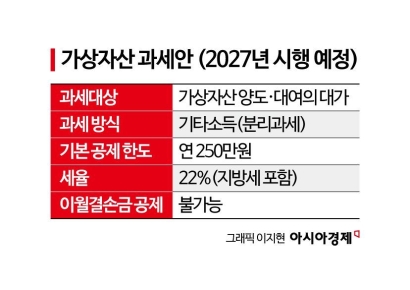 "Stocks Are Not Taxed, but Annual Crypto Gains Over 2.5 Million Won to Be Taxed Next Year... Investors Push Back"
- "Not Jealous of Winning the Lottery"... Entire Village Stunned as 200 Million Won Jackpot of Wild Ginseng Cluster Discovered at Jirisan
- "Even With a 90 Million Won Salary and Bonuses, It Doesn’t Feel Like Much"... A Latecomer Rookie Who Beat 70 to 1 Odds [Scientists Are Disappearing] ③
- General Strike D-1: Final Negotiations Between Samsung Electronics Labor and Management Over One Key Issue
- "How Did an Employee Who Loved Samsung End Up Like This?"... Past Video of Samsung Electronics Union Chairman Resurfaces
In particular, Jeju Island, a popular tourist destination, raised its social distancing level to Level 4 on the 18th to curb the spread during the vacation season. In fact, the total number of visitors to 12 designated beaches in Jeju over July and August was approximately 944,900, an 8.7% decrease compared to the previous year.
© The Asia Business Daily(www.asiae.co.kr). All rights reserved.