[2022 Budget] Cutting COVID-19 Support Funds and Investing in Future Projects... '10% Discretionary Spending' Restructuring
Temporary Increase in COVID-19 Budget 'Full Review'
128 Billion KRW Reduced in Special Activity Expenses for Public Officials
Inter-Ministerial Collaborative Budgets Increased from 17 to 22, Up 4 Trillion KRW
K-Global Vaccine Hub, Labor Transition, and More Up Over 40%
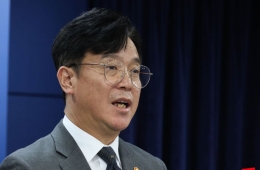
![[2022 Budget] Cutting COVID-19 Support Funds and Investing in Future Projects... '10% Discretionary Spending' Restructuring](http://www.asiae.co.kr/news/img_view.htm?img=2021080915221969755_1628490139.jpg)
[Sejong=Asia Economy Reporter Moon Chaeseok] The key feature of the government’s budget proposal for next year is maintaining an 'expansionary fiscal' stance by increasing the total amount while adjusting the scale of investment by project to attempt fiscal savings. To this end, the government plans to restructure about 10% of discretionary spending by cutting the budget for temporary COVID-19 support projects and investing in future growth projects.
The government will expand the scale of 'collaborative budget' projects related to joint projects of relevant ministries, which are expected to require large-scale restructuring due to eco-friendly and digital industrial restructuring, by 40%. It will encourage ministries to establish a system to discover joint tasks and reduce overlapping projects.
Redirecting Funds Used for COVID Support to Future Projects
On the 31st, the government announced the budget proposal for next year and explained key features such as fiscal restructuring measures and the expansion of collaborative budgets.
Temporary increased projects such as emergency loans and temporary job retention costs, which were increased as part of the COVID-19 crisis response, will be fully reviewed and about 10% of discretionary spending will be reorganized for future projects. For example, 1.5 trillion KRW of emergency financial support for COVID-19 will be allocated to protecting financially vulnerable groups such as low-credit and young small business owners (800 billion KRW) and strengthening innovation venture and startup competitiveness (200 billion KRW). The 1.1 trillion KRW for temporary job retention costs will be redirected to training personnel in new technology fields such as software (300 billion KRW) and supporting green and digital labor transition (400 billion KRW).
Special activity expenses for public officials and other four major current expenses will be reduced from 750.9 billion KRW this year to 738.1 billion KRW next year. The budget for private subsidy projects supported for more than three years will be cut by about 30% (300 billion KRW), re-evaluating the effectiveness and necessity of support. Sixty-one public institutions will save 200 billion KRW of grants by discovering their own income that had been omitted and used as operating expenses. Research and development (R&D) grant planning and evaluation management costs, which were dispersed by institution and project, will be consolidated into 25 projects, saving 20.8 billion KRW.
Joint Ministry Projects such as Automobile Restructuring See 40% Increase in 'Collaborative Budget'
The government will increase the number of collaborative budget projects between ministries from 12 to 17 and expand the scale from 9.9 trillion KRW to 13.9 trillion KRW, an increase of over 40%. First, the budget for the K-Global Vaccine Hub construction project will be increased from 200 billion KRW to 700 billion KRW, aiming to develop a domestic vaccine by the first half of next year. The budget for restructuring workers in high carbon-emission industries such as automobiles and coal power generation will be expanded from 400 billion KRW to 800 billion KRW to support their job transitions.
Additionally, the budget for eco-friendly and autonomous vehicle development will increase from 2 trillion KRW to 3.4 trillion KRW, and support funds for abused, protected, and adopted children will double from 100 billion KRW to 200 billion KRW. These are projects that are difficult for a single ministry to pursue individually but often involve overlapping investments during implementation.
Nationwide Public Opinions Gathered to Increase Budgets for Abused Children and Food Security
The government also formulated related budgets after gathering public opinions nationwide. As a result, the number of shelters for abused children increased from 105 to 140, and the number of students benefiting from the youth single-parent independence package increased to 1,000.
Hot Picks Today
 "Stocks Are Not Taxed, but Annual Crypto Gains Over 2.5 Million Won to Be Taxed Next Year... Investors Push Back"
- "Don't Throw Away Coffee Grounds" Transformed into 'High-Grade Fuel' in Just 90 Seconds [Reading Science]
- Signed Without Viewing for 1.6 Billion Won... Jamsil and Seongbuk Jeonse Prices Jump 200 Million Won in a Month [Real Estate AtoZ]
- "Groups of 5 or More Now Restricted"... Unrelenting Running Craze Leaves Citizens and Police Exhausted
- "Even With a 90 Million Won Salary and Bonuses, It Doesn’t Feel Like Much"... A Latecomer Rookie Who Beat 70 to 1 Odds [Scientists Are Disappearing] ③
Furthermore, the budget for on-site inspections of agricultural and fishery products and the non-face-to-face legal aid electronic application system was increased by 20 billion KRW from 120 billion KRW to 140 billion KRW.
© The Asia Business Daily(www.asiae.co.kr). All rights reserved.