Seoul Reports 673 New COVID-19 Cases, 'Highest Ever'... Critical Patients Also Reach 'Record High'
2155 New COVID-19 Cases
Incheon Cases Double Compared to Previous Day
434 Severe Patients
Daily Deaths Also in Double Digits
9 out of 10 Infected with Delta Variant
Jung Eun-kyung: "Not at Peak Yet, Will Gradually Decline After September"
Increased Moderna Supply
First Dose for 18-49 Age Group Delayed in Vaccination Can Be Moved Up to After September 6

As the fourth wave of COVID-19 continues to spread relentlessly, the number of new confirmed cases has risen back to the 2,000s after five days. On the 25th, citizens lined up for testing at the temporary screening center at Seoul Station. Photo by Hyunmin Kim kimhyun81@
View original image[Asia Economy Reporter Lee Chun-hee] The number of new COVID-19 cases has risen again to over 2,000 after about a week. In particular, Seoul recorded the highest number ever with 673 confirmed cases. Amid growing concerns over the depletion of frontline medical capacity due to the sharp increase in critically ill patients and deaths, analyses suggest that the '4th wave' has not yet reached its peak.
'673 Cases' - Seoul Records Highest Number of Confirmed Cases Ever
According to the Central Disease Control Headquarters of the Korea Disease Control and Prevention Agency, as of midnight on the 25th, the number of new COVID-19 cases was 2,155, rising again to the 2,000 range after about a week. The recent daily new case trend shows a pattern where cases decrease at the beginning of the week due to the 'weekend effect'?a reduction in testing on holidays?and then surge midweek.
There were 2,114 locally transmitted cases, with 1,369 in the metropolitan area and 745 in non-metropolitan areas. The proportion between the metropolitan and non-metropolitan areas has consistently maintained around 60-65% and 35-40%, respectively, showing indiscriminate spread without regional variation.
In particular, Seoul recorded 673 locally transmitted cases, the highest ever, and Incheon nearly doubled to 117 cases compared to the previous day. The spread continues in non-metropolitan areas as well, with 102 cases in Gyeongnam, 86 in Busan, and 74 in Chungnam.
Increasing Number of Critically Ill and Deaths
As the Delta variant spreads rapidly, the severity and fatality rates have also increased. The number of critically ill COVID-19 patients reached 434 on this day, surpassing the previous record of 420 the day before. This is the first time in about seven months since January, when the '3rd wave' was at its peak, that the number of critically ill patients has been in the 400s.
Daily deaths also returned to double digits with 11 deaths reported on the 16th, 174 days after February 23 when 11 deaths were last recorded. On the 25th, 13 deaths were reported. This is due to the virus spreading faster despite accelerated vaccination efforts.
![On the morning of the 13th, medical staff performed intubation on a patient in the COVID-19 severe ward at the National Health Insurance Ilsan Hospital in Goyang-si, Gyeonggi-do, a dedicated COVID-19 base hospital in northern Gyeonggi Province. <br>[Image source=Yonhap News]](http://www.asiae.co.kr/news/img_view.htm?img=2021082511493191121_1629859771.jpg)
On the morning of the 13th, medical staff performed intubation on a patient in the COVID-19 severe ward at the National Health Insurance Ilsan Hospital in Goyang-si, Gyeonggi-do, a dedicated COVID-19 base hospital in northern Gyeonggi Province.
[Image source=Yonhap News]
Health authorities have issued warnings about the risk of COVID-19 spread due to the Delta variant. Kim Eun-jin, head of the testing analysis team at the Central Disease Control Headquarters, stated, "The Delta variant virus has been observed to release about 300 times more virus particles on the day of onset compared to the first wave," adding, "The high viral load is believed to cause more frequent global outbreaks." The basic reproduction number, which indicates the probability of transmission, is understood by authorities to be more than twice that of the original non-variant virus.
However, authorities assessed that stable management is being maintained despite the surge in confirmed cases. Lee Sang-won, head of the epidemiological investigation and analysis team at the Central Disease Control Headquarters, said, "Our country's weekly incidence rate, additional mortality rate, and cumulative fatality rate remain lower compared to major countries." He explained that the weekly confirmed cases per million people are much lower than Israel's 5,578 cases?known for its high vaccination rate?as well as the United States' 2,979 and the United Kingdom's 3,132, maintaining a level of about 244 cases.
Authorities: "The 4th Wave Has Not Yet Peaked"
However, many point out that the 4th wave has not yet reached its peak. Nine out of ten confirmed cases are infected with the Delta variant, and its spread shows no signs of calming down. Jung Eun-kyung, Commissioner of the Korea Disease Control and Prevention Agency, said at the National Assembly Health and Welfare Committee plenary session on the 23rd, "It is difficult to expect a sharp decline after peaking, and the epidemic is expected to proceed moderately until September and then gradually decline."
Concerns about bed shortages and medical personnel shortages are also growing. Son Young-rae, head of the Social Strategy Division at the Central Disaster and Safety Countermeasures Headquarters, said, "Our medical system currently has about 20-30% capacity to respond," adding, "Based on current estimates, we believe that we can manage without major problems up to about 2,500 patients." However, he added, "If more than 2,500 patients continue to occur steadily, various problems could arise in our medical system," and emphasized, "We are working on both expanding medical system capacity and strengthening quarantine management efforts to prevent the epidemic from growing larger."
Hot Picks Today
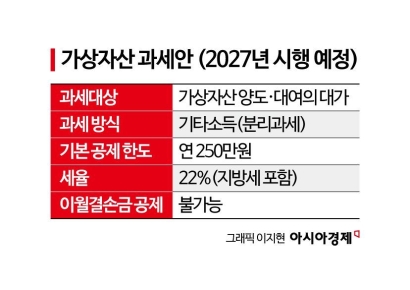 "Stocks Are Not Taxed, but Annual Crypto Gains Over 2.5 Million Won to Be Taxed Next Year... Investors Push Back"
- "Not Jealous of Winning the Lottery"... Entire Village Stunned as 200 Million Won Jackpot of Wild Ginseng Cluster Discovered at Jirisan
- "Even With a 90 Million Won Salary and Bonuses, It Doesn’t Feel Like Much"... A Latecomer Rookie Who Beat 70 to 1 Odds [Scientists Are Disappearing] ③
- "Rather Than Endure a 1.5 Million KRW Stipend, I'd Rather Earn 500 Million in the U.S." Top Talent from SNU and KAIST Are Leaving [Scientists Are Disappearing] ①
- "How Did an Employee Who Loved Samsung End Up Like This?"... Past Video of Samsung Electronics Union Chairman Resurfaces

Meanwhile, authorities announced that, following Moderna's initial plan to significantly reduce vaccine supply this month, the supply volume has been increased again. To achieve faster vaccination goals, the first-dose vaccination schedule for the 18-49 age group will be adjusted. Accordingly, those who have not yet made vaccination reservations or those who have reservations after Chuseok (next month on the 21st) and wish to advance their vaccination schedule can adjust their first-dose vaccination date to after the 6th of next month.
© The Asia Business Daily(www.asiae.co.kr). All rights reserved.







