US Democrats Accelerate Independent Passage of $3.5 Trillion Infrastructure Investment Budget
Senate Passes $1 Trillion Budget, Followed by $3.5 Trillion Budget Resolution
Democratic Party Dissent Not Easily Quelled
![Senator Joe Manchin is a member of the Democratic Party but opposes the $3.5 trillion infrastructure investment. <br>[Image source=AP Yonhap News]](http://www.asiae.co.kr/news/img_view.htm?img=2021081203585873966_1628708337.jpg)
Senator Joe Manchin is a member of the Democratic Party but opposes the $3.5 trillion infrastructure investment.
[Image source=AP Yonhap News]
[Asia Economy New York=Correspondent Baek Jong-min] The U.S. Senate has passed a budget resolution containing a $3.5 trillion investment in human infrastructure. Although this marks the start of processing the budget independently without the Republican Party, it does not seem easy to quell opposition within the Democratic Party.
In the early hours of the 11th (local time), the Senate passed the budget resolution with 50 votes in favor and 49 against. All Democratic lawmakers voted in favor, while all Republican lawmakers opposed except for one absentee.
According to CNN, the budget resolution is the first step to trigger the Senate's 'budget reconciliation' process for Democratic-only processing. The resolution is a kind of guideline that contains the scale of the budget.
The Senate seats are evenly split 50-50 between Democrats and Republicans. The Democrats attempted to pass the resolution while pushing for the budget reconciliation process to neutralize the Republicans' legitimate procedural obstruction (filibuster). Through the budget reconciliation process, a bill can be passed with just 50 seats using Vice President Kamala Harris's casting vote.
The Democrats showed their determination for independent processing by passing a $1 trillion infrastructure investment bill the day before with Republican support and then processing this resolution late at night.
With the passage of the budget resolution, 12 standing committees will prepare detailed budget plans, combine them into a single reconciliation bill, and submit it again for a Senate vote.
House Speaker Nancy Pelosi stated that the $1 trillion and $3.5 trillion budget bills would be processed simultaneously after passing the Senate, while Democratic House Majority Leader Steny Hoyer announced in a letter to members the day before that despite the summer recess, the budget resolution would be put to a vote during the week of August 23.
If the House passes the same budget resolution as the Senate, the Senate will be able to finally pass the reconciliation bill.
However, for the $3.5 trillion bill to finally pass the Senate, internal discipline within the Democratic Party is necessary. Some Democratic lawmakers, including Joe Manchin and Kyrsten Sinema, believe that the $3.5 trillion infrastructure investment is excessive.
Manchin, who is a Democrat but has opposed large-scale infrastructure spending, expressed opposition in a statement released that day, saying, "Considering the current pace of economic recovery, continuing spending at a level suitable for a Great Depression situation is irresponsible."
Hot Picks Today
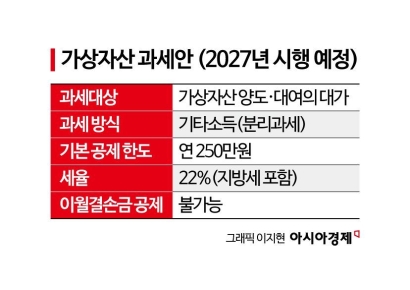 "Stocks Are Not Taxed, but Annual Crypto Gains Over 2.5 Million Won to Be Taxed Next Year... Investors Push Back"
- "Not Jealous of Winning the Lottery"... Entire Village Stunned as 200 Million Won Jackpot of Wild Ginseng Cluster Discovered at Jirisan
- "Even With a 90 Million Won Salary and Bonuses, It Doesn’t Feel Like Much"... A Latecomer Rookie Who Beat 70 to 1 Odds [Scientists Are Disappearing] ③
- "Rather Than Endure a 1.5 Million KRW Stipend, I'd Rather Earn 500 Million in the U.S." Top Talent from SNU and KAIST Are Leaving [Scientists Are Disappearing] ①
- "How Did an Employee Who Loved Samsung End Up Like This?"... Past Video of Samsung Electronics Union Chairman Resurfaces
Regarding this, CNN pointed out that the Democrats cannot afford a single defector to pass the $3.5 trillion infrastructure investment plan and must unite all lawmakers, but they are already facing a major challenge.
© The Asia Business Daily(www.asiae.co.kr). All rights reserved.







