US $1 Trillion Infrastructure Investment Bill Passes Senate... Dollar Strengthens, Bond Yields Rise
![[Image source=Reuters Yonhap News]](http://www.asiae.co.kr/news/img_view.htm?img=2021081112380273158_1628653083.jpg)
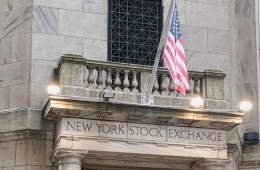
[Asia Economy New York=Correspondent Baek Jong-min] The ambitious $1 trillion infrastructure investment budget proposed by U.S. President Joe Biden has passed a critical milestone. Fueled by expectations of infrastructure investment, the Dow Jones Industrial Average and the S&P 500 index reached record highs on the New York Stock Exchange, while U.S. Treasury yields and the dollar value rose. However, Wall Street has recently been revising its U.S. Treasury yield forecasts downward.
On the 10th (local time), the U.S. Senate voted on the bipartisan $1 trillion infrastructure budget bill, passing it with 69 votes in favor and 30 against. Among those voting in favor were 19 Republican senators, including Senate Minority Leader Mitch McConnell.
This infrastructure investment plan covering roads, bridges, railways, and water systems falls significantly short of the $2.3 trillion initially proposed by President Biden. New projects amount to only $550 billion. President Biden stayed at home until the morning of the day, then returned to the White House to deliver a speech expressing gratitude for Republican cooperation and reportedly made direct calls to lawmakers. This was especially welcome news for President Biden, who had not achieved concrete policy progress since taking office. Foreign media hailed it as "a major victory for Biden and the Democrats."
President Biden and the Democrats now plan to independently push forward a $3.5 trillion human infrastructure investment bill. The key challenge lies not with the Republicans but with some Democratic lawmakers such as Joe Manchin. Progressive lawmakers may also oppose the bill due to the reduced climate change budget compared to initial expectations.
U.S. Treasury yields rose to 1.34% on the day, reflecting expectations for the $1 trillion infrastructure investment. Although yields had fallen to 1.127% last week, they have strengthened due to optimism about the infrastructure bill and the Federal Reserve's potential tapering (reduction of asset purchases).
The rise in Treasury yields also boosted the value of the U.S. dollar. The dollar index climbed to 93.11, marking its highest level since mid-March.
Hot Picks Today
 "Stocks Are Not Taxed, but Annual Crypto Gains Over 2.5 Million Won to Be Taxed Next Year... Investors Push Back"
- "Not Jealous of Winning the Lottery"... Entire Village Stunned as 200 Million Won Jackpot of Wild Ginseng Cluster Discovered at Jirisan
- "Jeong Yu-kyung Is a Neighbor"...Itaewon Standalone House with Record 23.2 Billion Won Appraisal Up for Auction [Real Estate AtoZ]
- "How Did an Employee Who Loved Samsung End Up Like This?"... Past Video of Samsung Electronics Union Chairman Resurfaces
- "Even With a 90 Million Won Salary and Bonuses, It Doesn’t Feel Like Much"... A Latecomer Rookie Who Beat 70 to 1 Odds [Scientists Are Disappearing] ③
However, investment banks such as Goldman Sachs and JP Morgan have recently lowered their year-end Treasury yield forecasts in response to the recent downward trend. JP Morgan revised its year-end Treasury yield forecast from 1.95% to 1.75%, while Goldman Sachs projected 1.6%.
© The Asia Business Daily(www.asiae.co.kr). All rights reserved.