Interest Rate Hikes: Boon or Bane for Household Debt?

KRW 1,765 Trillion: The Largest Household Debt in History
Need to Slow Down the Growth Rate Due to Interest Rate Hikes
Household Debt Already on the Rise
Raising Interest Rates Could Increase Borrowers' Burden
[Asia Economy Reporter Kim Eun-byeol] With Lee Ju-yeol, Governor of the Bank of Korea, stating that discussions on raising interest rates could begin next month, a debate has emerged about how raising rates at this point would affect household debt. While some, including the Bank of Korea, believe that raising rates now is necessary to prevent further increases in household debt, others worry that raising rates amid the ongoing COVID-19 situation could increase the interest burden on loans for self-employed individuals and others.
At a press conference following the Monetary Policy Committee meeting on the 15th, Governor Lee expressed deep concern about financial imbalances. He said, "Recently, economic agents' risk appetite has continued, leading to asset investments financed by borrowing," and added, "Despite strengthened prudential regulations, recent trends show the limits of macroprudential regulations as long as there is an expectation that low interest rates will be maintained for a long time." This means that although the government is regulating loans to curb the rapid increase in household debt caused by aggressive borrowing and investment, these measures have not been effective. Therefore, Governor Lee stated, "The need to respond with monetary normalization within the limits allowed by macroeconomic conditions has increased."
Considering the rapid economic recovery and COVID-19 under government control, the necessity to raise interest rates has increased to prevent a systemic crisis caused by the rapid rise in household debt and asset bubbles such as real estate.
Governor Lee also appeared before the National Assembly's Planning and Finance Committee the day before and said, "The prolonged low interest rates and the market's expectation that they will continue have been one factor driving funds into the asset market." He added, "The later the interest rate hike, the greater the cost we will have to pay, so I hope we can raise rates within this year."
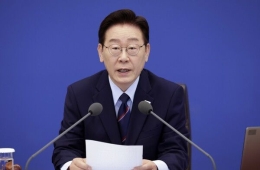
![Bank of Korea Governor Lee Ju-yeol is responding to lawmakers' questions at the Planning and Finance Committee plenary meeting held at the National Assembly in Yeouido, Seoul on the 16th. <br>[Image source=Yonhap News]](http://www.asiae.co.kr/news/img_view.htm?img=2021071710090738080_1626484147.jpg)
Bank of Korea Governor Lee Ju-yeol is responding to lawmakers' questions at the Planning and Finance Committee plenary meeting held at the National Assembly in Yeouido, Seoul on the 16th.
[Image source=Yonhap News]
In the first quarter of this year, South Korea's household debt reached KRW 1,765 trillion, marking a 9.5% increase compared to the same period last year, maintaining a high growth rate. Bank household loans also increased by KRW 41.6 trillion in the first half of the year, setting a record for the largest increase in the first half. The household debt-to-GDP ratio stands at 103.8%, ranking 7th among 43 countries surveyed by the Bank for International Settlements (BIS). Despite government efforts to curb lending, household loans are rapidly increasing.
However, concerns have been raised that raising interest rates amid the ongoing COVID-19 situation could increase the burden on borrowers who have already taken out loans. Yang Kyung-sook, a member of the Democratic Party of Korea and the National Assembly's Planning and Finance Committee, expressed concerns about the possibility of the Bank of Korea raising the base interest rate this year. The reason is that if interest rates rise, loan interest rates will increase, which could lead to higher household interest burdens and credit risks.
Rep. Yang said, "If the base interest rate is raised, it will lead to an increase in loan interest rates, which in turn results in a greater interest repayment burden on households," and added, "Policy support such as expanding the Financial Intermediation Support Loan System should also be considered to ensure the financial soundness of vulnerable groups is not undermined."
Regarding the difficulties vulnerable groups may face due to interest rate hikes, Governor Lee said, "I understand that self-employed individuals, small business owners who provide face-to-face services, and those with unstable employment face difficulties in repaying interest," and added, "In the past, we have expanded financial support for vulnerable groups, and we will not neglect support for vulnerable groups that the Bank of Korea can provide, depending on the situation this time as well."
Hot Picks Today
 "Stocks Are Not Taxed, but Annual Crypto Gains Over 2.5 Million Won to Be Taxed Next Year... Investors Push Back"
- "Don't Throw Away Coffee Grounds" Transformed into 'High-Grade Fuel' in Just 90 Seconds [Reading Science]
- [Breaking] President Lee: "Israel Violated All International Norms" in Abduction of Citizens in Gaza Strip
- "Groups of 5 or More Now Restricted"... Unrelenting Running Craze Leaves Citizens and Police Exhausted
- "Even With a 90 Million Won Salary and Bonuses, It Doesn’t Feel Like Much"... A Latecomer Rookie Who Beat 70 to 1 Odds [Scientists Are Disappearing] ③
© The Asia Business Daily(www.asiae.co.kr). All rights reserved.