US Warns Domestic Companies of Potential Violations of Xinjiang Investment Laws
![Tony Blinken, U.S. Secretary of State <br>[Photo by Reuters]](http://www.asiae.co.kr/news/img_view.htm?img=2021071402171232717_1626196632.jpg)
[Asia Economy New York=Correspondent Baek Jong-min] On the 13th (local time), the U.S. government warned companies to halt transactions and investments related to forced labor and human rights abuses in the Xinjiang region of China. Coupled with China’s measures to restrict its domestic companies from listing on U.S. stock exchanges, the economic relationship between the two countries is expected to deteriorate in the future.
The renewed alert jointly issued by the U.S. Departments of State, Treasury, Commerce, Homeland Security, the Office of the U.S. Trade Representative, and Labor regarding the Xinjiang supply chain defines the Chinese government as committing genocide and crimes against humanity against ethnic minorities in Xinjiang. It warns that U.S. companies and individuals face the risk of violating U.S. laws if they directly or indirectly engage in supply chains or venture investments related to the Xinjiang region.
The 36-page guide released by the State Department contains detailed information on the risks of investing in Chinese companies linked to forced labor and surveillance in Xinjiang. The sectors mentioned include agriculture, cotton, textiles, mobile phones, and electronic assemblies.
The guide also states that the Chinese government continues to perpetrate horrific abuses targeting mostly Muslim Uyghurs, Kazakhs, and Kyrgyz in the Xinjiang Uyghur Autonomous Region and other parts of China.
Secretary of State Antony Blinken highlighted in a statement that the defining feature of this alert is the explicit designation of the Chinese government’s actions in Xinjiang as genocide and crimes.
Blinken emphasized, "The United States will continue to hold China accountable for its atrocities and abuses through whole-of-government efforts and close coordination with the private sector and allies."
This alert is a revision of the one first issued in July last year during the Trump administration by the Departments of State, Treasury, Commerce, and Homeland Security. Compared to then, the addition of the Office of the U.S. Trade Representative and the Department of Labor suggests a whole-of-government response is underway.
![The appearance of residents in the Xinjiang region of China <span>[Image source=AP Yonhap News]</span>](http://www.asiae.co.kr/news/img_view.htm?img=2021051304241832942_1620847458.jpg)
The appearance of residents in the Xinjiang region of China [Image source=AP Yonhap News]
View original imageThe Biden administration last week added 14 Chinese companies related to human rights abuses and surveillance in Xinjiang to the "blacklist," and Bloomberg reported that a similar alert will be issued regarding Hong Kong this week.
The U.S. Congress also supports the government’s policy. Last month, the Senate Foreign Relations Committee passed the "Uyghur Forced Labor Prevention Act," which imposes import restrictions on goods produced by forced labor in Xinjiang and regulates companies that seek to trade with Xinjiang.
Meanwhile, on the 30th of last month, the Chinese government took strong retaliatory measures against the ride-sharing company Didi Chuxing, which listed on the U.S. stock market without complying with the order to delay its listing, and required companies listing on foreign stock exchanges to obtain government approval. This is seen as a measure effectively blocking Chinese companies from listing on U.S. stock exchanges.
Hot Picks Today
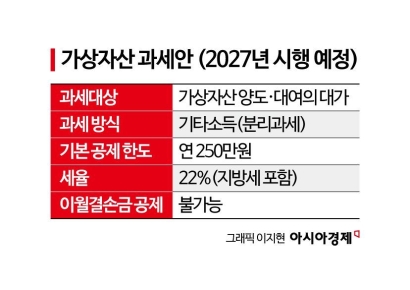 "Stocks Are Not Taxed, but Annual Crypto Gains Over 2.5 Million Won to Be Taxed Next Year... Investors Push Back"
- "Not Jealous of Winning the Lottery"... Entire Village Stunned as 200 Million Won Jackpot of Wild Ginseng Cluster Discovered at Jirisan
- "Jeong Yu-kyung Is a Neighbor"...Itaewon Standalone House with Record 23.2 Billion Won Appraisal Up for Auction [Real Estate AtoZ]
- "How Did an Employee Who Loved Samsung End Up Like This?"... Past Video of Samsung Electronics Union Chairman Resurfaces
- "Even With a 90 Million Won Salary and Bonuses, It Doesn’t Feel Like Much"... A Latecomer Rookie Who Beat 70 to 1 Odds [Scientists Are Disappearing] ③
© The Asia Business Daily(www.asiae.co.kr). All rights reserved.