Government Discusses Service Stability and User Protection with Google, Naver, and 3 Other Companies
Obligation to Ensure Stability of Value-Added Communication Services
Review of Progress and Introduction Effects

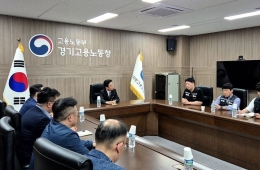
[Asia Economy Reporter Minyoung Cha] The Ministry of Science and ICT announced on the 8th that it held a meeting chaired by Heo Seong-wook, Director of the Network Policy Office, with obligated service providers under Article 22-7 of the Telecommunications Business Act to ensure the stability of value-added telecommunications services and to strengthen user protection.
Among the six obligated service providers, five participated: Google, Netflix Services Korea, Facebook, Naver, and Kakao. Content Wave plans to participate separately at a later date due to corporate circumstances.
This meeting was organized to review the major progress and effects of the value-added telecommunications service stability obligation regulation, which has been in effect since the end of last year, and to explore directions for future development.
At the meeting, the service providers shared the status of their implementation of service stability measures. Jaehun Jung, Senior Policy Advisor at Google Korea, explained the status of outages and responses for Google’s major services such as YouTube and announced the newly introduced Korean-language guidance implemented after the regulation took effect.
Junghwan Yeon, Head of Policy at Netflix Services Korea, described the technical efforts and investment status to optimize the volume and routes of content traffic, while Heo Wook, Head of External Policy at Facebook Korea, shared plans to ensure stability through cooperation with domestic ISPs.
Jiyoon Son, Head of Policy Strategy at Naver, explained the guidelines Naver is independently preparing to ensure service stability, and Changgeun Choi, Head of External Cooperation at Kakao, presented improvements to the outage notification system and plans to prepare for traffic surges during holidays and new service launches.
The Ministry of Science and ICT summarized the key achievements and implications since the regulation’s implementation and explained future development directions through industry cooperation. In the open discussion, challenges, suggestions, and domestic user protection measures were discussed.
Hot Picks Today
!["It Has Now Crossed Borders": No Vaccine or Treatment as Bundibugyo Ebola Variant Spreads [Reading Science]](https://cwcontent.asiae.co.kr/asiaresize/93/2026052019230771274_1779272587.jpg) "It Has Now Crossed Borders": No Vaccine or Treatment as Bundibugyo Ebola Variant Spreads [Reading Science]
"It Has Now Crossed Borders": No Vaccine or Treatment as Bundibugyo Ebola Variant Spreads [Reading Science]
- [Breaking] Samsung Labor Union to Hold Vote on Tentative Agreement from 22nd to 27th
- [Report] "I Think Twice Before Going to a Store"... Starbucks '5/18 Tank Day' Controversy Grows
- "Stocks Are Not Taxed, but Annual Crypto Gains Over 2.5 Million Won to Be Taxed Next Year... Investors Push Back"
- "Who Is Visiting Japan These Days?" The Once-Crowded Tourist Spots Empty Out... What's Happening?
Heo Seong-wook, Director of the Network Policy Office at the Ministry of Science and ICT, who chaired the meeting, stated, “The value-added telecommunications service stability assurance system, which has attracted international attention since its introduction, has produced tangible results such as Korean-language guidance during overseas service outages thanks to active cooperation from companies. The government believes continuous improvement and development of the system are necessary to maximize user benefits, and we will strive to impose only the minimum necessary obligations on the industry while actively reflecting companies’ improvement requests, making this system a global model.”
© The Asia Business Daily(www.asiae.co.kr). All rights reserved.