Vice Minister Ki Jae: "Reviewing Restoration of Forward Exchange Position Regulation from 40% to 50%"
Deputy Minister of Economy Lee Okwon to Hold 1st Foreign Exchange Soundness Council Meeting on the 6th
Foreign Exchange Soundness Remains Stable Despite COVID-19...Considering Soundness Regulations

Lee Ok-won, First Vice Minister of Strategy and Finance, speaking at the "1st Foreign Exchange Soundness Council" held on the 6th in collaboration with the Financial Services Commission, Bank of Korea, and Financial Supervisory Service. (Photo by Ministry of Strategy and Finance)
View original image[Sejong=Asia Economy Reporter Moon Chaeseok] The government is considering restoring the regulations on forward foreign exchange positions in the banking sector, which were relaxed last year due to the impact of the COVID-19 pandemic, back to their original state. This decision is based on the assessment that the domestic foreign exchange soundness has remained stable despite the COVID-19 crisis. Additionally, foreign exchange liquidity checks for the non-banking sector will be strengthened.
Lee Eokwon, First Vice Minister of Strategy and Finance, held the '1st Foreign Exchange Soundness Council' on the 6th with the Financial Services Commission, the Bank of Korea, and the Financial Supervisory Service, stating, "We will review normalization measures for foreign exchange-related actions, including the banking sector's forward foreign exchange position regulations, which were partially relaxed during the COVID-19 response process."
The forward foreign exchange position system regulates domestic banks to manage their net forward foreign exchange positions at 40% or less of their capital. Financial institutions such as banks trade foreign currencies like the dollar through buying and selling forwards rather than spot transactions. The purpose is to limit the proportion of forward foreign exchange positions below a certain level of capital to prevent excessive concentration of foreign currency assets.
Previously, domestic banks' net forward foreign exchange positions could not exceed 40% of their capital, but since March last year, the regulation was relaxed to 50%. Foreign bank branches' limits were expanded from 200% to 250%.
Vice Minister Lee evaluated, "Although our country's external debt has recently increased, this is mostly due to the inflow of bond investment funds, and the proportion of short-term external debt within total external debt remains stable at 29.3%."
He urged, "To prevent the recurrence of the experience last March when the foreign exchange procurement vulnerability of the non-banking sector spread market instability, the Financial Supervisory Service should proceed smoothly with the foreign currency liquidity stress tests to be piloted in the second half of the year."
Hot Picks Today
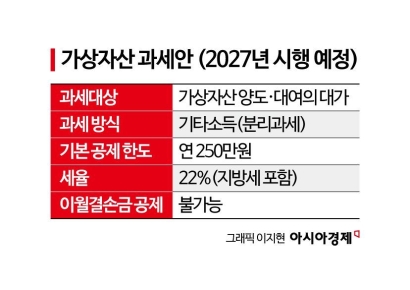 "Stocks Are Not Taxed, but Annual Crypto Gains Over 2.5 Million Won to Be Taxed Next Year... Investors Push Back"
- "Not Jealous of Winning the Lottery"... Entire Village Stunned as 200 Million Won Jackpot of Wild Ginseng Cluster Discovered at Jirisan
- "Even With a 90 Million Won Salary and Bonuses, It Doesn’t Feel Like Much"... A Latecomer Rookie Who Beat 70 to 1 Odds [Scientists Are Disappearing] ③
- "Rather Than Endure a 1.5 Million KRW Stipend, I'd Rather Earn 500 Million in the U.S." Top Talent from SNU and KAIST Are Leaving [Scientists Are Disappearing] ①
- "How Did an Employee Who Loved Samsung End Up Like This?"... Past Video of Samsung Electronics Union Chairman Resurfaces
Vice Minister Lee also requested the smooth introduction of three monitoring indicators for the non-banking sector in the second half of the year. These indicators, introduced to strengthen foreign exchange liquidity checks in the non-banking sector, refer to ▲foreign currency funding needs ▲foreign currency asset-liability gap ▲foreign currency funding and operation maturities.
© The Asia Business Daily(www.asiae.co.kr). All rights reserved.







