[Q&A] Drinking Prohibited at Hangang Park After 10 PM Starting Today... Changes in Quarantine Measures
Vaccinated Individuals Also Required to Wear Masks Outdoors 'Until Situation Stabilizes'

A citizen visiting the temporary screening clinic set up at Seoul Station Plaza on the 4th, where around 700 new COVID-19 cases are expected, is undergoing a test. Photo by Kang Jin-hyung aymsdream@
View original image[Asia Economy Reporter Seo So-jeong] As the spread of COVID-19 continues mainly in the Seoul metropolitan area, the government has reversed its direction and decided not to allow the 'outdoor no-mask policy for first-dose vaccinated individuals' currently applied from this month in the metropolitan area. Additionally, outdoor drinking in parks, riversides, and other areas in the metropolitan region will be prohibited after 10 PM. This is because new confirmed cases have recorded in the 700s even on weekends, and the infection is spreading rapidly, especially among the highly active young population in their 20s and 30s. We have summarized the questions regarding the changed quarantine measures.
Q. When will the outdoor mask-wearing and the ban on outdoor drinking after 10 PM in the metropolitan area be enforced?
A. The recommendation for vaccinated individuals to wear masks outdoors starts immediately from today. Masks must not be removed even outdoors where a 2-meter distance can be maintained. However, regarding penalty adjustments, local governments plan to issue administrative orders and apply penalties if there are many violations. The ban on outdoor drinking after 10 PM requires local governments to enact ordinances, so administrative measures are expected to take about a day or two. From today, it is recommended not to drink in parks or riversides after 10 PM, and administrative procedures will follow, mainly led by local governments in Seoul, Gyeonggi, and Incheon.
Q. How long will the principle of mandatory outdoor mask-wearing for vaccinated individuals and the ban on outdoor drinking after 10 PM by the riverside in the metropolitan area be maintained?
A. For now, local governments in the metropolitan area will activate this system and maintain these measures until the 'situation improves.' It should be understood that these measures will be maintained without a fixed period until the epidemic situation stabilizes and begins to decline more steadily.
Q. The metropolitan area has met the new 'Social Distancing' Level 3 criteria. When will the distancing measures for the metropolitan area, to be applied after the 8th, be decided?
A. Discussions are ongoing with local governments in the metropolitan area. In particular, metropolitan local governments are collecting opinions from each district and consulting experts to gather feedback. These opinions are being discussed together with central government agencies. The final decision and announcement are scheduled to be made at the Central Disaster and Safety Countermeasures Headquarters meeting on Wednesday, the 7th, after monitoring the situation until early next week.

On the 4th, as the number of new COVID-19 cases is expected to be around 700, citizens visiting the temporary screening clinic set up at Seoul Station Plaza are lining up to get tested. Photo by Kang Jin-hyung aymsdream@
View original imageQ. There is a plan to strengthen diagnostic testing in the metropolitan area.
A. Temporary screening clinics or mobile screening clinics will be additionally installed mainly in areas with high floating populations and density such as Jung-gu, Gangnam, and Songpa in Seoul. As of the 3rd, Seoul has increased the number of temporary screening clinics to 34, Incheon operates 5, and Gyeonggi has 66 clinics. To allow diagnostic testing without time restrictions, the operating hours of screening clinics in Seoul will be extended until 9 PM on weekdays and 6 PM on weekends. Gyeonggi screening clinics will also extend hours until 9 PM on weekdays and 6 PM on weekends.
Hot Picks Today
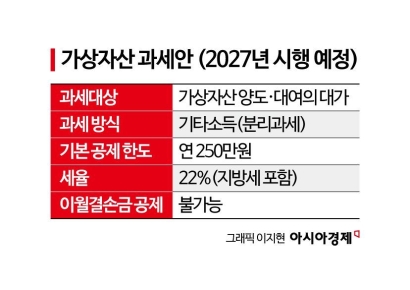 "Stocks Are Not Taxed, but Annual Crypto Gains Over 2.5 Million Won to Be Taxed Next Year... Investors Push Back"
- "Not Jealous of Winning the Lottery"... Entire Village Stunned as 200 Million Won Jackpot of Wild Ginseng Cluster Discovered at Jirisan
- "Rather Than Endure a 1.5 Million KRW Stipend, I'd Rather Earn 500 Million in the U.S." Top Talent from SNU and KAIST Are Leaving [Scientists Are Disappearing] ①
- "How Did an Employee Who Loved Samsung End Up Like This?"... Past Video of Samsung Electronics Union Chairman Resurfaces
- "Even With a 90 Million Won Salary and Bonuses, It Doesn’t Feel Like Much"... A Latecomer Rookie Who Beat 70 to 1 Odds [Scientists Are Disappearing] ③
Q. COVID-19 cases are surging in the metropolitan area. Is there any problem with the medical response system?
A. With the recent surge in patients in the metropolitan area, it is expected that residential treatment centers for mild cases, which account for about 80% of total confirmed cases, may be insufficient. However, dedicated infectious disease hospitals for moderate or severe cases and intensive care beds have some capacity available. Currently, the total number of beds in the metropolitan area is 9,300, with 54%, or 4,200 beds, available. Although there is no increase in severe cases, mild or asymptomatic cases are rising, so preparations are underway. Regarding residential treatment centers, three facilities with a capacity of about 500 people will be additionally opened next week, and the admission capacity will be doubled by using multi-bed rooms.
© The Asia Business Daily(www.asiae.co.kr). All rights reserved.