"Liquid-Type Tobacco Also Subject to Health Promotion Surcharge"…15 Welfare Ministry Bills Pass Plenary Session
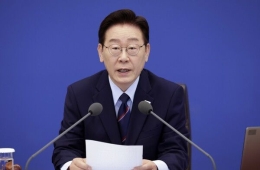
Passage of the National Health Promotion Act and the Act on Welfare of Persons with Disabilities in the National Assembly Plenary Session
![[Image source=Yonhap News]](http://www.asiae.co.kr/news/img_view.htm?img=2021062917434212029_1624956222.jpg)
[Asia Economy Reporter Kim Ji-hee] The Ministry of Health and Welfare announced that 15 bills under its jurisdiction, including the National Health Promotion Act and the Welfare of Persons with Disabilities Act, were passed by the National Assembly plenary session on the 29th.
The Ministry of Health and Welfare evaluated that through the amendment of the National Health Promotion Act, "new types of tobacco (such as liquid-type tobacco) manufactured from roots, stems, etc., rather than the leaves at the beginning of the year, have been included in the scope of health promotion charges, thereby enhancing tax fairness."
Additionally, through this plenary session, laws such as the Act on the Use and Provision of Social Security Benefits and the Discovery of Beneficiaries, the Pharmaceutical Affairs Act, and the Medical Device Act were also amended. First, the amendment to the Act on the Use and Provision of Social Security Benefits and the Discovery of Beneficiaries established a legal basis for sharing social security-related information between the Ministry of Health and Welfare and educational institutions (superintendents and school principals). This enables early detection of children at risk and suspected victims of abuse.
The amendments to the Pharmaceutical Affairs Act and the Medical Device Act expanded the obligation to prepare expenditure reports by suppliers of pharmaceuticals and medical devices to include public disclosure obligations and strengthened penalties for violations. Those entrusted with promotional activities for pharmaceuticals and medical devices were also given the same obligation to prepare expenditure reports as suppliers. By including them among those prohibited from providing economic benefits (rebates), a basis was established to enhance transparency in pharmaceutical and medical device transactions.
The amendment to the Long-Term Care Insurance Act for the Elderly allows 'special cash benefits' to undergo the same annual benefit cost calculation procedures, including review by the Long-Term Care Committee, as facility and home care benefits. Special cash benefits are a system that pays family care expenses in exceptional cases where long-term care institutions are significantly lacking in islands or remote areas, or where care by others is impossible due to infectious disease patients, making it difficult for beneficiaries to use home or facility care benefits.
The National Basic Livelihood Security Act was also amended. It clarified the criteria for recognition and cancellation of recognition of self-support enterprises and established regulations for the preferential purchase of products from self-support enterprises, thereby providing stronger protection for diligent self-support enterprises. The amendment to the National Pension Act codified the obligation to notify about pension insurance premium arrears into law. It also requires additional notifications of arrears through various methods such as text messages, strengthening the protection of workers' pension benefits.
Furthermore, the Emergency Welfare Support Act was amended to provide a legal basis for private organizations designated by city, county, and district offices to assist in the preparation and submission of emergency welfare application forms upon the request of beneficiaries.
Amendments were also made to laws related to persons with disabilities. Through the amendment of the Act on Guarantee of Convenience for Persons with Disabilities, the Elderly, and Pregnant Women, wheelchair shopping carts for persons with disabilities were included as mandatory items in large marts, enhancing convenience in daily life. The Welfare of Persons with Disabilities Act was amended to provide the National Pension Service, which conducts detailed assessments of disability levels, with the authority to request necessary materials from related institutions, thereby reducing the document submission burden on persons with disabilities. Additionally, those sentenced to employment restriction orders under the Special Act on the Punishment of Sexual Crimes were added to the list of employment restrictions in facilities related to persons with disabilities. The kinship exemption provision in the Criminal Act, which exempts punishment for property crimes among relatives, was made inapplicable to crimes of abuse against persons with disabilities. Legal grounds were also established to expand the scope of mandatory reporters of disability abuse, introduce a statement assistance system for victimized persons with disabilities, and install shelters for children with disabilities, thereby providing stronger protection for persons with disabilities.
The amendment to the Regional Health Act established a basis for omitting part of the investigation and selecting beneficiaries when the results of income and property investigations for providing regional health care services based on public data fall below certain criteria. This improves convenience for applicants and efficiency in investigation work.
Hot Picks Today
 "Stocks Are Not Taxed, but Annual Crypto Gains Over 2.5 Million Won to Be Taxed Next Year... Investors Push Back"
- "Don't Throw Away Coffee Grounds" Transformed into 'High-Grade Fuel' in Just 90 Seconds [Reading Science]
- Despite Warnings of "Do Not Enter, You May Not Make It Out Alive"... Foreign Tourist Stranded After Unauthorized Climb on Jeju Sanbangsan
- Signed Without Viewing for 1.6 Billion Won... Jamsil and Seongbuk Jeonse Prices Jump 200 Million Won in a Month [Real Estate AtoZ]
- "Even With a 90 Million Won Salary and Bonuses, It Doesn’t Feel Like Much"... A Latecomer Rookie Who Beat 70 to 1 Odds [Scientists Are Disappearing] ③
In addition, an amendment was made to the Korea Human Resources Development Institute for Health and Welfare Act. The name of the Korea Human Resources Development Institute for Health and Welfare was changed to the Korea Human Resources Institute for Health and Welfare, and its role as a comprehensive management and support organization for education and training in the health and welfare sector was strengthened.
© The Asia Business Daily(www.asiae.co.kr). All rights reserved.