"Online Eyewear Sales and Drone Delivery 'HanGeoreum Model' Project to Establish Win-Win Plan by Q3"
Government Selects New Tasks for Social Compromise 'Hangeoreum Model'
Establishment of Win-Win Coordination Body...Attempt to Reach Stakeholder Agreement

Lee Eok-won, First Vice Minister of the Ministry of Economy and Finance, explaining key policy plans such as the 'One Step Model' at the Emergency Economic Central Countermeasures Headquarters and Innovation Growth Strategy Meeting on the afternoon of the 9th. (Photo by Ministry of Economy and Finance)
View original image[Sejong=Asia Economy Reporter Moon Chaeseok] The government has stepped in to resolve conflicts surrounding new businesses such as online eyeglass sales services and drone/robot small parcel delivery. They plan to apply the 'Hangeoreum Model,' a social compromise mechanism where stakeholders make concessions to reach an agreement.
On the 9th, the Ministry of Economy and Finance discussed the "Current Status and Future Plans for Promoting the Hangeoreum Model, a Social Compromise Mechanism for Introducing New Businesses," at the Central Emergency Economic Countermeasures Headquarters and the Innovation Growth Strategy Meeting.
For new tasks to be promoted in the first half of this year, they prioritized ▲ innovation in daily logistics services using future transportation means ▲ and the online eyeglass sales service task. According to the Medical Service Act, eyeglasses cannot be sold online, but since March 2019, under a regulatory sandbox demonstration exemption, new businesses have applied to operate a service that takes online orders after virtual fitting of eyeglasses and delivers them. The industry opposes this, citing concerns about side effects if eyeglass adjustment work is omitted and infringement on the business rights of small eyeglass shops. However, new businesses argue that there are no safety issues and that sales should be allowed as it offers consumer convenience and new market opportunities for the industry.
Regarding small parcel delivery using future transportation means such as drones and robots, there is currently no legal basis. The freight cargo industry opposes this, fearing threats to their survival, while the logistics industry using new transportation means demands the establishment of legal grounds that cover potential future transportation methods to foster new industry development.
The government has set a goal to prepare win-win plans related to these two tasks before the third quarter. For tasks in the second half of the year, candidate tasks will be identified and reviewed, with selections planned after August.
Lee Eokwon, the first vice minister of the Ministry of Economy and Finance, stated, "Through the Hangeoreum Model, we will seek ways for all stakeholders to win and establish a virtuous cycle of coexistence and innovation."
Hot Picks Today
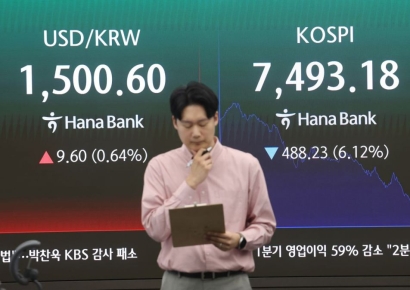 After Topping 8,000 Instead of Hitting 10,000... KOSPI Plunges—When Will It Rebound?
- "Samsung and Hynix Were Once for the Underachievers"... Hyundai Motor Employee's Lament
- [Breaking] Court Rules Against Samsung Electronics Union...1 Billion Won per Day Penalty for Exceeding Strike Scope
- Court Partially Grants Samsung Electronics' Injunction to Prohibit Industrial Action... 100 Million Won Penalty Per Day for Violations
- "That? It's Already Stashed" Nightlife Scene Crosses the Line [ChwiYak Nation] ③
Meanwhile, since last year, the government has been operating the Hangeoreum Model, achieving agreements on rural vacant house utilization for lodging and forest tourism (Hadong Alps Project), and in January this year, on shared lodging for domestic urban residents. However, while the shared lodging business days for domestic urban residents were discussed based on a limit of 180 days per year, opinions have emerged that flexibility is needed considering regional characteristics, and additional feedback is being gathered.
© The Asia Business Daily(www.asiae.co.kr). All rights reserved.