85 Forced Labor Victims Lose 8.6 Billion Won Compensation Lawsuit Against 16 Japanese Companies (Comprehensive)
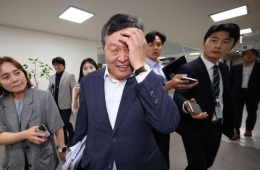
![On the morning of the 28th of last month, the first hearing of the damages lawsuit filed by victims of forced labor under Japanese rule against 16 Japanese companies was held at the Seoul Central District Court in Seocho-gu. After the trial ended, the plaintiffs gave interviews to the press. [Image source=Yonhap News]](http://www.asiae.co.kr/news/img_view.htm?img=2021052812373955169_1622173059.jpg)
On the morning of the 28th of last month, the first hearing of the damages lawsuit filed by victims of forced labor under Japanese rule against 16 Japanese companies was held at the Seoul Central District Court in Seocho-gu. After the trial ended, the plaintiffs gave interviews to the press. [Image source=Yonhap News]
View original image[Asia Economy Reporter Kim Daehyun] In the first trial of a damages claim lawsuit filed by forced labor victims during the Japanese colonial period against 16 Japanese companies, the court dismissed the case.
On the 7th, the Civil Division 34 of the Seoul Central District Court (Presiding Judge Kim Yangho) delivered the ruling at 2 p.m. in the damages claim lawsuit filed by 85 forced labor victims, including Mr. Song, against 16 Japanese companies such as Nippon Steel (formerly Shin Nippon Steel) and Nissan Chemical.
The court stated, "Individual claims cannot be said to have been extinguished or waived directly by the Claims Agreement," but added, "However, they cannot be exercised through litigation. All plaintiffs' claims are dismissed."
The court ruled, "Considering the wording of the Claims Agreement and related memoranda, the circumstances of the agreement's conclusion, and subsequent measures, the victims' claims for damages fall under the scope of the Claims Agreement," and "The phrases 'complete and final settlement' and 'no further claims can be made' as stipulated in Article 2 of the Claims Agreement should be interpreted not as the complete extinction of individual claims but as a restriction on 'Korean nationals exercising rights through litigation against Japan or Japanese nationals'."
It further explained, "This is ultimately the same as the minority opinion and conclusion of the Supreme Court's plenary session ruling in lawsuits filed by other forced labor victims against Japanese companies."
Additionally, the court stated, "According to Article 27 of the Vienna Convention, domestic legal circumstances recognizing the illegality of colonial rule alone cannot justify the 'non-fulfillment' of the Claims Agreement without mutual agreement on the legality or illegality of colonial rule," and "If this claim were accepted, it could result in a violation of international law, including Article 27 of the Vienna Convention and the principle of estoppel." The principle of estoppel means that one cannot act inconsistently with their previously stated words or conduct.
Regarding the advancement of the scheduled verdict date from the 10th to this day, the court said, "(According to the Supreme Court ruling) changing the verdict date without notifying the parties is not illegal," and "Considering the overall circumstances such as courtroom peace and stability, the verdict date was changed and the legal representatives were notified via electronic service and telephone calls."
Earlier, on the 28th of last month, the court had decided at the first hearing, "This case has been pending for a long time. Relevant precedents have been issued by the Supreme Court, and the facts are all established," and resolved to conclude all arguments at that hearing. At that time, the representatives of the Japanese companies all requested the court to postpone the verdict date, but the court responded, "These are all legal issues, and the plaintiffs have waited a very long time," rejecting the request.
On this day as well, the court added, "Although some parties requested continuation of the arguments, this ruling can be made as a dismissal without trial under Article 219 of the Civil Procedure Act, so the request was not accepted."
This is the first lawsuit among forced labor victim lawsuits against Japanese companies involving multiple companies, and the total amount of damages claimed by the victims was 8.6 billion KRW. The Japanese companies consistently remained 'non-responsive' after the victims filed the lawsuit in 2015. However, after the court recently served the complaint through public notice (a system where the content is published in the court gazette and deemed delivered to the parties), the Japanese companies belatedly appointed domestic lawyers as their legal representatives. It is reported that about ten parties involved in the case passed away between the initial filing of the complaint and the first hearing held on this day.
The victims and their families who witnessed the ruling expressed strong regret. Jang Deokhwan, representative of the National Coalition for Justice for Forced Labor Victims under Japanese Rule, said, "I cannot contain my anger," and criticized, "I cannot understand how the judiciary and the state can act like this when our ancestors suffered at the hands of the Japanese. In short, it is a state and government that do not protect their own citizens." Jang added, "Even the parties did not know that the verdict date was advanced today."
Attorney Kang Gil, lead counsel from Hansae Law Firm representing the victims, said, "This ruling is completely contrary to the existing Supreme Court rulings," and "We plan to appeal." In 2018, the Supreme Court accepted a damages claim filed by four forced labor victims, including the late Go Woon-taek, against Nippon Steel, ordering compensation of 100 million KRW per person.
Hot Picks Today
!["Rather Than Endure a 1.5 Million KRW Stipend, I'd Rather Earn 500 Million in the U.S." Top Talent from SNU and KAIST Are Leaving [Scientists Are Disappearing] ①](https://cwcontent.asiae.co.kr/asiaresize/93/2026051914165468840_1779167814.png) "Rather Than Endure a 1.5 Million KRW Stipend, I'd Rather Earn 500 Million in the U.S." Top Talent from SNU and KAIST Are Leaving [Scientists Are Disappearing] ①
"Rather Than Endure a 1.5 Million KRW Stipend, I'd Rather Earn 500 Million in the U.S." Top Talent from SNU and KAIST Are Leaving [Scientists Are Disappearing] ①
- Given Grants, Then Says "No Launch" ... Innovative Korean Technology Ultimately Forced Overseas
- [Breaking] Chairman Park Sookeun: "Possibility of Agreement Instead of Samsung Electronics Labor-Management Mediation Proposal"
- "If That's the Case, Why Not Just Buy Stocks?" ETFs in Name Only, Now 'Semiconductor-Heavy' and a Playground for Short-Term Traders
- "No Cure Available, Spread Accelerates... Already 105 Dead, American Infected"
Attorney Kang added, "At the very least, wages and consolation money must be compensated for the extremely unfair situation where forced laborers did not receive wages," and "The bilateral relationship should be reestablished based on this."
© The Asia Business Daily(www.asiae.co.kr). All rights reserved.
![Cheaper Than Candy, Yet Impossible to Find... Fears of a 'Pediatric Medical Crisis' as Pharmaceutical Companies Halt Production [Why&Next]](https://cwcontent.asiae.co.kr/asiaresize/307/2026051910065268365_1779152813.jpg)