Foreign Retail Investors Have Not Sold Tesla Shares
[Asia Economy Reporter Minji Lee] The love of foreign investors for Tesla remained steadfast. Investors who had turned their backs due to Elon Musk's erratic remarks on cryptocurrencies have returned, allowing Tesla to maintain its position as the top net purchase stock for eight consecutive months. This is analyzed as an increase in investor inflow aiming for low-price purchases amid the significantly dropped stock price.
According to the Korea Securities Depository's Sabrro on the 31st, the top net purchased stock by domestic investors this month was Tesla, the US electric vehicle company, with a net purchase amount of 98.5 billion KRW. Although Tesla stocks worth 1.1756 trillion KRW were sold the most over the month, the demand to buy stocks also reached 1.275 trillion KRW. Despite Elon Musk, Tesla's CEO, causing erratic behavior regarding cryptocurrencies, which seemed to break the record of being the top net purchase stock since October last year, the record was maintained as investors aiming to buy stocks at low prices flowed in. Tesla's stock price, which had fallen to the 560-dollar range this month, has now rebounded to the 620-dollar range.
The market viewed low-price purchases as valid considering Tesla's core competitiveness. Compared to early this year when the stock price was above 900 dollars, the current price is about 30% lower. Yeonju Park, a researcher at Mirae Asset Securities, explained, "The core of autonomous driving is road driving data and algorithms to process it effectively, semiconductor design capabilities, and operating systems. Tesla has secured a significant gap from competitors, so the stock price could rise to around 850 dollars."
Besides Tesla, domestic investors are also focusing on US growth stocks. The top net purchase stocks included Amazon (87.8 billion KRW), ProShares UltraPro QQQ (59.4 billion KRW), which tracks three times the return of the Nasdaq 100 Index, and SOXL (48.3 billion KRW), which tracks three times the return of the Philadelphia Semiconductor Index?stocks invested in growth sectors. Since growth stocks have been declining this month amid concerns that the US Federal Reserve (Fed) might start early tapering (asset purchase reduction), demand to buy at low prices has been reflected.
Hot Picks Today
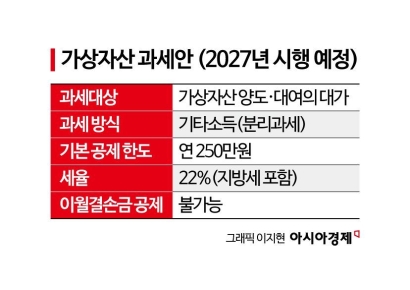 "Stocks Are Not Taxed, but Annual Crypto Gains Over 2.5 Million Won to Be Taxed Next Year... Investors Push Back"
- "Not Jealous of Winning the Lottery"... Entire Village Stunned as 200 Million Won Jackpot of Wild Ginseng Cluster Discovered at Jirisan
- "Rather Than Endure a 1.5 Million KRW Stipend, I'd Rather Earn 500 Million in the U.S." Top Talent from SNU and KAIST Are Leaving [Scientists Are Disappearing] ①
- "How Did an Employee Who Loved Samsung End Up Like This?"... Past Video of Samsung Electronics Union Chairman Resurfaces
- "Even With a 90 Million Won Salary and Bonuses, It Doesn’t Feel Like Much"... A Latecomer Rookie Who Beat 70 to 1 Odds [Scientists Are Disappearing] ③
Experts say that investing in growth stocks is not a bad strategy. This is based on the judgment that major countries will have no choice but to pursue accommodative monetary and fiscal policies until the second half of the year. Namjoong Moon, a researcher at Daishin Securities, explained, "Inflationary pressure compared to the previous year will inevitably decrease as we move into the second half of the year," adding, "As long as the COVID-19 situation continues, the period of temporarily increased volatility should be used as an opportunity to expand the proportion of growth stocks."
© The Asia Business Daily(www.asiae.co.kr). All rights reserved.







