Democratic Party's Hong Ik-pyo: "No Discussion on Capital Gains Tax... Loan Regulations Should Not Be Eased During Interest Rate Hikes"

Hong Ik-pyo, Chairman of the Policy Planning Committee of the Democratic Party of Korea, is attending the Policy Coordination Meeting held at the National Assembly on the 29th and delivering an opening remark. Photo by Yoon Dong-joo doso7@
View original image[Asia Economy Reporter Park Cheol-eung] Hong Ik-pyo, head of the Democratic Research Institute and a member of the Democratic Party of Korea, stated that there is no internal party discussion on easing capital gains tax, and that easing loan regulations should be considered very restrictively only for long-term non-homeowners.
On the 25th, Hong appeared on KBS Radio's "Choi Kyung-young's Strongest Current Affairs" and said, "Some ruling party members and opposition members keep talking about easing capital gains tax on multi-homeowners, but we should not give the market the expectation that it will be eased if they just wait."
He also said, "Because such signals keep going out, I think multi-homeowners are holding back even more now."
He emphasized that easing taxation on multi-homeowners is not being considered, and that the capital gains tax burden on single-homeowners is not significant. Hong said, "We can consider various things for single-homeowners, but easing taxation on multi-homeowners is not appropriate in terms of tax fairness." When asked if there is any party discussion about easing capital gains tax for single-homeowners, he replied, "Not yet," adding, "Single-homeowners are already almost not paying capital gains tax."
He explained that discussions on easing taxation for single-homeowners are limited to property holding tax. Hong elaborated, "If single-homeowners hold their homes long-term, actual demanders and residents hardly feel any capital gains tax burden."
Regarding loan regulations, he said, "There are many issues recently related to interest rates. The U.S. is tapering. Tapering means gradually reducing the amount of money circulating in the market." Tapering refers to the gradual narrowing of quantitative easing policies, and the U.S. Federal Reserve Board (FRB) is adjusting to stop asset purchases.
This ultimately leads to interest rate hikes, so lowering the loan threshold is risky. Hong said, "Many experts say there is a very high possibility of interest rate hikes. If the U.S. raises interest rates, we may have no choice but to follow to some extent." He added, "We need to judge by looking at various economic conditions of our people, but because of such concerns, there is no need to excessively ease loan regulations now."
Hot Picks Today
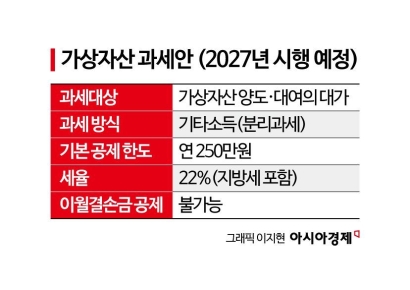 "Stocks Are Not Taxed, but Annual Crypto Gains Over 2.5 Million Won to Be Taxed Next Year... Investors Push Back"
- "Not Jealous of Winning the Lottery"... Entire Village Stunned as 200 Million Won Jackpot of Wild Ginseng Cluster Discovered at Jirisan
- "Even With a 90 Million Won Salary and Bonuses, It Doesn’t Feel Like Much"... A Latecomer Rookie Who Beat 70 to 1 Odds [Scientists Are Disappearing] ③
- "Rather Than Endure a 1.5 Million KRW Stipend, I'd Rather Earn 500 Million in the U.S." Top Talent from SNU and KAIST Are Leaving [Scientists Are Disappearing] ①
- "How Did an Employee Who Loved Samsung End Up Like This?"... Past Video of Samsung Electronics Union Chairman Resurfaces
He expressed the opinion that it is desirable to apply loan-to-value ratio (LTV) and debt-to-income ratio (DTI) restrictions selectively for some long-term non-homeowners.
© The Asia Business Daily(www.asiae.co.kr). All rights reserved.







