Bitcoin Followed by Stock Market and Commodities Decline... Gold Alone Rises
Impact of Risk Asset Aversion Sentiment
US Treasury Yields Rise as Fed Signals Asset Purchase Reduction
Cryptocurrency and Stock Market Weakness
Copper, Crude Oil, Lumber, and Grains All Plunge

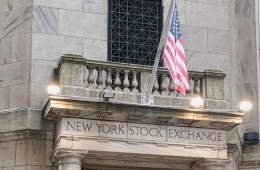
[Asia Economy New York=Correspondent Baek Jong-min] Not only cryptocurrencies but also stocks, bonds, and commodities all fell simultaneously, and with the U.S. Federal Reserve (Fed) hinting at tapering asset purchases, a 'red alert' has been triggered in the risk asset market.
On the 19th (local time), international financial, commodity, and cryptocurrency markets all plunged together. Although the stock market has seen fluctuations before, the simultaneous crash of cryptocurrencies and commodities has raised concerns that a market inflection point is imminent. The Wall Street Journal (WSJ) explained, "As investors' appetite for risk decreased, Bitcoin, commodities, foreign stocks, and U.S. stocks all fell together."

◇ "Institutions investing in gold instead of coins" = The sharp drop in Bitcoin prices that day was predominantly analyzed as a result of risk-asset avoidance sentiment triggered by warnings about cryptocurrencies from China. Additionally, JP Morgan mentioned that institutional investors have been investing in gold instead of Bitcoin for the past month, fueling the sell-off.
Mike Novogratz, founder of Galaxy Digital and a cryptocurrency investor, expressed concern in an interview with CNBC, saying, "Today's sharp drop in Bitcoin feels like a capitulation."
That day, the Fed tightened the market by hinting at the possibility of tapering asset purchases. After the Fed's indication of tapering, the yield on the 10-year U.S. Treasury bond soared sharply to 1.680% from the previous day's 1.641%. A rise in bond yields means a drop in bond prices. The Nasdaq index, which is sensitive to interest rate increases, fell sharply by 1.7% during the session but narrowed the decline to a slight loss, though unease remains.
Michael Gayed, who publishes the Lead Lag Report, told WSJ, "The market has started to recognize that reflation trades are overbought. A terrible situation could unfold." Reflation trades refer to buying stocks instead of bonds amid expectations of economic recovery.
If reflation trades spread, purchases concentrate on cyclical and value stocks. Coincidentally, energy and cyclical stocks showed larger declines than tech stocks that day. Conversely, buying interest spread to semiconductor stocks, which had recently experienced significant declines. The Dow Jones Industrial Average, focused on value stocks, fell by 0.48% that day.
◇ Commodities fall one after another = The price declines are also an abnormal sign. Although investment banks like Goldman Sachs have forecasted the start of a 'commodity supercycle,' concerns are emerging that excessive price increases could lead to demand deterioration. That day, copper fell 4.1% to $9,977.50 per ton on the London Metal Exchange, marking the largest drop since March 4. Most metals, including zinc, declined. The only metal that rose was gold, which increased due to institutional investors' preference for safe assets.
Oil prices also underwent a significant correction. West Texas Intermediate (WTI) crude oil on the New York Mercantile Exchange fell as much as 5.4% during the session, the largest drop in the past six weeks. WTI closed at $63.36 per barrel, down $2.13 (3.3%).
Lumber, a representative commodity reflecting U.S. inflation and supply chain bottlenecks, also fluctuated significantly. Lumber futures in the U.S. futures market dropped 5% during the session but then rose 5% in the afternoon, showing high volatility.
CNBC reported that lumber prices rose excessively, reducing demand, and fewer buyers sought to secure lumber at around $1,700. Grain prices also joined the commodity price decline. Prices of grains such as soybeans and wheat on the Chicago Mercantile Exchange fell about 1-2% that day.
Hot Picks Today
 "Stocks Are Not Taxed, but Annual Crypto Gains Over 2.5 Million Won to Be Taxed Next Year... Investors Push Back"
- "Not Jealous of Winning the Lottery"... Entire Village Stunned as 200 Million Won Jackpot of Wild Ginseng Cluster Discovered at Jirisan
- "Jeong Yu-kyung Is a Neighbor"...Itaewon Standalone House with Record 23.2 Billion Won Appraisal Up for Auction [Real Estate AtoZ]
- "How Did an Employee Who Loved Samsung End Up Like This?"... Past Video of Samsung Electronics Union Chairman Resurfaces
- "Even With a 90 Million Won Salary and Bonuses, It Doesn’t Feel Like Much"... A Latecomer Rookie Who Beat 70 to 1 Odds [Scientists Are Disappearing] ③
Bloomberg News explained that concerns about commodity price increases causing demand reduction are spreading in the commodity market. The news agency reported that institutional investors have been betting on declines in about 20 major commodities over the past month, indicating that the previously unstoppable rise in commodity prices is now being restrained.
© The Asia Business Daily(www.asiae.co.kr). All rights reserved.