Science and Technology Minister Nominee Im Hye-sook: "Will Monitor 5G 28GHz Deployment Until the End of This Year"
![[Image source=Yonhap News]](http://www.asiae.co.kr/news/img_view.htm?img=2021050415044921591_1620108289.jpg)
[Asia Economy Reporter Seulgina Jo] On the 4th, Im Hye-sook, the nominee for Minister of Science and ICT, stated regarding the construction of the 28 GHz band 5G network, "It is problematic that telecom companies are breaking their construction promises, but we need to wait a little longer until the end of this year." In response to the National Assembly's criticism that forcing telecom companies to build networks when the 28 GHz band cannot be used for 5G B2C services is a flawed policy and should be reexamined, she replied, "We will review it further."
At the hearing for the Minister of Science and ICT nominee held by the National Assembly's Science, Technology, Information and Broadcasting and Communications Committee on the same day, Im said, "The 28 GHz band is not yet at a mature technological stage, so telecom companies must consider the service and existing maturity level," adding, "We will monitor until the end of this year and take necessary measures."
The three major telecom companies committed to building a total of 45,215 base stations over three years when acquiring the 28 GHz 5G frequency: 5,269 stations in 2019, 14,042 in 2020, and 25,904 in 2021. However, as of the end of March this year, only 91 base stations had been completed.
On this day, independent lawmaker Yang Jeong-suk pointed out that in Im's pre-submitted written response, she officially stated that "considering the joint construction of 28 GHz band 5G base stations as a fulfillment item could be one of the possible alternatives," criticizing, "The Ministry of Science and ICT has abruptly changed its stance despite the three telecom companies showing no significant facility investment or notable obligation fulfillment." Yang emphasized, "This could result in abandoning 'real 5G,' so we must watch closely to ensure the three telecom companies do their best in building base stations." Im responded, "I will keep that in mind."
On the other hand, Democratic Party lawmaker Byun Jae-il criticized, "The 28 GHz band cannot be used for B2C services, yet a substantial amount of money was received from telecom companies during the submission of business plans and frequency auctions," adding, "The problem is not the end of this year, but if the policy is wrong, it should be corrected."
Byun questioned, "No 28 GHz B2C terminals are supplied, yet they demand deployment because business plans were submitted? This increases costs and is passed on to users. Shouldn't this be unacceptable as a policy?"
In response to these criticisms, Im said, "Since the 28 GHz band is primarily for B2B, we will review it further." Byun added, "It is a subject for reexamination, not activation. Due to the government's flawed policy, operators are struggling, and costs should not be passed on to users."
Hot Picks Today
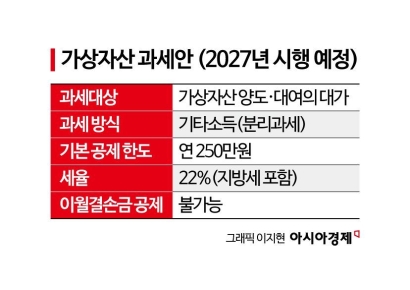 "Stocks Are Not Taxed, but Annual Crypto Gains Over 2.5 Million Won to Be Taxed Next Year... Investors Push Back"
- "Not Jealous of Winning the Lottery"... Entire Village Stunned as 200 Million Won Jackpot of Wild Ginseng Cluster Discovered at Jirisan
- "Even With a 90 Million Won Salary and Bonuses, It Doesn’t Feel Like Much"... A Latecomer Rookie Who Beat 70 to 1 Odds [Scientists Are Disappearing] ③
- "Rather Than Endure a 1.5 Million KRW Stipend, I'd Rather Earn 500 Million in the U.S." Top Talent from SNU and KAIST Are Leaving [Scientists Are Disappearing] ①
- "How Did an Employee Who Loved Samsung End Up Like This?"... Past Video of Samsung Electronics Union Chairman Resurfaces
Due to the frequency characteristics of the 28 GHz band, it has weak diffraction, cannot penetrate obstacles, and has narrow coverage. The industry views it as more suitable for B2B use rather than B2C due to technological limitations. Recently, a report highlighting the declining 5G speeds of Verizon in the U.S., which preemptively adopted the 28 GHz band, has drawn attention. Consequently, among U.S. operators, the need for the mid-band spectrum used in Korea is emerging.
© The Asia Business Daily(www.asiae.co.kr). All rights reserved.







