[Reporter’s Reading] CSI and the Three-Tier Court System Also Existed in Joseon
1751, A Murder Case in Aneumhyeon
Aneumhyeon currently refers to the area around Anui-myeon, Hamyang-gun, Gyeongsangnam-do. On June 18, 1751, according to the lunar calendar, a murder occurred here. The victims were two gichal-gungwan (military police officers). Their names were Kim Hanpyeong and Kim Donghak. They are not historical figures remembered today after 270 years. The impact of the incident was not significant. However, the local government office was thrown into turmoil by the event that took the lives of two gichal-gungwan, who symbolized public authority at the time.
“1751, Aneumhyeon Murder Case,” written by Lee Sang-ho, begins like a detective novel with a sudden murder on a summer afternoon. The vivid investigation process also resembles a detective story. However, this book records actual history, not fiction. It is not mainstream history because it deals with the death of an unknown person in the provinces rather than the central figures. The author revealed that he wrote this book after reading “The Return of Martin Guerre” by Natalie Zemon Davis. Martin Guerre was a 16th-century French peasant farmer, and “The Return of Martin Guerre,” which compiles records of a trial surrounding an impersonator of him and reconstructs the period as it was, is cited by the author as an example of microhistory research methods and proof of how historical facts can become content.
The direction of “1751, Aneumhyeon Murder Case” is similar. As microhistory, it vividly depicts the judicial system of Joseon in the 27th year of King Yeongjo’s reign (1751) through a provincial murder case. Following the records of this murder case makes the Joseon criminal system almost tangible. For example, during the investigation of a murder case at the time, an “ojakin” had to be brought along for the autopsy with the uisaeng (medical officer) and yulgwan (legal officer). While the uisaeng and yulgwan assisted with medical and legal knowledge, the ojakin was responsible for directly handling the corpse during the autopsy. Although the autopsy was the local magistrate’s duty, the magistrate could not personally clean the body, measure wound sizes, or determine the cause of death, so someone to act as the magistrate’s hands and feet was needed ? and that was the ojakin.
The author also wrote, “It was necessary to gather ‘inspection participants’ (chamgeom-in), mainly those not affiliated with the local government office. Especially, the families or relatives of the murdered Kim Hanpyeong and Kim Donghak had to be present.” The chamgeom-in had to stay together and could not leave the scene even briefly. They sometimes pledged not to meet others or accept bribes during the autopsy. After the autopsy, they confirmed objectivity by signing the related documents. The specifications of the “jang (杖)” used to interrogate suspects ? including the size, number of strikes, and target areas ? were also fixed. A three-tier system was established, including “bokgeom” (cross-checking the cause of death) and “dongchu” (joint interrogation) to ensure fairness. Moreover, only the king could order the death penalty. “Therefore, in murder cases, officials who received royal orders had to investigate the case directly, and all details, including the investigation process, interrogation, and autopsy results, had to be reported to the royal court,” the author explained. Through this, the author argues that the forceful “I know your crimes” style trials often seen in dramas or movies are misunderstandings.
At the same time, “1751, Aneumhyeon Murder Case” proves that records of commoners’ daily lives can become competitive content today. The book unfolds the story centered on a piece of writing from the “Yeongyeong Jang-gye Deungnok” included in the work diary “Yeongyeong Ilgi” of Jo Jae-ho, who served as the Gyeongsang Governor at the time of the incident. Descriptions of the crime scene, autopsy reports, and interrogation records are full of tension. The initial witnesses to the crime, gichal-gungwan Kim Tae-geon and Gu Unhak, each pointed to the other as the real culprit during their interrogations, falling into a “prisoner’s dilemma,” which is also noteworthy.
This book examines Joseon’s state system aimed at preventing wrongful deaths and secondary damage through the case of the Aneumhyeon murder. The author looks into the existence and application of the Joseon judicial system through the handling process of the Aneumhyeon murder case and focuses on the judicial system designed to produce similar results through the efforts of passionate local officials with at least minimal procedural legitimacy. This was sufficiently fair even by modern standards, and the author believes that the strength that sustained the Joseon dynasty for 500 years also came from such a system. As the Aneumhyeon murder case reaches its conclusion, the author’s intention that examining the daily lives of commoners helps fully understand the whole of history is clearly conveyed.
Hot Picks Today
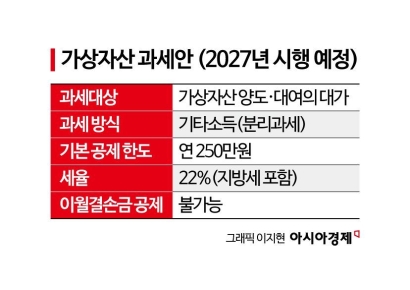 "Stocks Are Not Taxed, but Annual Crypto Gains Over 2.5 Million Won to Be Taxed Next Year... Investors Push Back"
- "Not Jealous of Winning the Lottery"... Entire Village Stunned as 200 Million Won Jackpot of Wild Ginseng Cluster Discovered at Jirisan
- "Even With a 90 Million Won Salary and Bonuses, It Doesn’t Feel Like Much"... A Latecomer Rookie Who Beat 70 to 1 Odds [Scientists Are Disappearing] ③
- General Strike D-1: Final Negotiations Between Samsung Electronics Labor and Management Over One Key Issue
- "How Did an Employee Who Loved Samsung End Up Like This?"... Past Video of Samsung Electronics Union Chairman Resurfaces
(1751, Aneumhyeon Murder Case / Lee Sang-ho / Pureun History / 13,900 KRW)
© The Asia Business Daily(www.asiae.co.kr). All rights reserved.