Commercial Banks Securing Ammunition, Increasing Bank Bond Issuance... Expected to Rise Further in the Second Half (Comprehensive)
Four Major Banks Issued 11 Trillion Won This Year
"About 22 Trillion Won Needed to Prepare for LCR Regulation Normalization"

[Asia Economy Reporter Park Sun-mi] The issuance of bank bonds by commercial banks is surging. Although loan demand has increased, the acceleration of withdrawals from savings and time deposits due to low interest rates has led banks to actively issue bank bonds to secure funds. Although financial authorities relaxed the liquidity coverage ratio (LCR) regulations for banks in response to the COVID-19 situation, it is expected that bank bond issuance will gain more momentum in the second half of the year in preparation for the possible normalization of regulations in September.
According to the banking sector on the 28th, the total amount of bank bonds issued by the four major commercial banks?KB Kookmin, Shinhan, Hana, and Woori?this year reached 11.01 trillion won, with 8.16 trillion won in the first quarter and 2.85 trillion won in April. Shinhan Bank issued the most at 3.99 trillion won, followed by Woori (3.25 trillion won), Kookmin (2.02 trillion won), and Hana (1.75 trillion won). Although it is early in the second quarter, the total issuance by the four major banks this year is more than 30% higher than the combined 8.31 trillion won issued in the first and second quarters of last year.
Expanding the scope to the entire banking sector, bank bond issuance has also increased compared to a year ago. According to the Korea Financial Investment Association, the amount of bank bonds issued in the first quarter of this year reached 40.75 trillion won, up from 38.54 trillion won during the same period last year. This is due to the need to secure liquidity for loans and new business funding. There are also forecasts that bank bond issuance will accelerate further in the second half of the year in preparation for the strengthening of LCR regulations on domestic banks.
The LCR is an indicator showing the ratio of high-liquidity assets that can be immediately converted into cash to respond to net cash outflows. To prepare for situations where large sums temporarily flow out during financial crises, financial authorities regulate the minimum LCR at 100%. However, to encourage active lending by banks during the COVID-19 pandemic, the authorities lowered this to 85% until March this year and extended the relaxation period once again until September. As a result, banks will be subject to relaxed regulations until September, with the consolidated LCR lowered from 100% to 85% and the foreign currency LCR from 80% to 70%.
Unlike the surge in loans, time deposits with interest rates in the 0% range have been shunned by consumers, putting the banking sector's efforts to maintain LCR under emergency conditions. Since the relaxation has already been extended twice, the industry is forming a mood to prepare for normalization before September, as further extensions cannot be guaranteed.
LCR of Four Major Banks Slightly Over 90%
As of the end of last year, banks with LCR below 100% include KB Kookmin, Shinhan, Hana, Woori, Gwangju, Daegu, Jeju, and Industrial Bank of Korea.
This means most banks must prepare for the restoration of LCR to 100%. Among them, the four major commercial banks?Kookmin (93%), Shinhan (90%), Hana (91%), and Woori (91%)?have LCRs slightly above 90%. To restore LCR to 100%, banks need to either reduce net cash outflows or increase high-liquidity assets, so bank bond issuance in the second half is likely to accelerate further.
The bond market estimates that the amount needed for the four major banks to recover LCR to 100% is about 22 trillion won. Based on the end of last year, the estimated amount of high-liquidity assets needed by each bank to reach an LCR of 100% through simple deduction ranges from about 4.7 trillion won to 7 trillion won.
Hot Picks Today
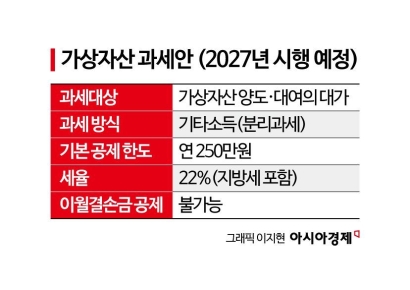 "Stocks Are Not Taxed, but Annual Crypto Gains Over 2.5 Million Won to Be Taxed Next Year... Investors Push Back"
- "Not Jealous of Winning the Lottery"... Entire Village Stunned as 200 Million Won Jackpot of Wild Ginseng Cluster Discovered at Jirisan
- "Even With a 90 Million Won Salary and Bonuses, It Doesn’t Feel Like Much"... A Latecomer Rookie Who Beat 70 to 1 Odds [Scientists Are Disappearing] ③
- "Rather Than Endure a 1.5 Million KRW Stipend, I'd Rather Earn 500 Million in the U.S." Top Talent from SNU and KAIST Are Leaving [Scientists Are Disappearing] ①
- "How Did an Employee Who Loved Samsung End Up Like This?"... Past Video of Samsung Electronics Union Chairman Resurfaces
Yoon Won-tae, a bond research analyst at SK Securities, said, "Kookmin Bank will need 4.7 trillion won, Shinhan Bank 7.1 trillion won, Woori Bank 4.9 trillion won, and Hana Bank 5.1 trillion won in high-liquidity assets. Assuming the LCR regulations normalize at the end of September and bank bonds are raised over three months starting in July, monthly bank bond issuance could increase by about 7 trillion won."
© The Asia Business Daily(www.asiae.co.kr). All rights reserved.







