[Good Morning Stock Market] US Stocks Mixed Ahead of Big Event... Nasdaq Hits New High
US FOMC Regular Meeting, President Joe Biden's Congressional Speech in Focus
Major Tech Stocks Earnings Reports Also Concentrated This Week... 1Q Earnings Season Turning Point
![On the 26th (local time), traders are handling their tasks on the trading floor of the New York Stock Exchange in the United States. <br>[Image source=Yonhap News]](http://www.asiae.co.kr/news/img_view.htm?img=2021042708150298811_1619478901.jpg)
On the 26th (local time), traders are handling their tasks on the trading floor of the New York Stock Exchange in the United States.
[Image source=Yonhap News]
[Asia Economy Reporter Minwoo Lee] The U.S. stock market is showing a cautious stance ahead of major events such as earnings announcements, the Federal Open Market Committee (FOMC) regular meeting, and President Joe Biden's congressional speech, while the rise in long-term Treasury yields has narrowed. The domestic stock market is also expected to continue a sector rotation trend amid this environment.
On the 26th (local time) at the New York Stock Exchange (NYSE), the Dow Jones Industrial Average closed at 33,981.57, down 0.18% (61.92 points) from the previous session. The S&P 500 index ended at 4,187.62, up 0.18% (7.45 points). The tech-heavy Nasdaq index closed at 14,138.78, up 0.87% (121.97 points), setting a new all-time high again.
◆ Yumi Kim, Economist at Kiwoom Securities = With news that federal mask guidelines might be eased as early as this week, cyclical sectors showed relative strength in the U.S. stock market. Technology stocks gained momentum as the 10-year U.S. Treasury yield, which had risen 4 basis points (1bp=0.01%) before the market opened, narrowed its intraday gains. Long-term yields fell due to ▲weak durable goods orders data ▲strong demand at the 5-year Treasury auction.
Major tech stocks such as Amazon (+2.04%), Tesla (+1.21%), Facebook (+0.63%), and Apple (+0.30%) mostly closed slightly higher ahead of this week's earnings announcements. It is very unusual for all major tech stocks to report earnings in the same week, so attention is heightened on this week's results. Overall caution has increased, but the market believes there is still room for further gains depending on the stock, and optimism continues to flow in.
The Biden administration's potential easing of federal public health guidelines on outdoor mask-wearing as early as this week positively impacted cyclical stocks. Energy (+0.64%), consumer discretionary (+0.62%), materials (+0.50%), financials (+0.33%), and travel stocks showed notable strength. Former FDA Commissioner Scott Gottlieb stated, "With more people vaccinated, outdoor mask mandates are no longer necessary." Additionally, the resumption of Johnson & Johnson's COVID-19 vaccine use following FDA and European Medicines Agency (EMA) guidelines last week also supported economic reopening. Meanwhile, the Philadelphia Semiconductor Index rose sharply (+1.67%) this week amid rising expectations for semiconductor company AMD's earnings.
The domestic stock market is expected to show a firm but steady trend as risk asset preference coexists with caution ahead of the FOMC meeting and major corporate earnings announcements. After the U.S. market close, Tesla reported quarterly earnings per share of $0.93, exceeding expectations, but its shares fell about 2% in after-hours trading. This is seen as a reflection of already priced-in expectations for major tech stocks' Q1 earnings. However, considering the improved earnings outlook for semiconductor sectors and strength in related sectors due to reflation, the sector rotation trend is expected to continue. This will likely support the downside of the domestic stock market.
◆ Seonghwan Kim, Researcher at Shinhan Investment Corp. = The strong earnings momentum in the U.S. stock market continues. The 3-month change rate of the S&P 500's 12-month forward earnings per share (EPS) is 9.4%, ranking in the top 1% over the past 30 years. The earnings revision ratio, which measures the breadth of earnings improvement, ranks in the top 2.6%. The sharp earnings improvement accompanying economic recovery has been sufficient to drive the U.S. stock market's bull run.
![[Good Morning Stock Market] US Stocks Mixed Ahead of Big Event... Nasdaq Hits New High](http://www.asiae.co.kr/news/img_view.htm?img=2021042708153998813_1619478939.png)
With accelerated COVID-19 vaccinations and the full-scale economic recovery, momentum is strengthening further, raising expectations for additional upward earnings revisions. The concern is whether this momentum has already been fully reflected in stock prices. Since the beginning of the year, the 10-year U.S. Treasury yield has risen nearly 70 basis points, yet the S&P 500's 12-month forward price-to-earnings ratio (PER) remains above 22 times. This is because the possibility of further upward earnings revisions has already been priced in.
Therefore, for the U.S. stock market to make further gains, earnings improvements exceeding market expectations need to accompany it. The EPS growth rate of the S&P 500 is expected to peak in Q2 compared to the same period last year. If the pace of earnings improvement slows, the market, which has risen on earnings expectations, could become vulnerable. It is time to assess the sustainability of earnings improvements and reasonable upside potential.
![[Good Morning Stock Market] US Stocks Mixed Ahead of Big Event... Nasdaq Hits New High](http://www.asiae.co.kr/news/img_view.htm?img=2021042708155998817_1619478960.png)
The 2021 sales outlook is still undervalued, with potential upward revisions of about 2-4%. The favorable business environment and operating leverage effects could also improve net profit margin forecasts. Historically, the sensitivity of earnings growth to sales growth was 1.7 times. Considering this, even conservatively, EPS this year has an upside potential of about 3.5-6%.
Concerns about tax increases and the rollback of stimulus policies have raised voices fearing downward revisions of next year's earnings estimates. If the corporate tax rate rises to 25%, EPS would inevitably be revised down by 4-5%. However, concerns about tax hikes could be offset during the process of resolving undervaluation in earnings forecasts. Considering this, the S&P 500's 12-month forward EPS could reach 200 points by year-end. Depending on the economic trajectory, it could even reach 210 points. This is because earnings forecasts remain conservative compared to strong economic momentum.
Hot Picks Today
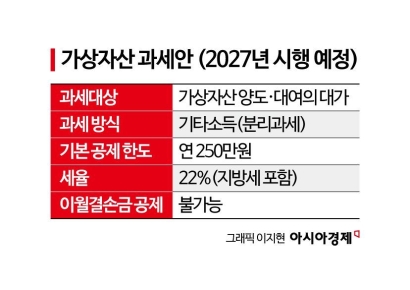 "Stocks Are Not Taxed, but Annual Crypto Gains Over 2.5 Million Won to Be Taxed Next Year... Investors Push Back"
- "Not Jealous of Winning the Lottery"... Entire Village Stunned as 200 Million Won Jackpot of Wild Ginseng Cluster Discovered at Jirisan
- "Jeong Yu-kyung Is a Neighbor"...Itaewon Standalone House with Record 23.2 Billion Won Appraisal Up for Auction [Real Estate AtoZ]
- "How Did an Employee Who Loved Samsung End Up Like This?"... Past Video of Samsung Electronics Union Chairman Resurfaces
- "Even With a 90 Million Won Salary and Bonuses, It Doesn’t Feel Like Much"... A Latecomer Rookie Who Beat 70 to 1 Odds [Scientists Are Disappearing] ③
Upward revisions are expected to continue through Q2 and Q3. This limits downside risk despite frictional negative factors. Over the past 30 years, during periods when earnings estimates were revised upward, stock prices did not fall more than 10% from their highs.
© The Asia Business Daily(www.asiae.co.kr). All rights reserved.