[Into the Stocks] Good Earnings but... Stock Price 'Stalls' Hyundai Motor, Starting Again?
Solid 1Q Earnings... Financial Division Operating Margin Expected to Reach Double Digits for the First Time in 8 Years
Stock Price Stalls... KOSPI's Uptrend Only Half Achieved
"May Focus on Future Investments Rather Than Governance Restructuring"
![The Ioniq 5 is displayed at Hyundai's booth at the 19th Shanghai Motor Show, which opened on the 19th at the National Exhibition and Convention Center (NECC) in Shanghai, China. [Image source=Yonhap News]](http://www.asiae.co.kr/news/img_view.htm?img=2021042311311194943_1619145071.jpg)
The Ioniq 5 is displayed at Hyundai's booth at the 19th Shanghai Motor Show, which opened on the 19th at the National Exhibition and Convention Center (NECC) in Shanghai, China. [Image source=Yonhap News]
View original image[Asia Economy Reporter Minwoo Lee] Since the beginning of the year, Hyundai Motor's stock price, which experienced sharp fluctuations following rumors of Apple and the autonomous vehicle project 'Apple Car,' has struggled to rebound. Although there are short-term concerns such as vehicle semiconductor supply issues and the resurgence of COVID-19, the medium- to long-term growth outlook remains valid considering a solid demand base and improved product competitiveness. Furthermore, a smooth business structure reorganization is expected to lead to a revaluation.
Strong Performance... Financial Sector Recovers Double-Digit Operating Profit Margin
In the first quarter of this year, Hyundai Motor recorded consolidated sales of KRW 27.3909 trillion and operating profit of KRW 1.6566 trillion, representing increases of 8.2% and 91.8% respectively compared to the same period last year. This is considered a strong performance that exceeded market expectations (consensus). So Suhong, a researcher at NH Investment & Securities, explained, "Overseas operating rates excluding China were better than previously expected, and the virtuous cycle effect (improving cost of sales ratio) from the successful accumulation of new car effects continued," adding, "The financial sector's profitability improved significantly due to reduced bad debt costs from strong new car effects and overseas demand recovery, as well as increased used car values."
In particular, the financial sector's operating profit reached KRW 530 billion, up 143.1% year-on-year. The operating profit margin stood at 12.4%. Thanks to demand recovery and strong new car effects, the financial sector's operating profit margin is expected to recover to double digits for the first time in eight years since 2013's 11.3%. Researcher Cho analyzed, "Although the China business continues to underperform, equity-method valuation gains also rose sharply by 319.8% year-on-year to KRW 361 billion due to the recovery of major affiliates' performance."
Strong Performance but Stock Price Struggles to Recover
Nevertheless, the stock price remains stagnant. Earlier, on January 11, Hyundai Motor hit an intraday high of KRW 289,000, setting a new record. This surpassed the previous high of KRW 272,500 recorded in May 2012 after about nine years. The news of developing the autonomous electric vehicle commonly called 'Apple Car' with Apple acted as a positive catalyst. Along with Hyundai Motor, Hyundai Mobis, Kia, and other Hyundai Motor Group stocks surged. However, just a month later, in February, Hyundai Motor announced that "we are not in discussions with Apple regarding autonomous vehicle development."
Following this, the stock price began to decline. From the 24th of last month, while the KOSPI steadily rose, reaching an all-time closing high of 3,220.70 on the 20th, Hyundai Motor's stock price only rose 3.6% compared to the KOSPI's 7.5% increase during the same period. As of 2:53 PM on that day, the stock price was KRW 221,000, down 2.21% from the previous day, returning to the price level before the Apple Car issue surfaced.
Governance Restructuring VS Core Business Investment
The most important issue for Hyundai Motor going forward is governance restructuring. It is expected that the governance improvement efforts, postponed since 2018, will resume through the listing of Hyundai Engineering. Earlier, on the 9th, Hyundai Engineering sent a Request for Proposal (RFP) for KOSPI listing to major domestic securities firms. The lead underwriters are expected to be finalized early next month. With Hyundai Engineering's listing, Hyundai Motor Group Chairman Chung Euisun is expected to secure the 'ammunition' needed for governance restructuring.

(MK=Chung Mong-koo, Honorary Chairman of Hyundai Motor Group, ES=Chung Eui-sun, Chairman of Hyundai Motor Group)
View original imageCurrently, Hyundai Motor Group maintains a circular shareholding structure of 'Hyundai Mobis → Hyundai Motor → Kia → Hyundai Mobis.' According to the Fair Trade Commission, Hyundai Motor Group is the only one among the top 30 domestic conglomerates that has not resolved its circular shareholding chain. If the change of the same person (controlling shareholder) applied to the Fair Trade Commission is announced as early as this month, Chairman Chung would succeed Honorary Chairman Chung as the new group head, making it an opportune time for governance restructuring.
However, there are also criticisms that the practical benefits of governance restructuring are limited. This is because, unlike in 2018, there is less pressure to dissolve circular shareholding. While new circular shareholdings or strengthening of circular shareholdings are prohibited, existing circular shareholdings are not subject to regulation. Samsung Securities researcher Lim Eunyeong said, "If governance restructuring is attempted, the major shareholder will incur taxes exceeding KRW 1 trillion, and Kia and Hyundai Steel, which own shares in Hyundai Mobis, will also face taxes exceeding KRW 1 trillion during the share sale process," adding, "Moreover, the merger and share exchange process will take at least six months, and with the industry undergoing transformation, the group's resources will likely focus more on future technology investments than governance restructuring."
In fact, Hyundai Motor Group acquired an 80% stake in robotics technology company Boston Dynamics in December last year. Hyundai Motor, a group affiliate, invested 30% (KRW 358.4 billion), Hyundai Mobis 20% (KRW 239 billion), Hyundai Glovis 10% (KRW 119.5 billion), and Chairman Chung personally invested 20% (KRW 239 billion). Researcher Lim interpreted this as "meaning that the group's future growth engines lie in robotics technology and Urban Air Mobility (UAM) technology."
Hot Picks Today
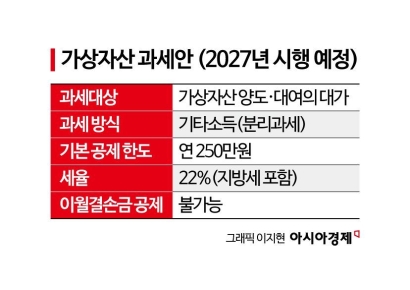 "Stocks Are Not Taxed, but Annual Crypto Gains Over 2.5 Million Won to Be Taxed Next Year... Investors Push Back"
- "Not Jealous of Winning the Lottery"... Entire Village Stunned as 200 Million Won Jackpot of Wild Ginseng Cluster Discovered at Jirisan
- "Rather Than Endure a 1.5 Million KRW Stipend, I'd Rather Earn 500 Million in the U.S." Top Talent from SNU and KAIST Are Leaving [Scientists Are Disappearing] ①
- "How Did an Employee Who Loved Samsung End Up Like This?"... Past Video of Samsung Electronics Union Chairman Resurfaces
- "Even With a 90 Million Won Salary and Bonuses, It Doesn’t Feel Like Much"... A Latecomer Rookie Who Beat 70 to 1 Odds [Scientists Are Disappearing] ③
© The Asia Business Daily(www.asiae.co.kr). All rights reserved.







