[Review] Wrapping Up the 2021 Shareholders' Meeting
![[Review] Wrapping Up the 2021 Shareholders' Meeting](http://www.asiae.co.kr/news/img_view.htm?img=2019052806365748718_1558993017.jpg)
Jung Woo-yong, Vice Chairman of Policy, Korea Listed Companies Association
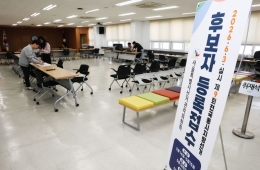
Recently, the regular general meetings of shareholders for companies with December fiscal year-end have all concluded. The shareholders' meeting is an event where management reports to shareholders how the company was operated over the past year and how it plans to be managed in the coming year. Especially, since important decisions stipulated by the Commercial Act are directly voted on by shareholders, it can be considered the largest event for communication between shareholders and management.
Due to the impact of COVID-19 since last year, those in charge had to work several times busier for such an important event. From arranging the meeting venue to on-site quarantine management on the day, corporate staff worked even harder than before to ensure the smooth holding of the shareholders' meeting.
Even in a situation where the deadline for submitting business reports was moved up, forcing the shareholders' meeting schedule to be postponed to the end of March, companies made efforts to disperse the meeting dates, resulting in a 10.7 percentage point decrease in the concentration of the top three meeting dates compared to last year. According to the Korea Securities Depository, the number of listed companies on the Korea Exchange using electronic voting systems to assist shareholders who found it difficult to visit the meeting venue due to COVID-19 reached 331, an increase of about 35% from the previous year.
In this way, our companies did their best to enable shareholders to attend the shareholders' meetings and exercise their voting rights smoothly despite the COVID-19 situation. The Association, which provides practical training and consultation on shareholders' meetings, received about 7,000 inquiries from the end of the year to early this year. Questions related to COVID-19 were fewer than expected, and the greatest burden was confirmed to be legal risks arising from laws amended in recent years.
In particular, due to the amendment of the Enforcement Decree of the Commercial Act, business reports and audit reports must be provided to shareholders at least one week before the shareholders' meeting, so the submission deadline, which was until the end of March, was moved up, causing many difficulties in preparation. Additionally, with many companies experiencing changes in external audits due to amendments to the External Audit Act, resulting in an overall extension of audit periods, being required to submit business and audit reports earlier was like adding insult to injury. Practically, the Commercial Act, which forced the shareholders' meeting date to be postponed to the end of March, and the government's policy direction to advance and disperse meeting dates, have made the end of the year and early year a nightmare for practitioners facing increasing legal risks every year.
Companies face continuous amendments to laws related to listed companies, such as the introduction of the 3% rule, separate election of audit committee members, and mandatory appointment of female directors in large corporations. At a time when they should focus on business performance amid COVID-19, they inevitably have to spend significant costs and time preparing for legal risks unrelated to management.
Despite the prolonged COVID-19 situation, companies are now gradually stabilizing. Our companies continuously strive to create jobs, revitalize local economies, and increase tax revenues through profit generation. On the other hand, corporate-related laws and systems are imposing only punishments rather than incentives on companies, contrary to global trends.
It is not too late. To ensure that costs and manpower due to policy risks can be fully concentrated on corporate management, corporate-related policies must be reviewed and compared with those of major countries worldwide from now on, and amended by listening to voices from the corporate field and reflecting Korea's unique characteristics. Our companies compete not only domestically but also in the global market. By doing so, companies will bring more positive impacts to shareholders and our society through ESG management.
Hot Picks Today
 "Do We Need to Panic Buy Again?" War Drives 30% Price Surge... Even the Bedroom Feels the Impact
- "Suspicious Timing?"...Trump Traded Stocks After Praising Wartime Capabilities
- There Is a Distinct Age When Physical Abilities Decline Rapidly... From What Age Do Strength and Endurance Drop?
- "Anyone Who Visited the Room Salon, Come Forward"… Gangnam Police Station Launches Full Staff Investigation After New Scandal
- "Contact Me First If Houses Are Built": Wealthy Clients Eyeing... Will Ultra-High-End Residences Worth 20 Billion Won Be Developed? [Real Estate AtoZ]
© The Asia Business Daily(www.asiae.co.kr). All rights reserved.