Limitations and Challenges Left by the 'Hanmi 2+2 Meeting'
[Asia Economy Reporter Yoo In-ho, Military Specialist Reporter Yang Nak-gyu] The first South Korea-US foreign and defense ministers (2+2) meeting since the inauguration of the Joe Biden administration reaffirmed the strong South Korea-US alliance but failed to reach a consensus on sensitive issues such as North Korea's denuclearization and human rights, and China containment.

Foreign Minister Chung Eui-yong and Defense Minister Suh Wook are taking a commemorative photo with U.S. Secretary of State Antony Blinken and Secretary of Defense Lloyd Austin on the morning of the 18th at the Ministry of Foreign Affairs building in Jongno-gu, Seoul, ahead of the Korea-U.S. Foreign and Defense Ministers' Meeting. Photo by Joint Press Corps
View original imageThis is because the talks about resuming the Korean Peninsula peace process involving North Korea-US, inter-Korean, and South Korea-North Korea-US dialogues were omitted, and the declaration focused primarily on North Korea's nuclear and ballistic missile issues as the main concern.
Earlier, in the joint statement of the 2+2 meeting on the 18th, the South Korea-US foreign and defense ministers stated, "We confirmed that North Korea's nuclear and ballistic missile issues are the alliance's top priority and agreed to closely coordinate to resolve these issues."
In diplomatic circles, there is regret over the absence of the phrase "denuclearization of the Korean Peninsula" in the 2+2 meeting joint statement regarding North Korea policy.
Cho Sung-ryul, advisory research fellow at the Korea Institute for National Security Strategy, said, "It seems South Korea approached this more cautiously because it can be a direct party," adding, "Considering North Korea's backlash through statements by Kim Yo-jong, deputy director of the Central Committee of the Workers' Party of Korea, and Choe Son-hui, first vice foreign minister, as well as the ongoing review of US North Korea policy."
In this 2+2 meeting, the word "China" was excluded, and South Korea's participation in the US-led China containment coalition was not actively discussed, but there is a high possibility that this will become a burden for the South Korean government in the future.
From the US perspective, the South Korea-US alliance is considered the core of security in the Indo-Pacific region, so South Korea cannot be free from the US-led pressure and containment efforts against China.
Shin Beom-chul, head of the Foreign and Security Center at the Korea National Strategy Institute, said, "It appears that there is a considerable difference in views between South Korea and the US regarding China containment," adding, "How to coordinate this will be a future task for both countries."
Furthermore, there is speculation that the US Forces Korea may slow down the transfer process of wartime operational control (OPCON) to take the lead on the Korean Peninsula following this 2+2 meeting.
Unlike South Korea, which emphasizes a "prompt transfer" by confirming the "return timing" preferably within the current administration's term, the US reaffirmed its existing stance of strictly adhering to the "conditions" necessary for the transfer, suggesting that it will take a considerable period before the South Korean military regains control.
Hot Picks Today
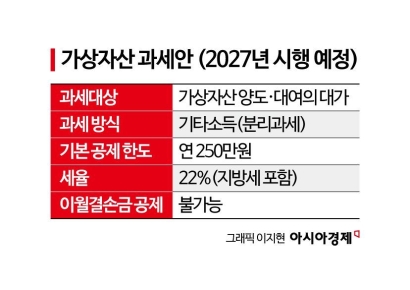 "Stocks Are Not Taxed, but Annual Crypto Gains Over 2.5 Million Won to Be Taxed Next Year... Investors Push Back"
- "Not Jealous of Winning the Lottery"... Entire Village Stunned as 200 Million Won Jackpot of Wild Ginseng Cluster Discovered at Jirisan
- "Even With a 90 Million Won Salary and Bonuses, It Doesn’t Feel Like Much"... A Latecomer Rookie Who Beat 70 to 1 Odds [Scientists Are Disappearing] ③
- "Rather Than Endure a 1.5 Million KRW Stipend, I'd Rather Earn 500 Million in the U.S." Top Talent from SNU and KAIST Are Leaving [Scientists Are Disappearing] ①
- "How Did an Employee Who Loved Samsung End Up Like This?"... Past Video of Samsung Electronics Union Chairman Resurfaces
At the defense ministers' meeting held the previous day, the US side repeatedly emphasized the "condition-based transfer," and ultimately, the South Korean side's press release did not include the expression "prompt transfer."
© The Asia Business Daily(www.asiae.co.kr). All rights reserved.







