[Good Morning Stock Market] Another Sharp Rise in US Treasury Yields... What Is the Impact on the Domestic Stock Market?
![Exterior view of the United States Federal Reserve Building [Image source=Yonhap News]](http://www.asiae.co.kr/news/img_view.htm?img=2021031907541939188_1616108058.jpg)
Exterior view of the United States Federal Reserve Building [Image source=Yonhap News]
View original image[Asia Economy Reporter Park Ji-hwan] The yield on the U.S. 10-year Treasury note continued its sharp rise, reaching the highest level in 14 months. On the 18th (local time) in the New York bond market, the 10-year Treasury yield surged by 11 basis points (1bp=0.01%p) to 1.754%, marking the highest level since January last year.
Despite the Federal Reserve's (Fed) statement the previous day that it would not raise interest rates until 2023 and that it was too early to discuss tapering asset purchases, the market failed to stabilize. This is interpreted as a reflection of unresolved market concerns about inflation.
The sharp rise in Treasury yields led to declines in major U.S. indices. On the New York Stock Exchange (NYSE), the Dow Jones Industrial Average closed down 153.07 points (0.46%) at 32,862.30. The Standard & Poor's (S&P) 500 index fell 1.48% to 3,915.46, and the Nasdaq index plunged 3.02% to 13,116.17.
Among domestic experts, the prevailing opinion was that the current level of interest rates could act as a short-term negative factor for the stock market. Accordingly, investors are advised to build investment portfolios focused on cyclical stocks or earnings-driven stocks as an effective investment strategy.
◆ Seo Sang-young, Kiwoom Securities Researcher = As global countries announce interest rate hikes or accelerated timing of hikes due to inflationary pressures, the U.S. 10-year Treasury yield reaching 1.75% is expected to have a negative impact on the domestic stock market. The international oil price has also dropped sharply by more than 7% due to U.S.-Russia tensions, expanded economic lockdowns in France, a strong dollar, and inventory increase issues, which is another burden. The sharp rise in yields and the plunge in international oil prices are expected to negatively affect foreign investor flows.
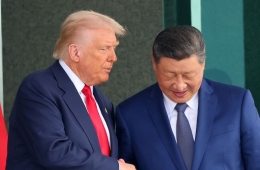
The content of the upcoming high-level U.S.-China talks during the trading session is also a concern. This is the first high-level meeting between the U.S. and China since the Biden administration took office, and the U.S. participants are known to be hardliners toward China. Given the many negative factors affecting foreign investor flows in the Korean stock market and the U.S.-China high-level talks, the market is expected to start lower and continue to adjust.
◆ Lee Jae-sun, Hana Financial Investment Researcher = The results of the previous day’s U.S. Federal Open Market Committee (FOMC) meeting lowered the possibility of U.S.-originated tightening risks in the near term, which is viewed positively. Chairman Powell reiterated the existing baseline interest rate scenario (holding steady until 2023) in an interview.
However, the dot plot and economic outlook released on the same day reflected the Fed’s confidence in a rapid economic normalization, suggesting that the market will remain sensitive to long-term bond levels and inflation indicators in the first half of the year. Continuous interest in sectors benefiting from earnings and rising prices is necessary. In Korea, sectors that experienced deep price corrections relative to earnings improvement expectations since February are expected to attract bargain buying. After the FOMC, U.S. stocks such as Expedia and Philip Morris, which are linked to economic normalization, recorded 52-week highs. The domestic retail sector rose 9.5% since February on expectations of domestic demand normalization.
◆ Lim Sung-chul, Heungkuk Securities Researcher = The market has been accustomed to long-term low interest rates since the 2008-2009 financial crisis. Especially, the full-scale trade disputes starting in the Trump administration in 2018 and the outbreak of the COVID-19 pandemic at the end of 2019 increased the preference for safe assets like bonds, pushing yields near the bottom.
In the long term, rising interest rates have accompanied corporate profit growth. Although the recent sharp rise in yields has increased stock market volatility, this is seen as a reflection of expectations for underlying inflation and price increases, and stability is expected to gradually return. After the surge in yields calms down, interest rates are expected to show a moderate upward trend alongside a healthy economic recovery and corporate profit growth, with the stock market adapting and rising together.
◆ Park Sang-hyun, Hi Investment & Securities Researcher = U.S. economic indicators are bound to show strong improvement due to stimulus measures and vaccine effects, which is likely to lead to further increases in U.S. interest rates. From the perspective of an expected strong economic cycle, the rise in interest rates can be seen as natural, but the burden of higher rates may act as a short-term negative factor for the stock market.
Hot Picks Today
 No Bacteria Detected in Arisu After 24 Hours of Repeated Drinking from a Tumbler
- "I Feel Uncomfortable Being Filmed"... Cheerleaders Distressed by Commercial Fan Cam Practices
- High-Net-Worth Investors Increase Stock Holdings: "Samsung and SK hynix Are Basic, Now Searching for the Next Opportunity" [Investment Strategies of the Wealthy] ⑧
- "Not Just Fuel Prices: Whale Collision Risks Surge as Hormuz Blockade Reroutes Ships"
- Police Officer Cycling on Day Off Rescues Woman Attempting to Jump from Hangju Bridge
Although the Nasdaq index continues to adjust due to rising rates, the Dow Jones index has been hitting record highs despite the rate increases, indicating that the rate rise accompanied by a strong economic rebound is not leading to the feared rate shock phenomenon. The key issue is stabilizing inflation expectations, which is expected to take some time. Until it is confirmed that the current price increases are temporary, as emphasized by the Fed, debates will inevitably continue.
© The Asia Business Daily(www.asiae.co.kr). All rights reserved.