OECD Raises Global Growth Forecast to 5.6% This Year
Most Countries Struggle to Recover to Pre-COVID-19 Levels by End of 2022
Vaccine Distribution and Variant Emergence Are Key Factors
![[Image source=Yonhap News]](http://www.asiae.co.kr/news/img_view.htm?img=2021030715504819011_1615099848.jpg)
[Asia Economy Reporter Ki Ha-young] The Organisation for Economic Co-operation and Development (OECD) has forecast the global economic growth rate for this year at 5.6%. This is a slight upward revision from last year's forecast, with the speed of COVID-19 vaccine distribution and the emergence of variant viruses expected to be key factors determining future growth rates.
On the 9th (local time), the OECD raised its global economic growth forecast for this year by 1.4 percentage points to 5.6% from the 4.2% forecast presented in December last year in its interim economic outlook report. The forecast for next year was also raised by 0.3 percentage points to 4.0%. This revision was attributed to the gradual increase in COVID-19 vaccine distribution developed last year and the announcement of additional fiscal stimulus measures by major governments such as the United States.
The OECD added that while the global economy is expected to recover to pre-pandemic levels by mid-year, this does not apply to all countries. Although the global economic outlook has improved, it is expected that production and income in many countries will remain at pre-pandemic levels until the end of 2022.
Among the Group of Twenty (G20) countries, India is projected to have the highest gross domestic product (GDP) growth this year at 12.6%. China (7.8%), the United States (6.5%), Turkey (5.9%), France (5.9%), and Spain (5.7%) followed.
Regionally, the United States is expected to see recovery driven by the additional $1.9 trillion (approximately 2,162 trillion won) stimulus package promoted by President Joe Biden. Europe is expected to experience a moderate recovery due to more limited fiscal policies compared to other major countries. The OECD projected the Eurozone’s GDP growth rate at 3.9% for this year and 3.8% for next year, following a 6.8% contraction last year.
In the Asia-Pacific region, the economic growth of surrounding areas is expected to benefit from China’s growth, continuing a steady recovery. Conversely, in Latin America and Africa, where the pace of COVID-19 vaccine acquisition is slower, there is a risk of renewed outbreaks, and limited capacity for additional stimulus measures is expected to constrain economic recovery.
The OECD predicted that the global economy’s fortunes this year will hinge on the speed of effective COVID-19 vaccine distribution worldwide and the emergence of variant viruses resistant to existing vaccines. If the vaccinated population increases rapidly, the global economic growth rate could rise to 7.0% this year and 5.0% next year. However, if vaccine distribution is slow and variant viruses spread, growth rates could fall to 4.5% this year and 2.75% next year.
Hot Picks Today
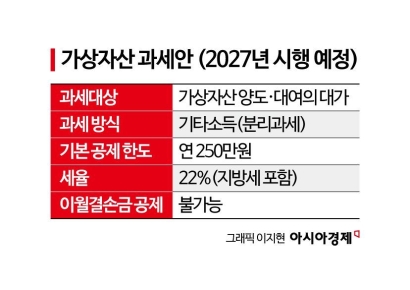 "Stocks Are Not Taxed, but Annual Crypto Gains Over 2.5 Million Won to Be Taxed Next Year... Investors Push Back"
- "Not Jealous of Winning the Lottery"... Entire Village Stunned as 200 Million Won Jackpot of Wild Ginseng Cluster Discovered at Jirisan
- "Rather Than Endure a 1.5 Million KRW Stipend, I'd Rather Earn 500 Million in the U.S." Top Talent from SNU and KAIST Are Leaving [Scientists Are Disappearing] ①
- "How Did an Employee Who Loved Samsung End Up Like This?"... Past Video of Samsung Electronics Union Chairman Resurfaces
- "Even With a 90 Million Won Salary and Bonuses, It Doesn’t Feel Like Much"... A Latecomer Rookie Who Beat 70 to 1 Odds [Scientists Are Disappearing] ③
The OECD recorded last year’s global economic growth rate at -3.4%, with only China and Turkey among the G20 countries achieving positive GDP growth of 2.3% and 1.8%, respectively. The OECD analyzed that China and Turkey were able to achieve positive growth thanks to strong fiscal policies implemented by their governments and recovery in the manufacturing and construction sectors.
© The Asia Business Daily(www.asiae.co.kr). All rights reserved.







