The Power of Cars and Semiconductors... January Current Account Surplus of $7.06 Billion, Surplus Expands for 8 Consecutive Months (Comprehensive)
Bank of Korea 'January 2021 Balance of Payments (Preliminary)'
![[Image source=Yonhap News]](http://www.asiae.co.kr/news/img_view.htm?img=2021030907565321495_1615244214.jpg)
[Asia Economy Reporter Kim Eun-byeol] The current account surplus in January reached $7.06 billion as exports of semiconductors and automobiles continued to perform well in the new year. The surplus margin expanded for the eighth consecutive month compared to the same month last year.
According to the "January 2021 Balance of Payments (Provisional)" released by the Bank of Korea on the 9th, the current account surplus in January was $7.06 billion, an increase of $6.48 billion compared to January last year ($580 million).
As the global economy gradually recovers from the COVID-19 shock and global trade continues to rebound, exports of passenger cars, information and communication devices, and semiconductors showed strong performance. January exports amounted to $46.66 billion, up $3.88 billion (9.1%) compared to the same month last year.
Imports were $40.93 billion, an increase of $220 million (0.5%) compared to the same month last year. According to customs clearance imports data, capital goods imports in January increased by 29.6% year-on-year, and consumer goods imports also rose by 7.2%.
Park Chang-hyun, head of the International Balance of Payments Team at the Bank of Korea's Economic Statistics Bureau, explained, "Capital goods imports, centered on semiconductor manufacturing equipment, increased, which directly links to domestic facility investment, positively contributing to the growth of Korea's key products and maintaining market competitiveness. Although there are still many remarks that consumption is negative due to the spread of COVID-19, consumer goods imports also increased significantly."
Compared to January last year, when the COVID-19 outbreak was at its early stage, overseas travelers sharply decreased, and transportation income increased, reducing the deficit in the service balance. The service balance recorded a deficit of $610 million in January, reducing the deficit by $2.38 billion compared to the same month last year (-$2.99 billion). With increased maritime and air cargo transportation, the transportation balance posted a surplus of $1.01 billion, turning positive compared to the same month last year. This marks seven consecutive months of surplus since July last year. The number of inbound travelers decreased by 96%, and outbound travelers by 97% compared to January last year, reducing the travel balance deficit (-$550 million) by $860 million.
As dividend income received by domestic companies from overseas subsidiaries increased, the primary income balance surplus expanded by $720 million year-on-year to $2.36 billion.
Hot Picks Today
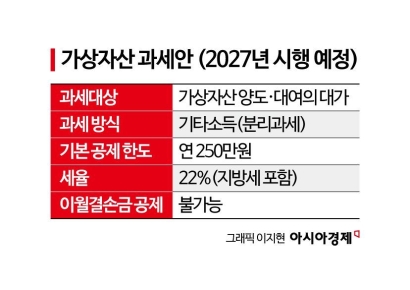 "Stocks Are Not Taxed, but Annual Crypto Gains Over 2.5 Million Won to Be Taxed Next Year... Investors Push Back"
- "Not Jealous of Winning the Lottery"... Entire Village Stunned as 200 Million Won Jackpot of Wild Ginseng Cluster Discovered at Jirisan
- "Even With a 90 Million Won Salary and Bonuses, It Doesn’t Feel Like Much"... A Latecomer Rookie Who Beat 70 to 1 Odds [Scientists Are Disappearing] ③
- General Strike D-1: Final Negotiations Between Samsung Electronics Labor and Management Over One Key Issue
- "How Did an Employee Who Loved Samsung End Up Like This?"... Past Video of Samsung Electronics Union Chairman Resurfaces
The net financial account, which indicates capital inflows and outflows, increased by $5.28 billion. Regarding direct investment, domestic investors' overseas investment increased by $2.2 billion, and foreign investment in Korea increased by $570 million. Domestic investors' overseas securities (stocks and bonds) investment increased by $10.95 billion, continuing the growth trend for ten consecutive months, while foreign investors' domestic stock investment decreased by $1.79 billion, marking a decline for two consecutive months. Foreigners' domestic bond investment increased by $4.09 billion, turning to an increase after three months. Park said, "Foreigners' stock investment decreased due to profit-taking, while bond investment turned to an increase supported by the inflow of public funds such as sovereign wealth funds."
© The Asia Business Daily(www.asiae.co.kr). All rights reserved.