Market Attentive to Interest Rates: "If They Fall, Will the Uptrend Resume... What Is the More Important Variable?"

[Asia Economy Reporter Lee Seon-ae] "There is a variable more important than interest rate rises or falls." The interest rate variable has cracked the optimism and bullish sentiment prevalent in the global financial market. Following the U.S. Producer Price Index (PPI) surprise that triggered caution about inflation, and with the U.S. 10-year Treasury yield surpassing 1.3%, the global financial market has become sensitive again to inflation and interest rate increases. If interest rates fall, can the market find stability and resume its upward trend?
On the 22nd, Lee Kyung-min, a researcher at Daishin Securities, said, "At this point, I think neither rising nor falling interest rates will have a positive impact on the global financial market." He added, "As seen in recent market trends, rising interest rates have led to increased valuation burdens and profit-taking in growth stocks, while a reversal to falling rates can be perceived as economic slowdown and strengthened preference for safe assets. If interest rates fall due to weak economic indicators, global stock markets will show more unstable trends." Ultimately, more important than interest rate fluctuations is regaining confidence in a self-sustaining economic recovery.
Following early January, the recent weak U.S. employment data has again raised doubts about the pace of economic recovery. The first-quarter GDP growth rates for the U.S., Europe, and G10 remain negative. Although dovish remarks from the Federal Reserve Chair and members may control interest rate rises, they also increase anxiety about the speed of economic recovery. During the first quarter, depending on the COVID-19 situation, economic data results, and consequent changes in recovery expectations, inflation and interest rate variables themselves are inevitably burdensome.
Lee said, "Ultimately, it is necessary to strengthen fundamental momentum and inject confidence in economic recovery." He emphasized, "Since sectors driving economic growth and corporate earnings growth, along with cyclical and financial stocks sensitive to inflation expectations, can rise together, inflation and interest rate increases will form a virtuous cycle with economic recovery and growth, adding upward momentum to the global stock market."
The second-quarter GDP growth rates reach 10.8% for the U.S., 13.1% for the Eurozone, 8.57% for the G10, and 12.01% for Asia. This means growth drivers that outweigh inflation and interest rate rises are entering the market. Even during 2011 and 2017, when U.S. inflationary pressures were high, global stock markets and the KOSPI maintained upward trends with stronger momentum.
Hot Picks Today
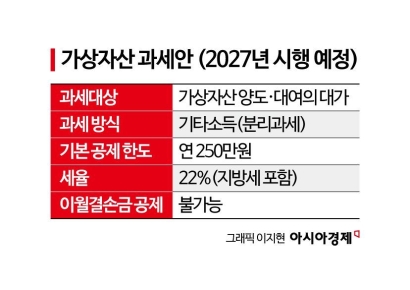 "Stocks Are Not Taxed, but Annual Crypto Gains Over 2.5 Million Won to Be Taxed Next Year... Investors Push Back"
- "Not Jealous of Winning the Lottery"... Entire Village Stunned as 200 Million Won Jackpot of Wild Ginseng Cluster Discovered at Jirisan
- "Rather Than Endure a 1.5 Million KRW Stipend, I'd Rather Earn 500 Million in the U.S." Top Talent from SNU and KAIST Are Leaving [Scientists Are Disappearing] ①
- "How Did an Employee Who Loved Samsung End Up Like This?"... Past Video of Samsung Electronics Union Chairman Resurfaces
- "Even With a 90 Million Won Salary and Bonuses, It Doesn’t Feel Like Much"... A Latecomer Rookie Who Beat 70 to 1 Odds [Scientists Are Disappearing] ③
However, for the time being, the global financial market and stock markets seem inevitably to be in a phase of adapting to changes in inflation and interest rate levels. The relative underperformance of the KOSPI, which still faces short-term overheating and valuation burdens compared to global stock markets, will continue. Although somewhat frustrating and sluggish trends may persist, this is an opportunity to prepare for the resumption and strengthening of the upward trend in the second quarter. Lee said, "I maintain a preference for a strategy of increasing weights by utilizing volatility and for structural growth stocks (Internet, secondary batteries, renewable energy) and export stocks (semiconductors, automobiles, transportation)." He explained, "In the near future, whether the KOSPI breaks out of its box range (3000?3200) with increased trading volume (over 24 trillion won) and whether preferred sectors break resistance levels will determine the medium- to long-term trend."
© The Asia Business Daily(www.asiae.co.kr). All rights reserved.