"Please Give Me Vegetables, Not Meat": Why Holiday Meals Are Uncomfortable for Vegans
Vegetarians Sigh Over Meat-Centered Holiday Meals
Coping With Curry Starch Instead of Egg Wash for Holiday Fritters
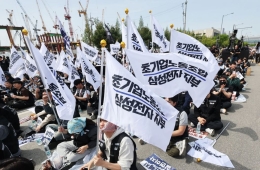
![On the afternoon of October 30 last year, members of the Citizens' Group for a Vegan World and the Korea Vegetarian Union wore animal masks and shouted slogans urging vegan diets at Gwanghwamun Square in Seoul. Vegans are complete vegetarians who reject all animal-based foods, including meat, eggs, and dairy products. [Image source=Yonhap News]](http://www.asiae.co.kr/news/img_view.htm?img=2021021412183474638_1613272714.png)
On the afternoon of October 30 last year, members of the Citizens' Group for a Vegan World and the Korea Vegetarian Union wore animal masks and shouted slogans urging vegan diets at Gwanghwamun Square in Seoul. Vegans are complete vegetarians who reject all animal-based foods, including meat, eggs, and dairy products. [Image source=Yonhap News]
View original image[Asia Economy, reporter Han Seunggon] # Lee, a university student in her twenties, always feels anxious when holidays approach. This is because, as a vegetarian (vegetarianism), there are almost no dishes she can eat at the well-prepared holiday table. Lee said, "It makes sense that holiday meals are centered around meat," but added, "Vegans can't have a proper meal. Still, I can't say 'I only want to eat vegetables' in front of my elders. The holidays are truly distressing."
For vegans (strict vegetarians), holidays-which should be a joyful time for extended family gatherings-are often uncomfortable due to meat-heavy menus. Most dishes, such as various pancakes, jeon, and galbi, are centered around meat.
Veganism is not simply about rejecting meat and eating only vegetables. It is a philosophy that advocates for animal rights based on the belief that one should reject all products and services produced through animal exploitation.
However, it is not easy for vegans to uphold their beliefs in daily life. Kim, an office worker in her thirties, said, "I have many vegan friends. They find holidays with meat-heavy meals very difficult," adding, "It's not just the challenge of having to eat non-vegetarian food. What's harder is the discriminatory attitude of people who can't understand veganism."
Another office worker in her twenties, Lee, said, "I know my family means well when they prepare meat for the holidays, and I feel sorry. But for vegans, just eating meat itself is distressing and difficult. I hope people can understand this."
Given these circumstances, vegans share tips on how to cope during the holidays. For example, instead of using imitation crab sticks in skewers, they substitute soy-based ham and mushrooms. For round fritters, they use curry starch water instead of an egg wash. Some even use konjac to create shrimp-shaped skewers.
However, there is no way to deal with the critical view that vegans are "too particular" or "unusual." Especially, complaints from family or relatives make vegetarians sigh even more deeply.
Park, a company employee in his thirties and a vegetarian, said, "During holidays, when all the relatives are gathered, I get exhausted trying to explain 'why I have to be a vegetarian' or 'why there should be vegetable-based dishes instead of meat during the holidays.' Honestly, the act of trying to persuade others feels a bit ridiculous. So I usually just stay quiet or laugh it off."

COVID-19 Self-Quarantine Supplies for Goyang, Gyeonggi Area. The photo is unrelated to specific expressions in the article. Photo by Kara
View original imageThis is not the first time that vegans have faced discrimination or controversy. Previously, there were requests from people in COVID-19 self-quarantine to include vegetarian options in their supplies. At the time, some citizens criticized these requests, arguing that insisting on vegetarian meals for personal beliefs could cause inconvenience to others, even in the urgent situation of COVID-19.
Earlier, there was also a rally calling for consideration of vegetarians in the military. On November 12, 2019, more than 30 civil society organizations-including the Green Party, Gonggam Public Interest Lawyers, and Animal Rights Action Kara-held a press conference in front of the National Human Rights Commission in Jung-gu, Seoul, together with four conscripts about to enlist, urging the Ministry of National Defense to "establish policies that guarantee vegetarian meal options in the military."
They argued, "Vegetarianism is not just a preference but a conviction and conscience not to exploit animals," and "Guaranteeing the right to choose vegetarian meals is linked to vegetarians' rights to pursue happiness, health, and freedom of conscience."
Hot Picks Today
 No Bacteria Detected in Arisu After 24 Hours of Repeated Drinking from a Tumbler
- "I Feel Uncomfortable Being Filmed"... Cheerleaders Distressed by Commercial Fan Cam Practices
- Staring at Stock Charts Causes 'Hwabyeong'... "What Have I Even Been Doing?" FOMO Spreads Amid Soaring KOSPI
- High-Net-Worth Investors Increase Stock Holdings: "Samsung and SK hynix Are Basic, Now Searching for the Next Opportunity" [Investment Strategies of the Wealthy] ⑧
- Police Officer Cycling on Day Off Rescues Woman Attempting to Jump from Hangju Bridge
Meanwhile, according to the Korea Vegetarian Vegan Association, there are about 1.5 million people in Korea who prefer vegetarian diets or are strict vegans who eat only plant-based foods such as vegetables, fruits, and seaweed. This figure includes all vegetarians, even those who consume animal products such as fish or dairy.
© The Asia Business Daily(www.asiae.co.kr). All rights reserved.